

Asiatic Black Bear
Ursus thibetanus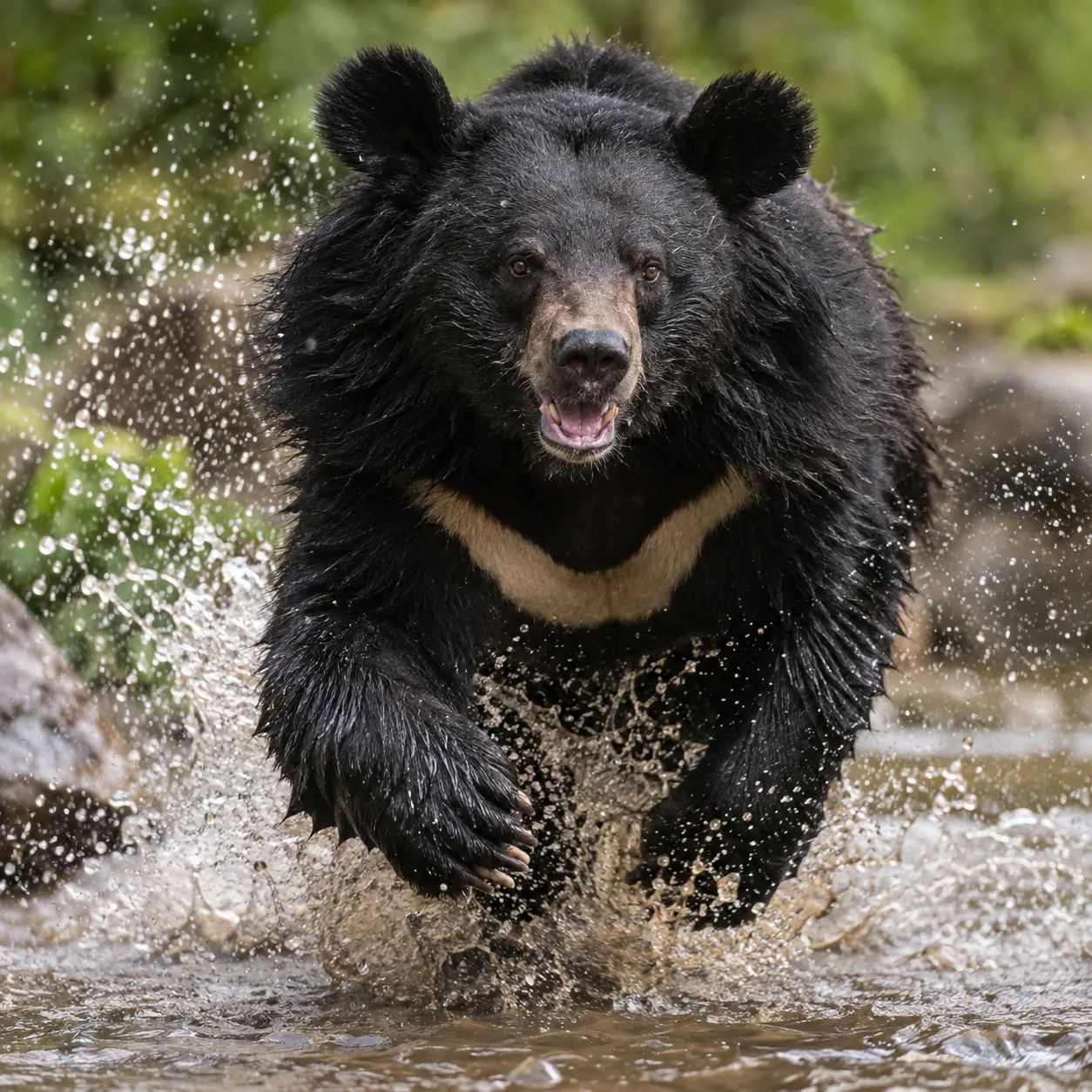
Bears
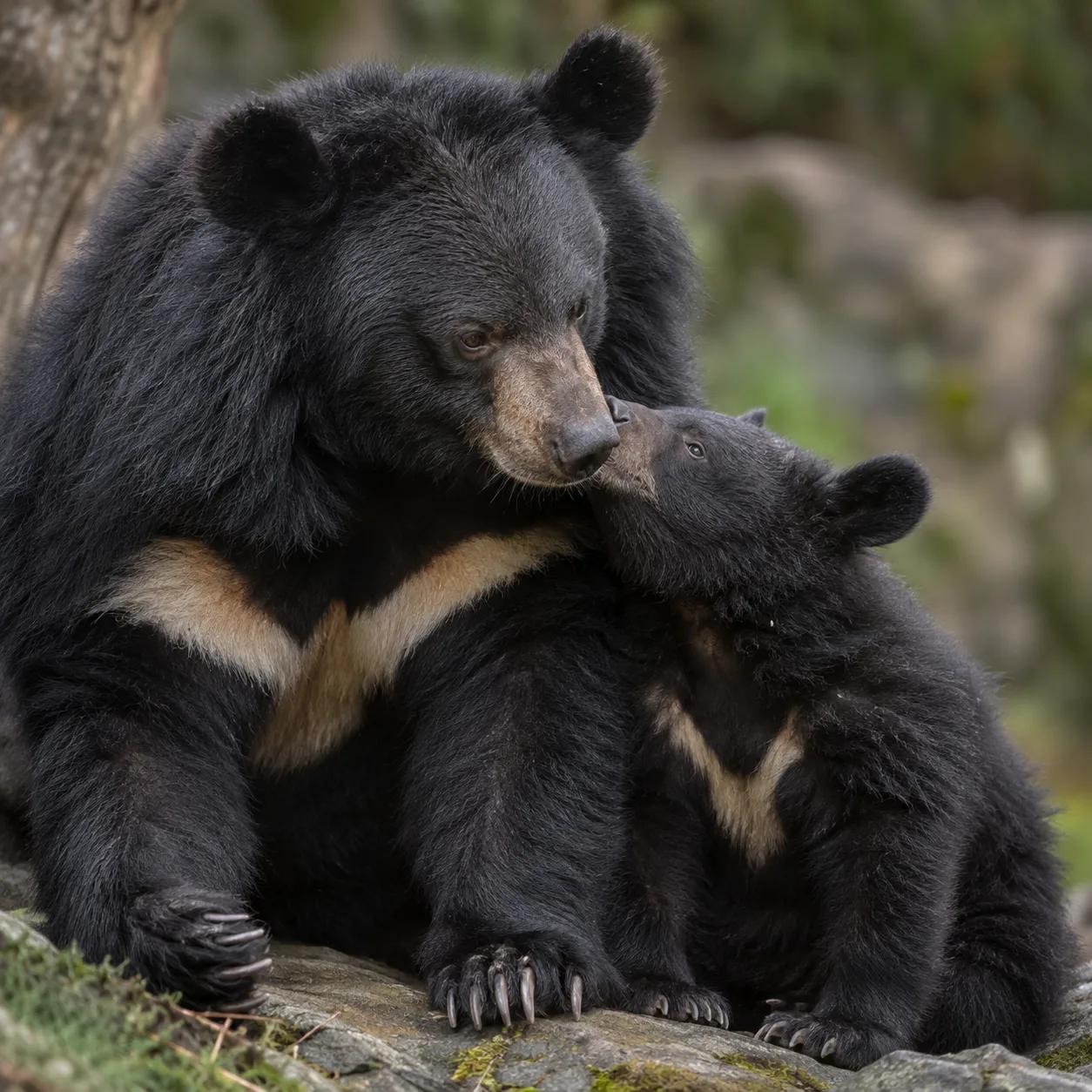
A medium-sized bear known for the distinct white V-shaped mark on its chest.
The Asiatic black bear (Ursus thibetanus), also widely known as the moon bear or white-chested bear, is a medium-sized, largely arboreal bear species native to the forests of Asia. Fewer than 60,000 individuals are estimated to remain in the wild, and the species is listed as vulnerable on the IUCN Red List.
Physical Characteristics and Appearance
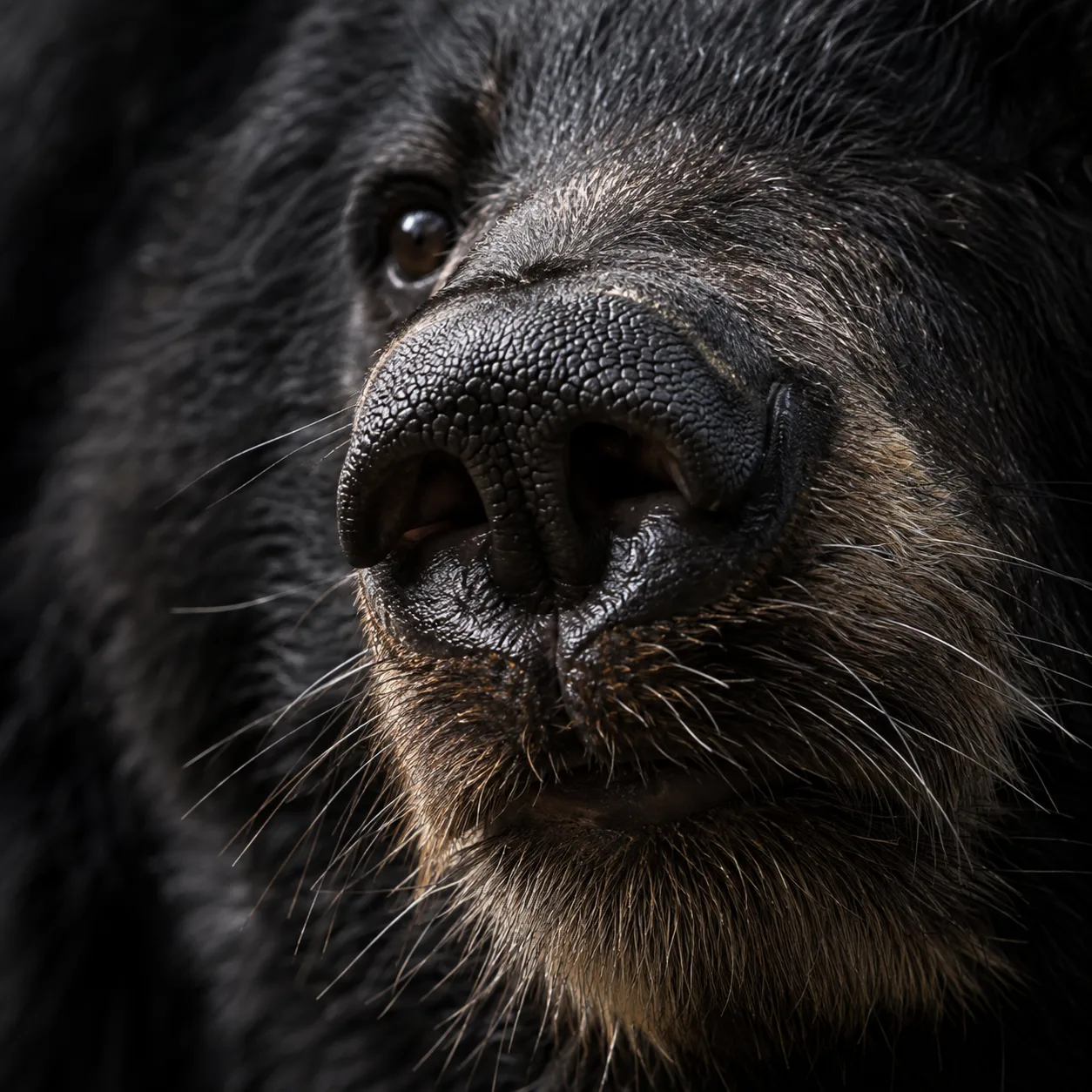
- Coat and Markings: They have sleek, glossy black fur (occasionally dark brown) with a distinct, cream or white V-shaped or crescent-shaped patch on their chest. They also feature a light brown or white muzzle and a prominent white chin.
- Size and Build: Adult males weigh 100–200 kg (220–440 lb), while females are typically smaller at 40–125 kg (88–276 lb). Their head-to-body length ranges from 120 to 190 cm (47 to 75 in).
- Climatic Adaptations: They possess long, curved claws and powerful forelegs optimized for climbing trees, where they frequently forage and construct nest-like branch folds.
Habitat and Geographic Distribution
- Range: Their natural distribution spans from southeastern Iran and Pakistan across the Himalayas, India, mainland Southeast Asia, China, the Korean Peninsula, Taiwan, the Russian Far East, and parts of Japan.
- Elevation Shifts: In mountainous regions like the Himalayas, they spend summers at high elevations (up to 3,600 meters / 11,800 feet) and descend below 1,500 meters during winter.
Diet and Behavior
- Omnivorous Diet: They are opportunistic omnivores whose diet is primarily vegetarian (fruits, nuts, acorns, berries, seeds, and shoots), supplemented with insects, grubs, honey, and occasional small vertebrates or carrion.
- Hibernation: Populations living in northern latitudes (Russia, Korea, Japan, and northeastern China) undergo a winter sleep or hibernation period from November through March, during which they do not eat, move, or excrete waste. Southern populations remain active year-round.
- Social Structure: They are characteristically solitary animals, except during the mating season or when raising cubs.
Threats and Conservation Status
- Poaching and Bile Farms: They are severely threatened by illegal poaching for their paws, skin, and particularly their gallbladders, which are harvested for bear bile used in traditional Asian medicine. Thousands of individuals have historically been kept in captivity on bile farms.
- Habitat Loss: Widespread deforestation and agricultural expansion continue to fragment their natural ranges, increasing human-wildlife conflicts as bears forage near human settlements. They are protected under CITES Appendix I.
- Group
- Bears