

Civet-Binturong
Arctictis binturong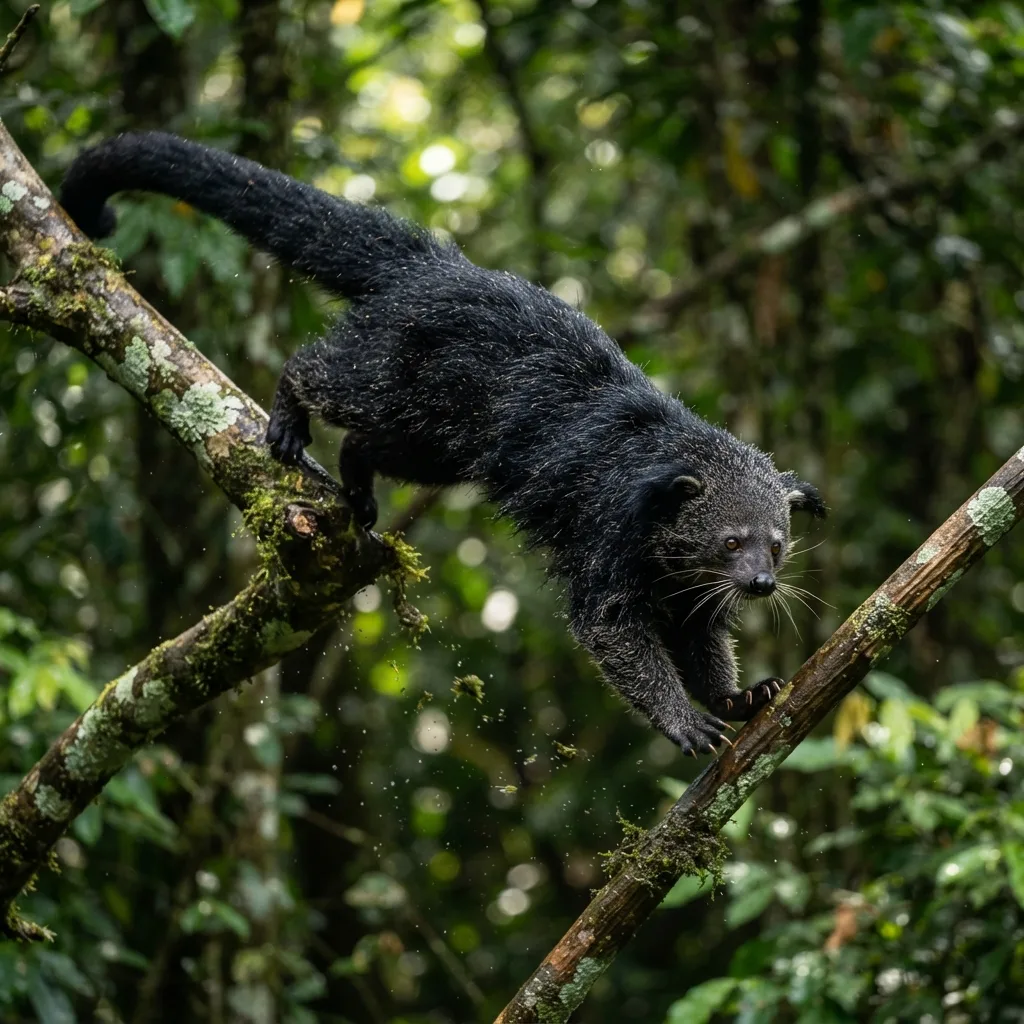
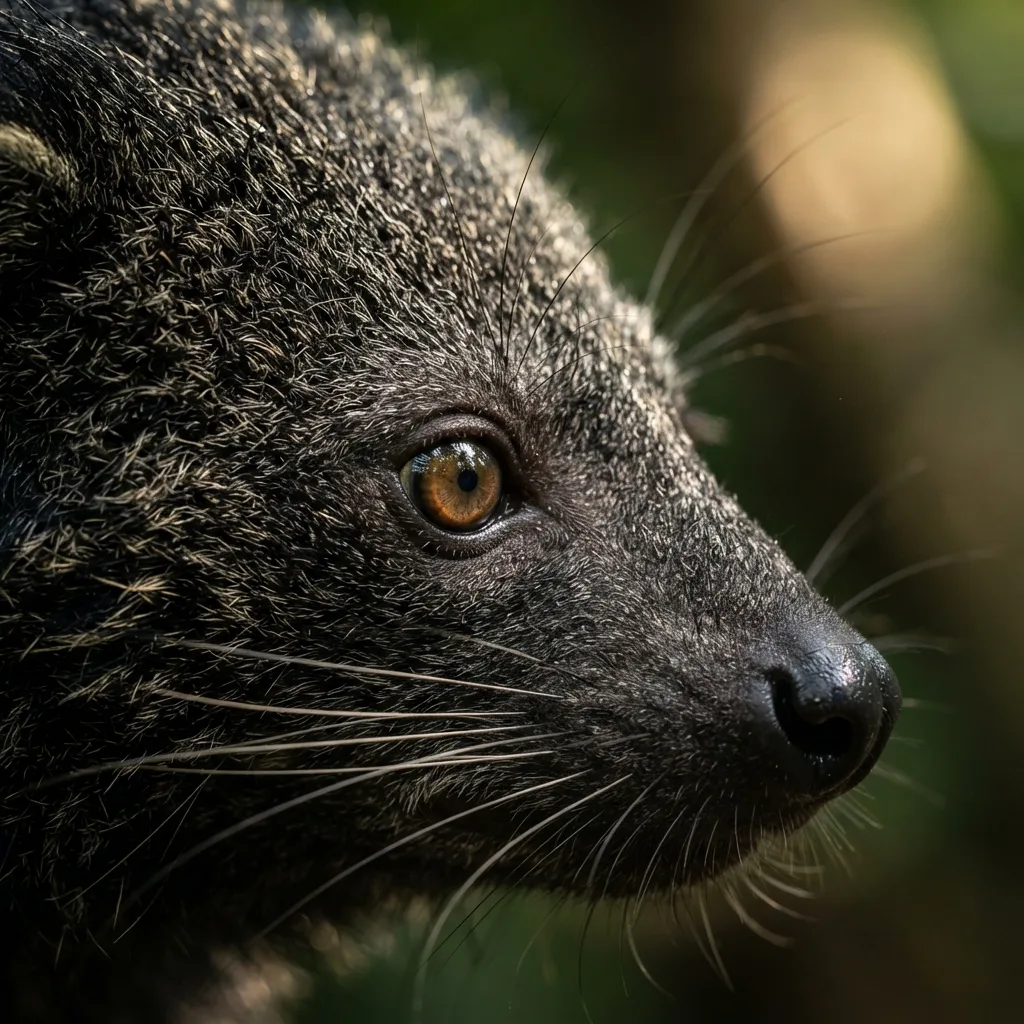
The animal has a special odor gland that smells like popcorn mixed with butter.
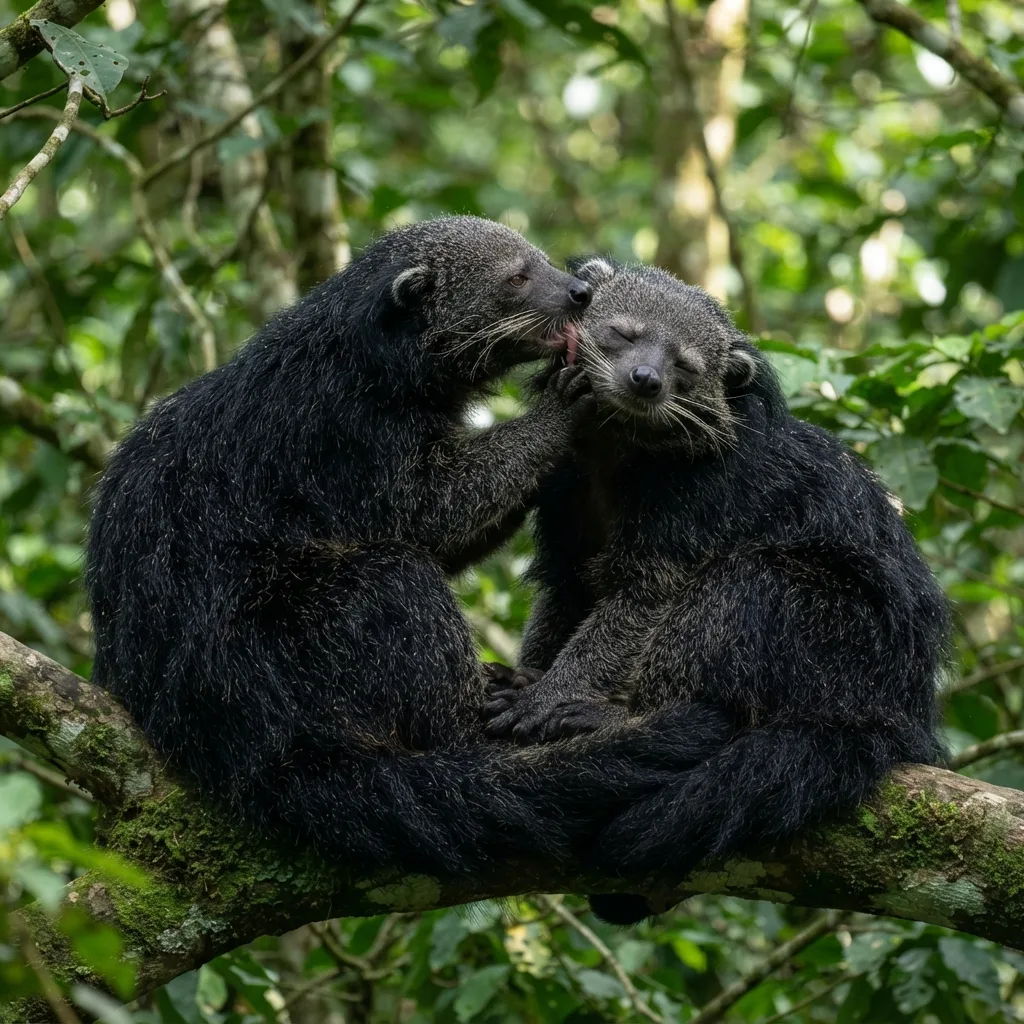
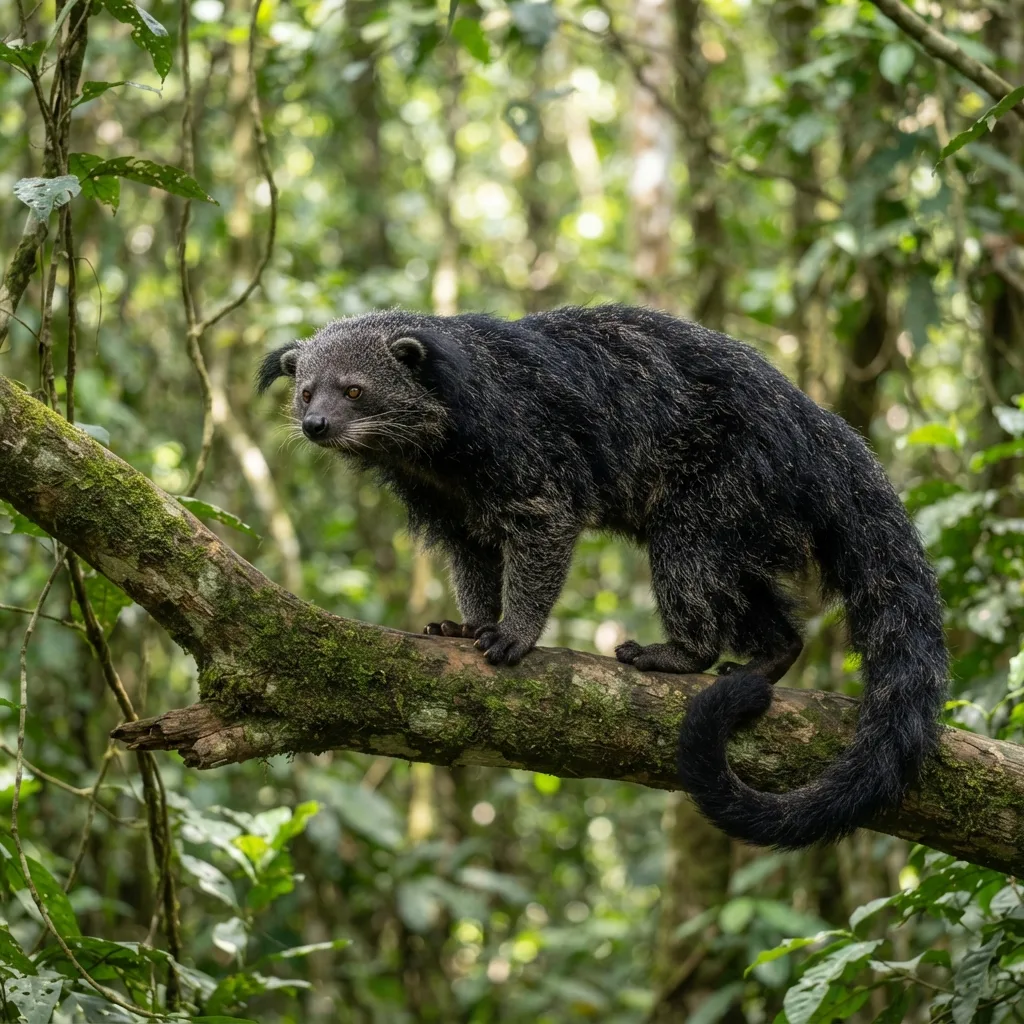
The binturong (Arctictis binturong), famously nicknamed the bearcat, is actually the largest member of the Viverridae (civet) family. Native to the dense tropical forests of South and Southeast Asia, this unusual mammal is famous for two distinct features: its unique prehensile tail and a specialized scent gland that smells precisely like buttered popcorn.
🐾 Physical Comparison: Binturong vs. Other Civets
While they share a common family ancestry, binturongs have evolved quite differently from their smaller civet cousins, such as the Asian Palm Civet:
Size & Weight: 20 to 50+ lbs (9–20+ kg); largest in the family.
Tail Adaptation: Fully prehensile tail used as a fifth limb for gripping branches.
Locomotion: Flat-footed (plantigrade) like bears; cannot leap between trees.
Primary Diet: Predominantly frugivorous, specifically relying heavily on figs.
🌳 Key Traits & Behavior
- The Popcorn Scent: Binturongs possess scent glands located under the tail. They use these pheromones to mark territory, leaving behind a chemical compound called 2-AP—the exact same compound that gives freshly popped popcorn its aroma.
- Canopy Specialists: Despite their heavy and somewhat clumsy movement on land, their specialized ankles can rotate 180 degrees. This allows them to walk straight down tree trunks headfirst while using their claws and prehensile tail for extreme stability.
- Keystone Seed Dispersers: They play a vital ecological role as one of the few species capable of digesting and effectively spreading the seeds of the strangler fig, a keystone plant that entire forest ecosystems rely on for food.
- Conservation Status: Binturongs are currently listed as Vulnerable on the IUCN Red List. They face steep population declines due to habitat destruction from logging and palm oil expansion, as well as exploitation in the illegal pet trade and the coffee trade.
- Group
- Small mammals