

Malayan Sun Bear
Helarctos malayanus malayanus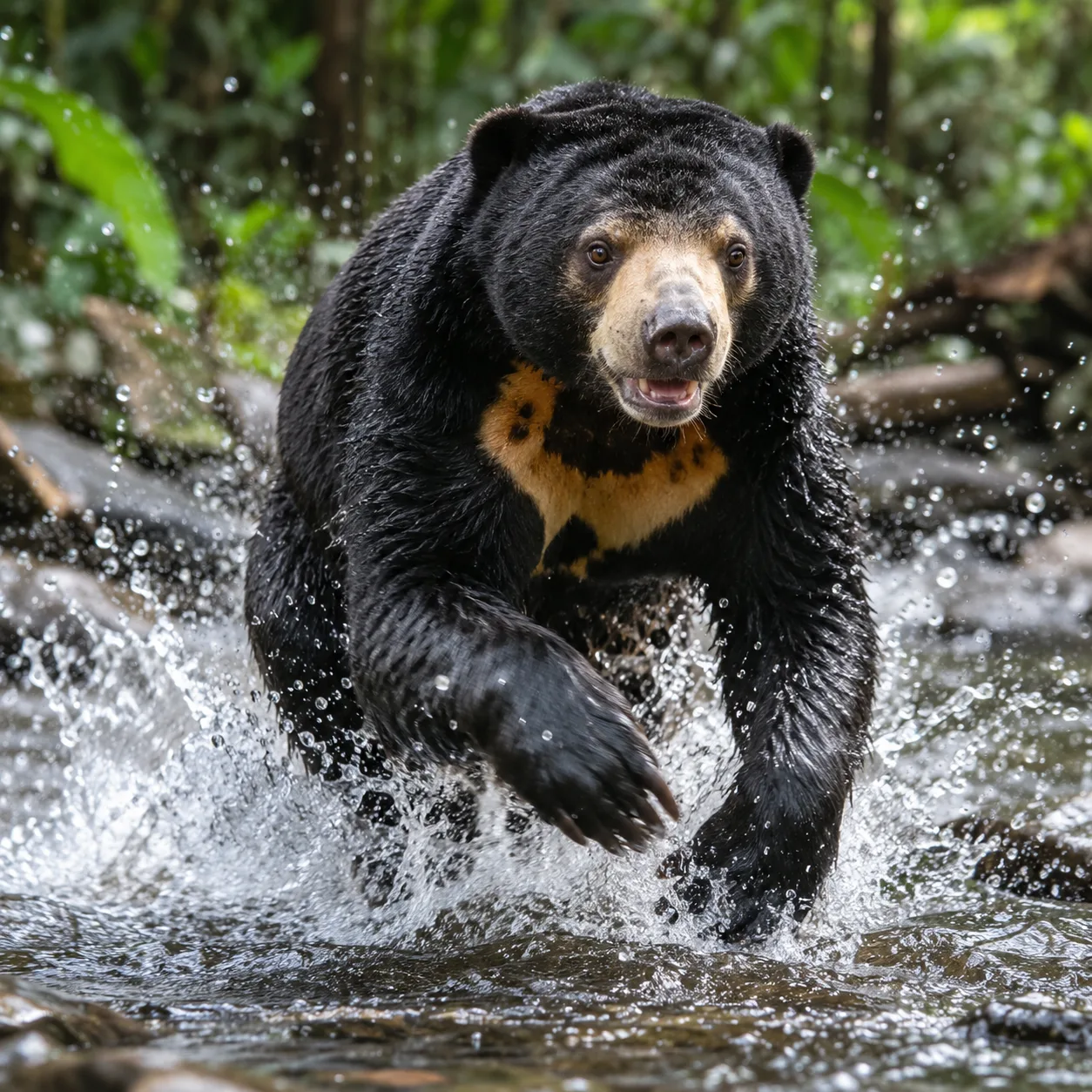
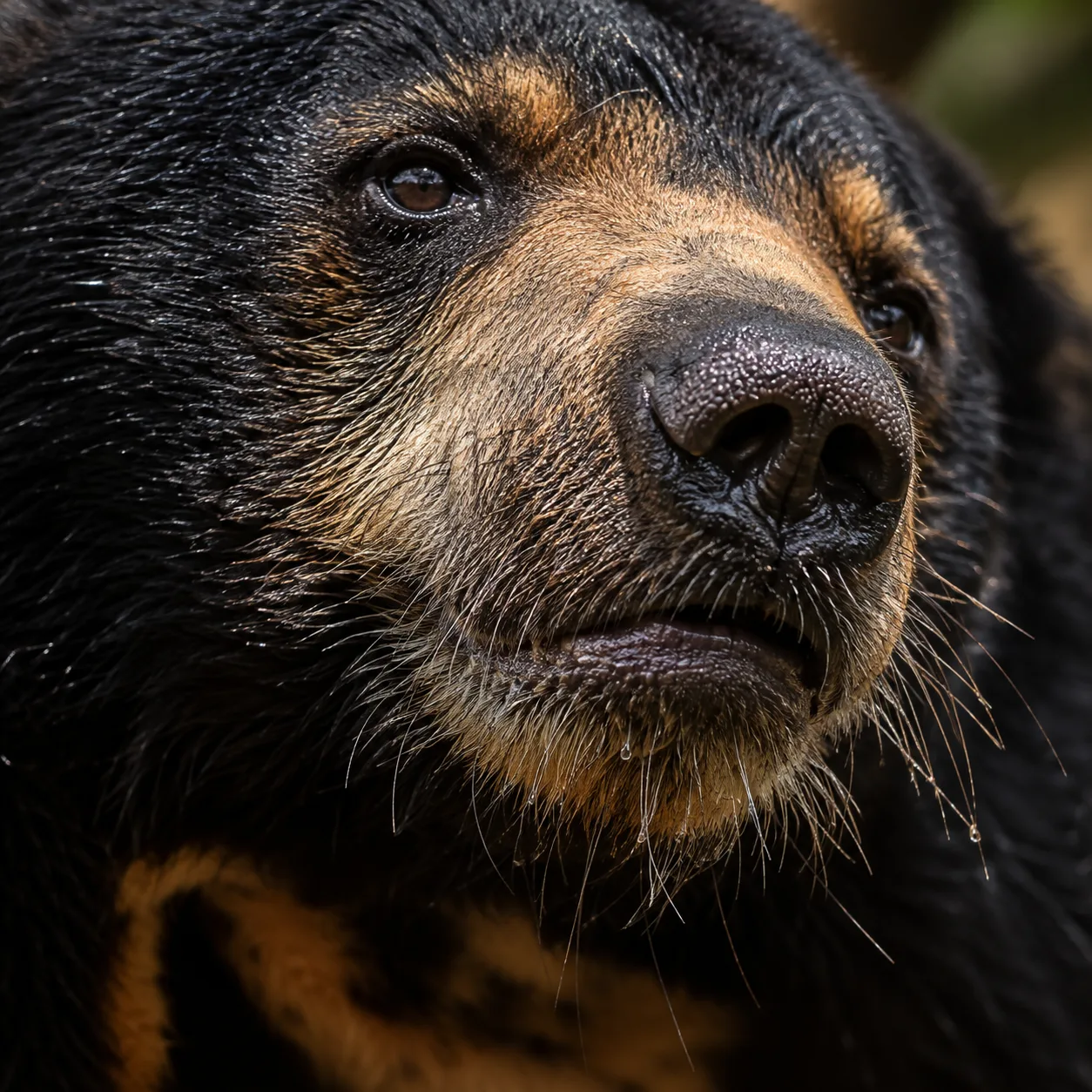
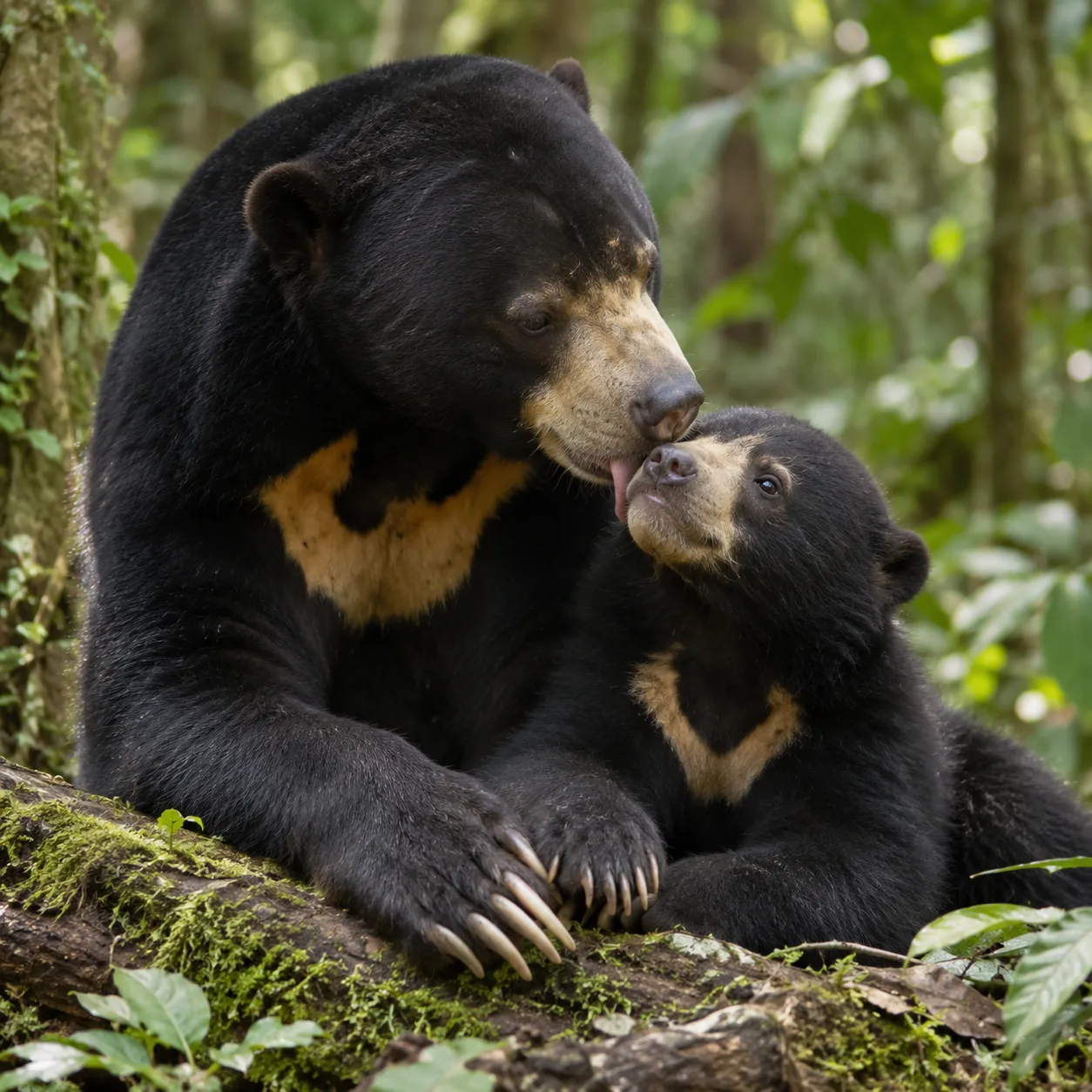
The smallest bear species, famous for the golden crest on its chest.
The Malayan sun bear (Helarctos malayanus malayanus) is the smallest bear species in the world, growing to only 1 to 1.5 meters (3.3 to 4.9 feet) in length and weighing between 25 and 70 kg (55 to 154 lbs).
Native to the dense tropical lowland and rainforests of Southeast Asia, these unique animals are adapted for an arboreal (tree-dwelling) lifestyle. Below is an overview of their key physical traits, behavior, and conservation status based on data from the IUCN Red List and wildlife organizations like WWF.
Key Facts and Classification
Scientific Name: Helarctos malayanus
IUCN Status: Vulnerable (Population Decreasing)
Diet: Omnivore (Insects, honey, fruit)
Lifespan: Up to 25–30 years in captivity
Distribution: Southeast Asia (Malaysia, Sumatra, Indochina)
Physical Characteristics
- Chest Patch: They feature a distinctive golden, yellow, or white crescent or U-shaped patch on their chest, which according to folklore resembles a rising sun. Each chest pattern is unique to the individual.
- Coat: Their fur is short, sleek, and jet-black, an adaptation to prevent overheating in hot tropical climates.
- Tongue and Claws: They possess an extremely long, slender tongue (up to 25–46 cm / 10–18 inches) and large, sickle-shaped front claws used to rip open hollow logs and extract honey and insects. Because of their love for honey, they are often nicknamed "honey bears".
Behavior and Ecology
- No Hibernation: Because they live in a warm tropical environment where food is available year-round, sun bears do not hibernate.
- Climbing Ability: They are exceptionally skilled and fast climbers, spending a significant amount of daytime hours resting, sunbathing, or building sleeping platforms high up in the trees.
- Activity Cycle: While traditionally considered nocturnal or cathemeral (active at any time of day or night), they often shift to nocturnal habits in areas with heavy human presence.
Threats and Conservation
- Deforestation: Rapid loss of primary tropical lowland forests for commercial logging and agriculture (such as palm oil plantations) destroys their natural habitat.
- Poaching: They are heavily targeted by illegal wildlife trade, hunted for local bushmeat, and exploited for the commercial bear bile trade used in traditional Asian medicine. Cubs are also frequently captured for the illegal pet trade after mothers are killed.
- Protection: Organizations like the Bornean Sun Bear Conservation Centre and international zoos work actively on rescue, rehabilitation, and public education to protect remaining wild populations.
- Group
- Bears