

Helmeted Guineafowl
Numida meleagris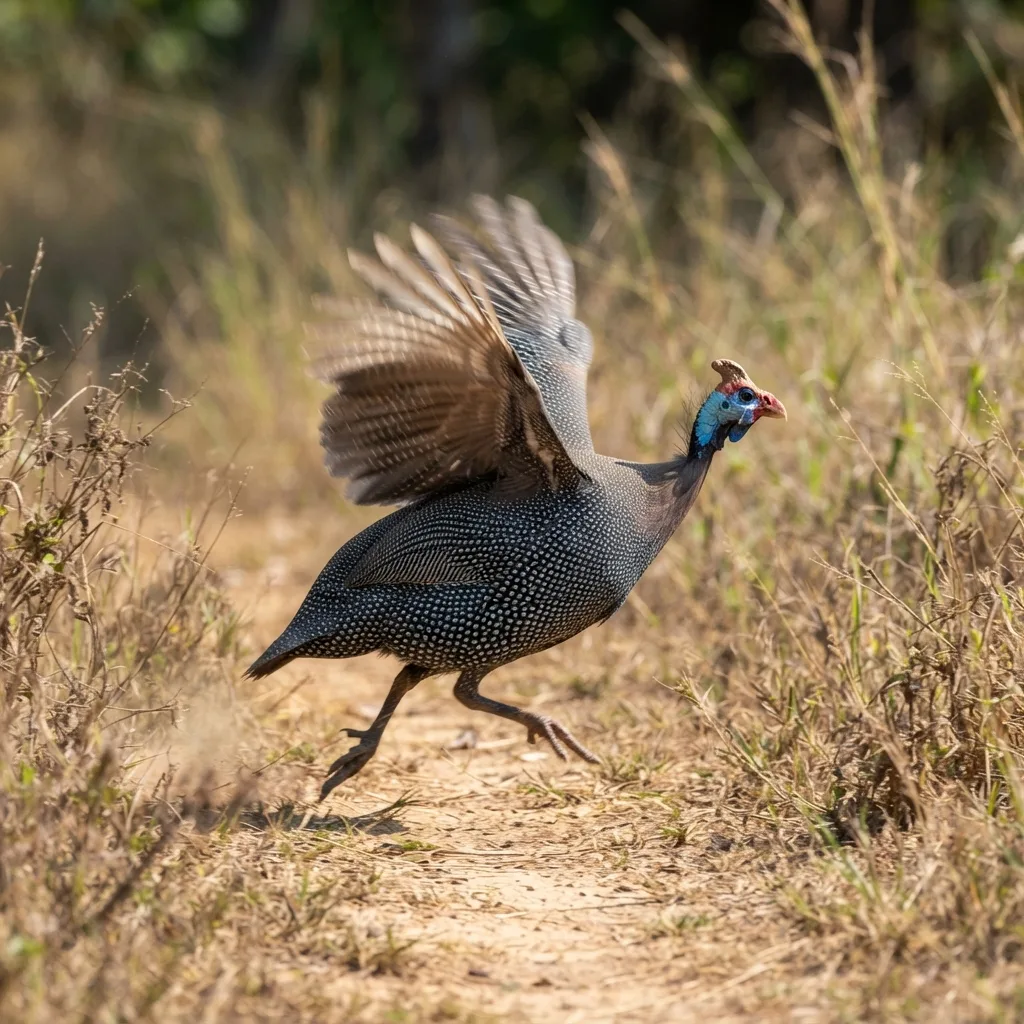
Other birds
walking on the ground with a large body, a lump of bones like a hat on its head
The helmeted guineafowl (Numida meleagris) is a large, stocky, ground-dwelling bird native to sub-Saharan Africa and famous for its distinctive bony head knob and dotted polka-dot plumage.
Physical Appearance
- Size: Measures 53 to 58 cm (21 to 23 in) long and weighs around 1.3 to 1.8 kg (2.9 to 4 lbs).
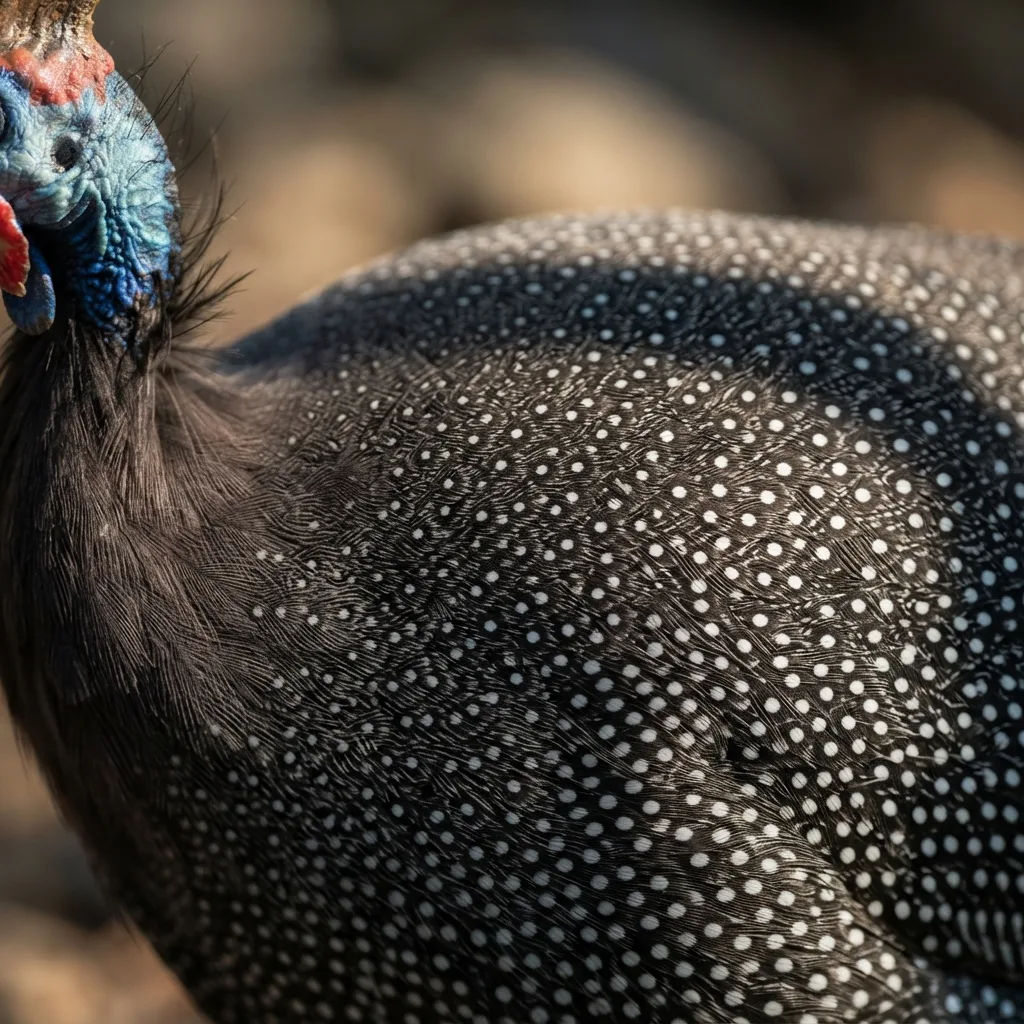
- Plumage: Covered in slate-grey or black feathers uniformly speckled with crisp white spots.
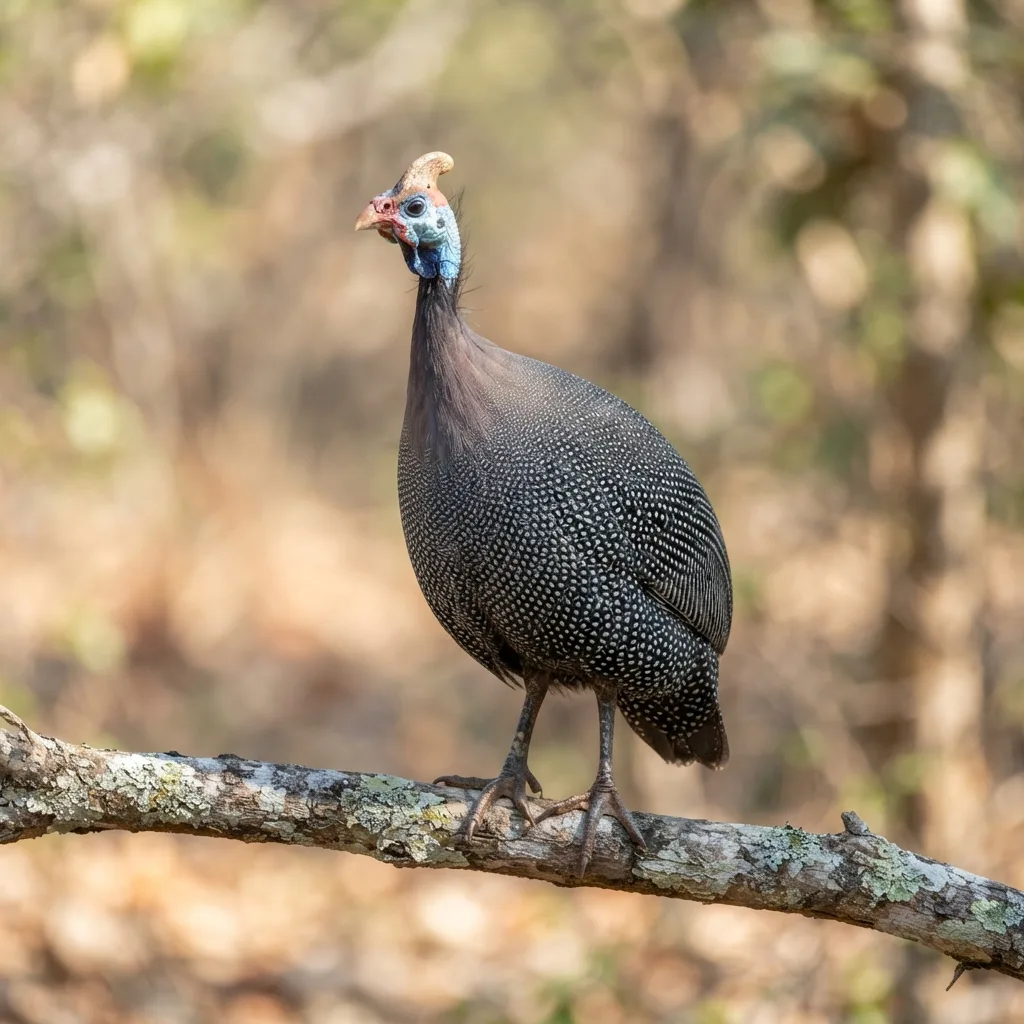
- Head: Unfeathered and bare, featuring blue or white skin, red-tipped wattles, and a dull yellow or brownish bony casque (helmet) on top.
Behavior and Lifestyle
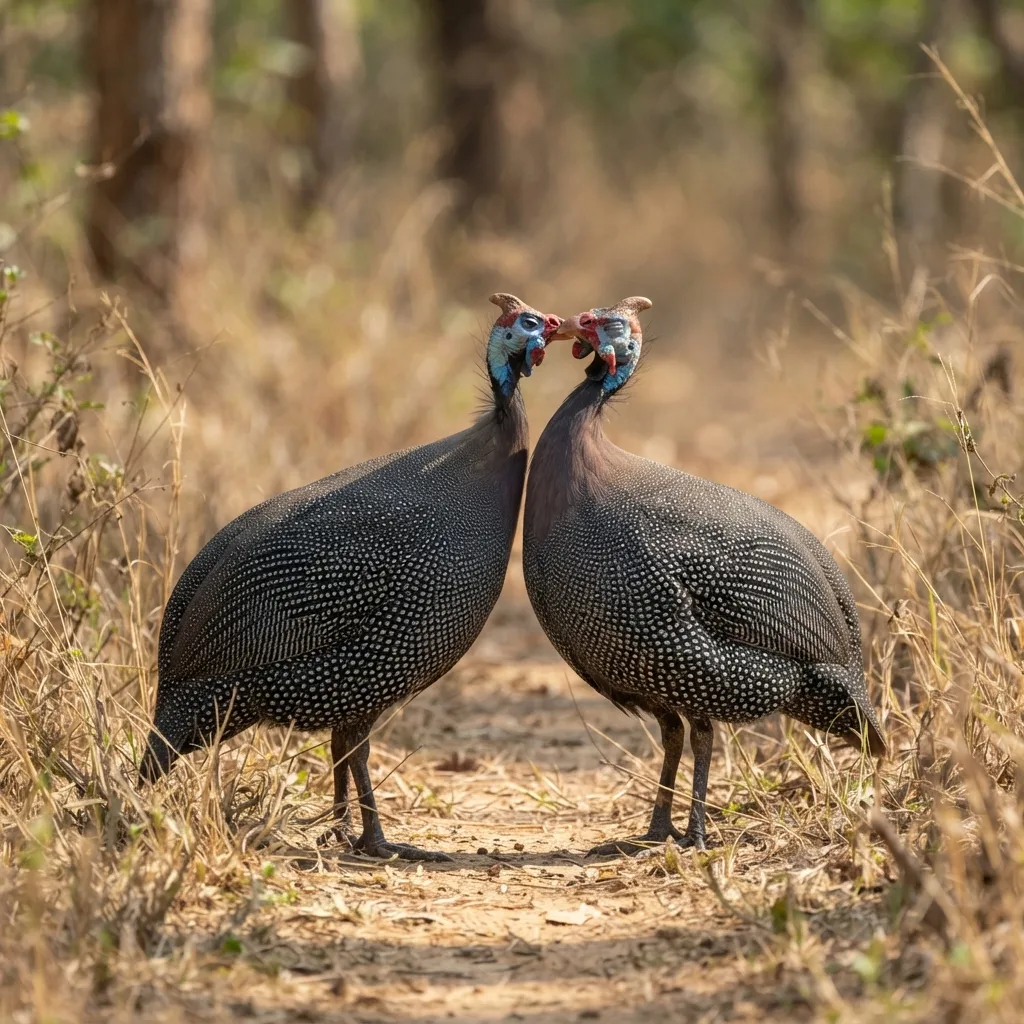
- Social: Highly gregarious birds that form tight-knit flocks ranging from 15 to 40 individuals outside the breeding season, sometimes numbering in the hundreds.
- Movement: Primarily terrestrial runners capable of hitting speeds up to 22 mph (35 km/h), choosing to run rather than fly unless startled into a short, explosive flight.
- Roosting: Fly up to safely roost in tall trees at night to evade ground predators.
- Vocalization: Known for a loud, harsh, and grating alarm call that sounds like "kek-kek-kek-kraaaaaaah", acting as a natural warning system.
Diet and Ecology
- Omnivorous: Forages on open ground by scratching the soil for seeds, bulbs, grasses, roots, spiders, scorpions, worms, and ticks.
- Agricultural Benefit: Often kept on farms as pest control because they eat large quantities of ticks, locusts, and other harmful insects.
Domestication and Distribution
- History: Domesticated originally by the ancient Romans and widely kept today for meat, eggs, and as vigilant "guard birds" that sound off at strangers.
- Global Spread: Feral and domesticated populations now exist across the West Indies, North America, South America, Australia, and Europe.
- Group
- Other birds