

Porcupine Crested
Hystrix cristata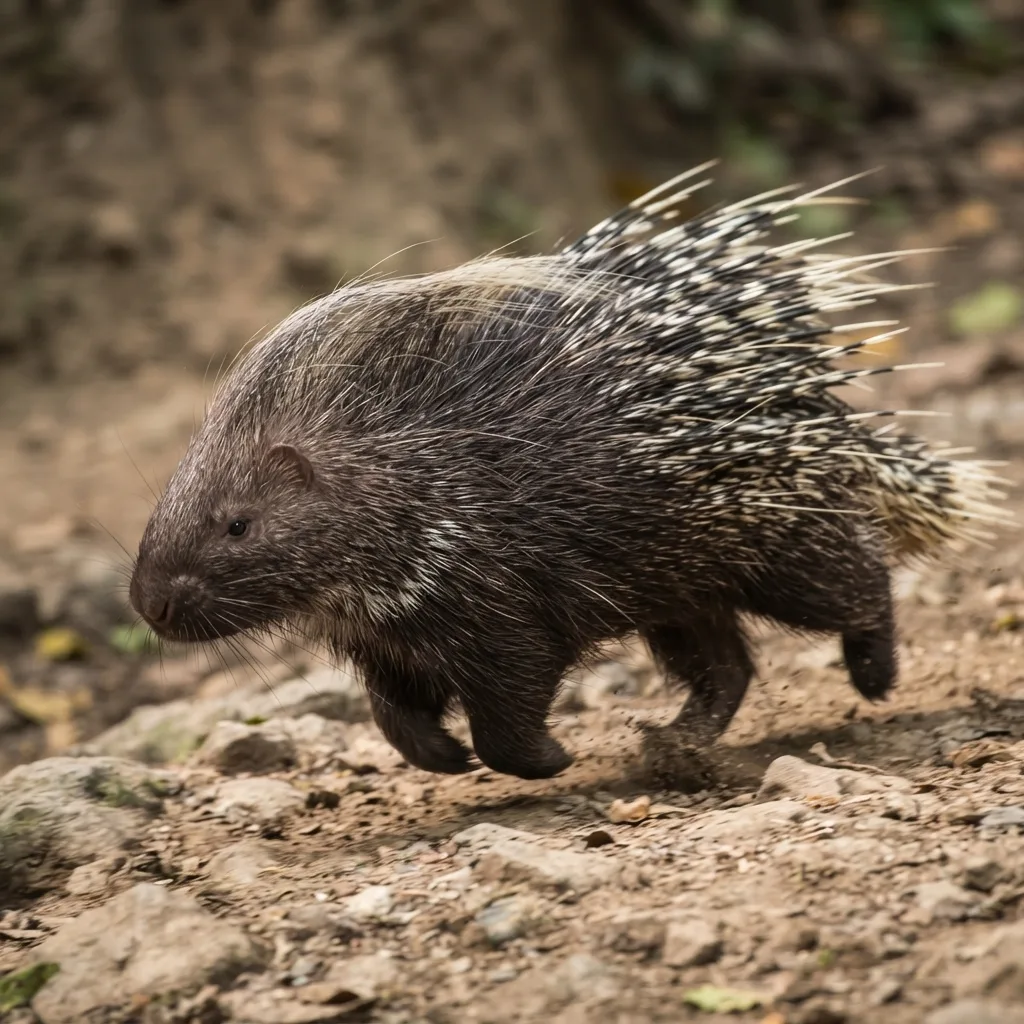
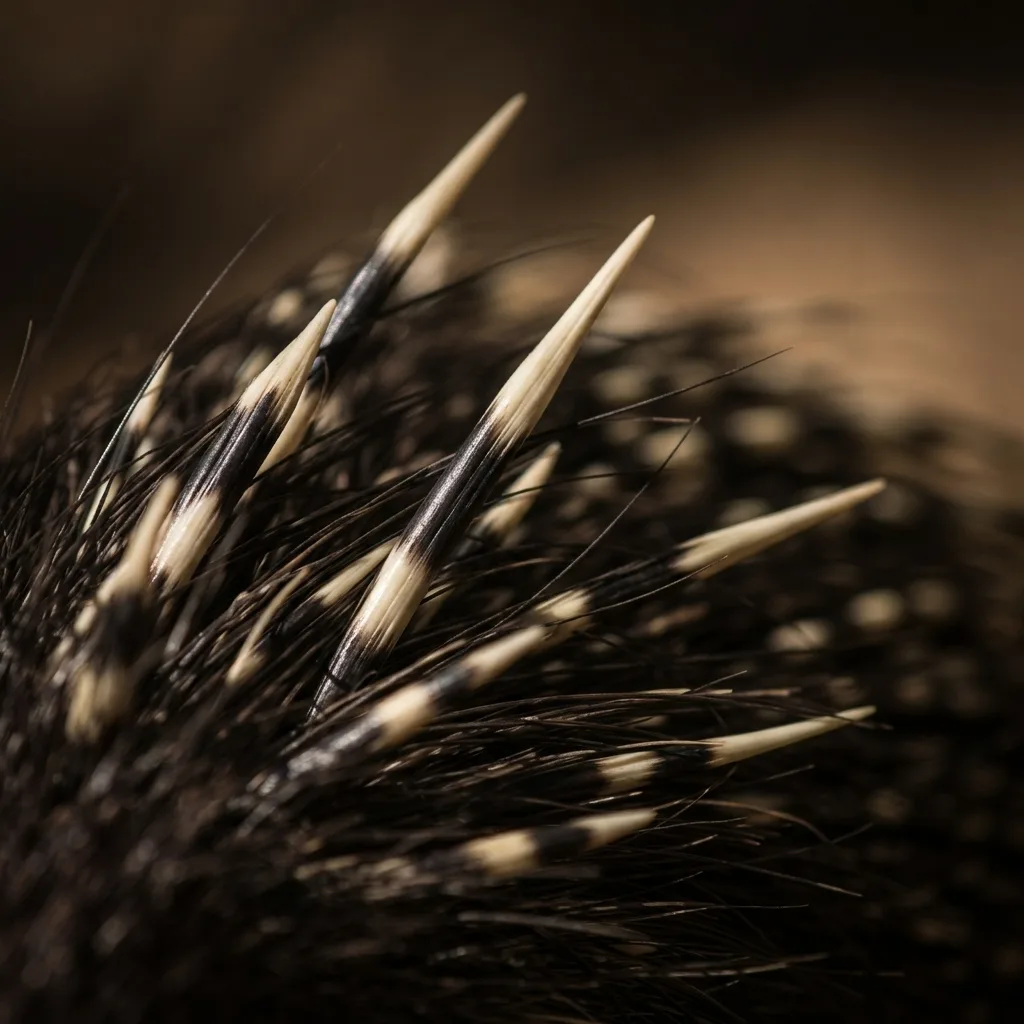
largest rodent has long white and black spiny feathers growing vertically
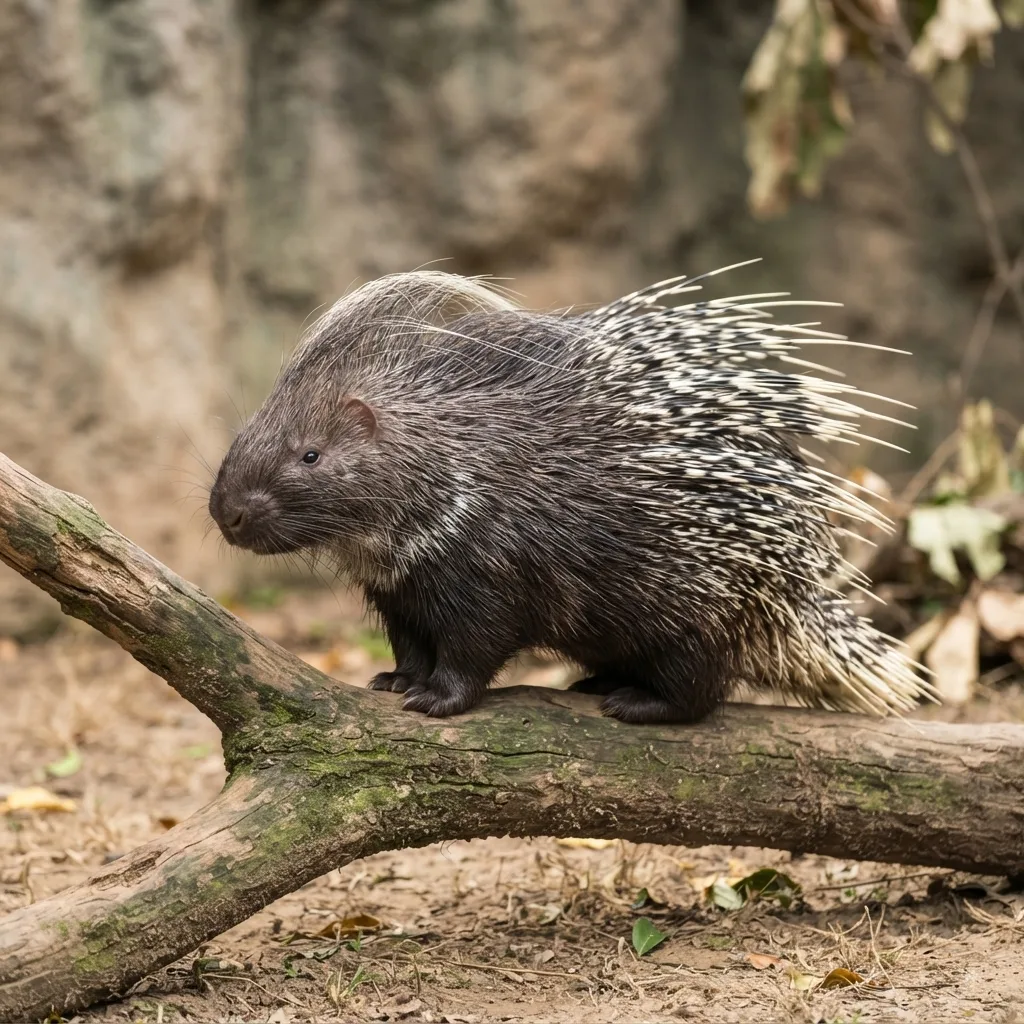
The crested porcupine (Hystrix cristata) is the largest rodent in Africa and the only porcupine species native to Europe. Notable for its striking mohawk-style crest of black-and-white spines, this nocturnal mammal is highly adapted to life on the ground across sub-Saharan Africa, North Africa, and parts of Italy.
Physical Characteristics
- Size and Weight: They typically weigh between 13 to 27 kilograms (30 to 60 lbs) and grow up to 60 to 91 centimeters long.
- The Crest: Coarse bristles run along the head, nape, and back, which can be raised into an intimidating crest.
- The Quills: Their bodies are covered in sturdy, banded quills reaching up to 35 cm in length. Unlike New World porcupines, their quills are smooth-tipped and unbarbed.
- Rattle Tail: The end of the tail features short, hollow "rattle quills".
Behavioral Mechanics & Defense
Crested porcupines cannot shoot their quills. Instead, they rely on a powerful three-tier defense system when threatened:
- Visual Warning: They raise and fan their quills to make themselves look twice their size.
- Auditory Warning: They stomp their feet and shake their tails, vibrating the hollow quills to create a loud, hiss-like rattle.
- Physical Attack: If a predator (like a lion or leopard) continues to bother them, they charge backward or sideways, slamming their thick defensive quills into the attacker.
Diet and Lifestyle
- Diet: Primarily herbivorous, they eat roots, tubers, bulbs, bark, and fallen fruits.
- Bone Collectors: Crested porcupines regularly collect and gnaw on animal bones. This behavior provides essential calcium and helps wear down their ever-growing incisor teeth.
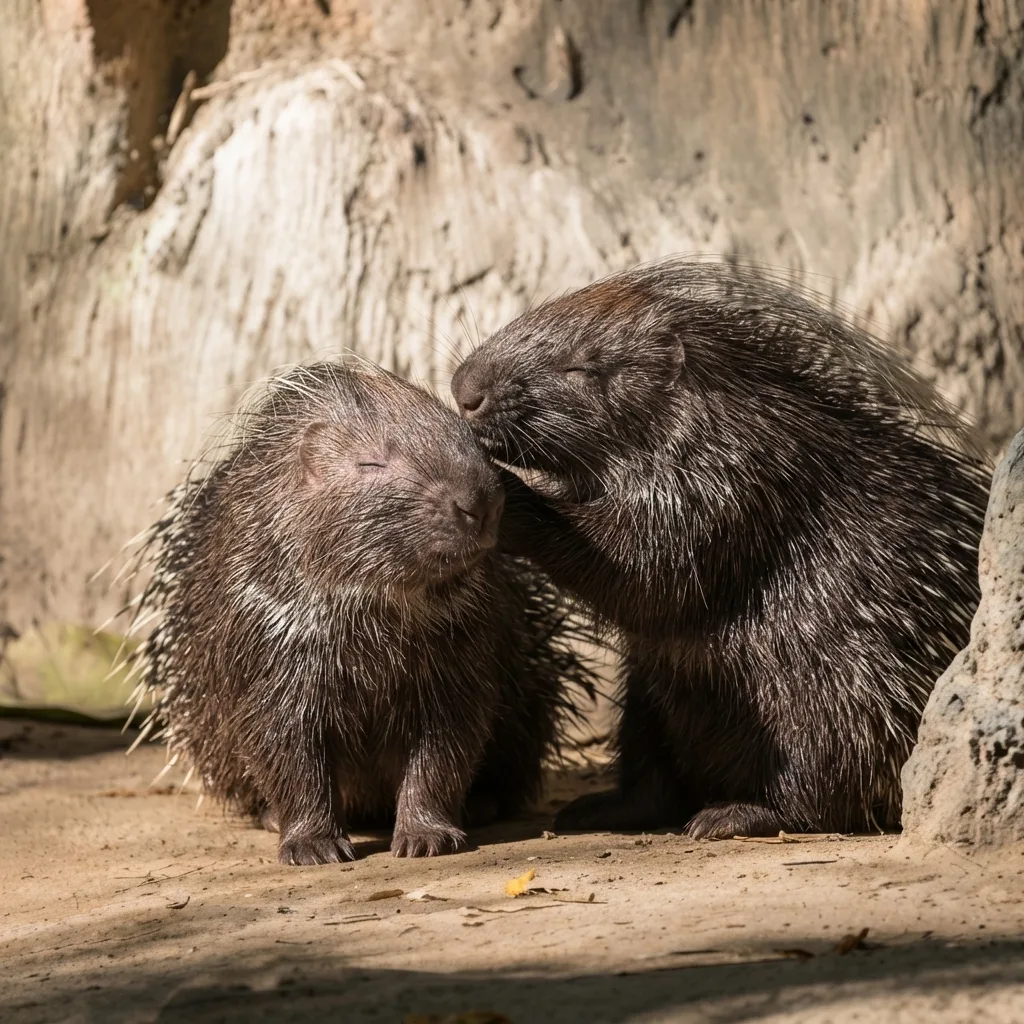
- Social Structure: They are monogamous and live in small, tightly-knit family groups within underground burrows or rock crevices.
Conservation Status
They are currently classified as Least Concern on the IUCN Red List. However, they face heavy pressure from local farmers who treat them as agricultural pests due to their crop-raiding habits.
- Group
- Small mammals