

Purple-Bellied Lory
Lorius hypoinochrous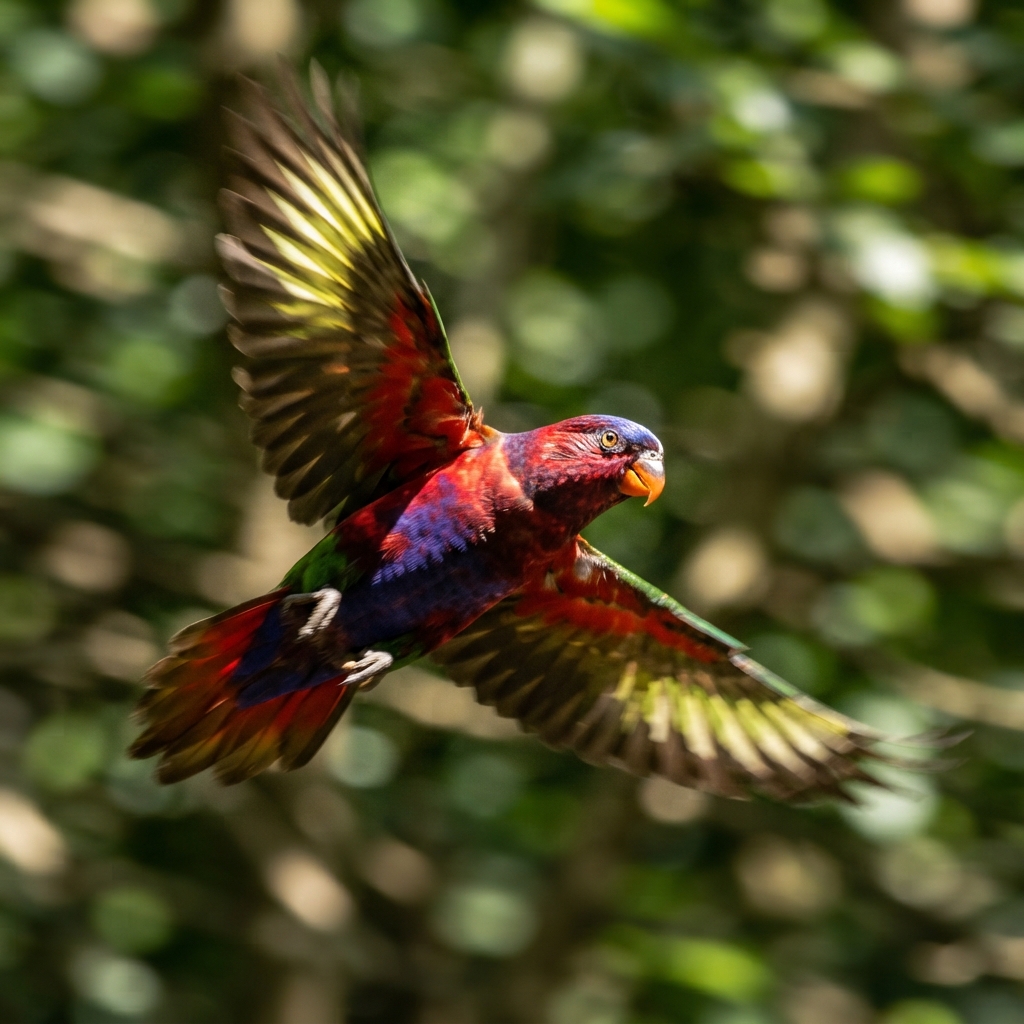
Parrots & cockatoos
The short-tailed and thick-bodied parrot is of the Psittaculidae genus.
The purple-bellied lory (Lorius hypoinochrous) is a thick-set, short-tailed parrot species in the family Psittaculidae that is endemic to Papua New Guinea.
Physical Characteristics
- Size and Weight: Measures about 26–27 cm (10–11 in) in length and weighs approximately 137–240 grams.
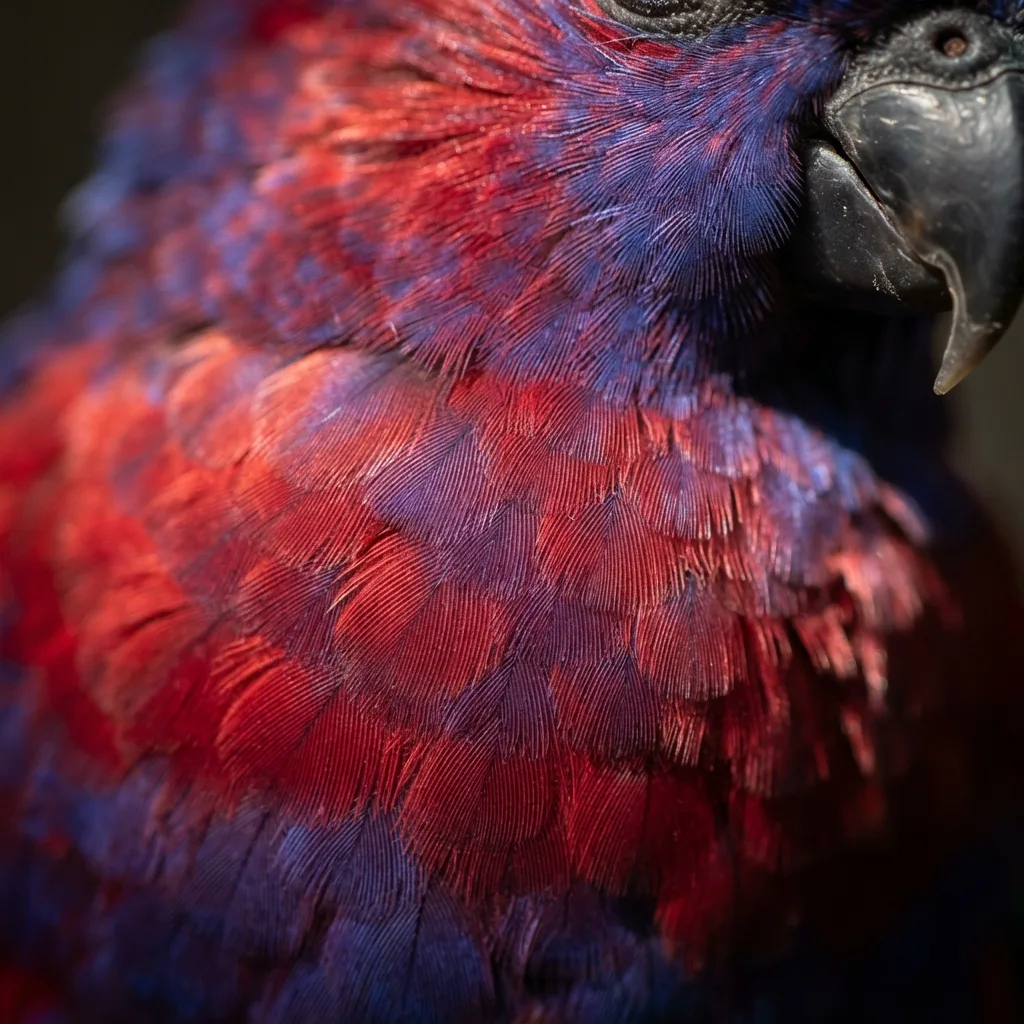
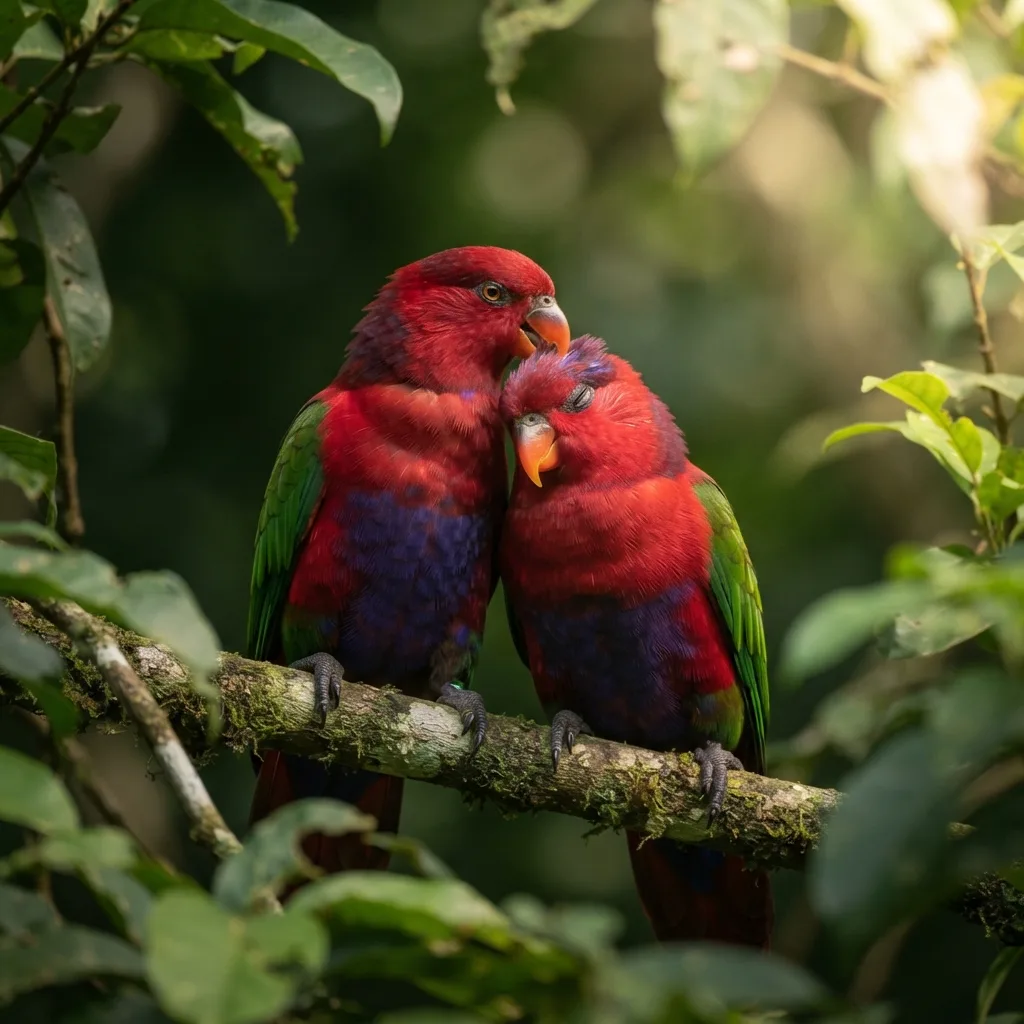
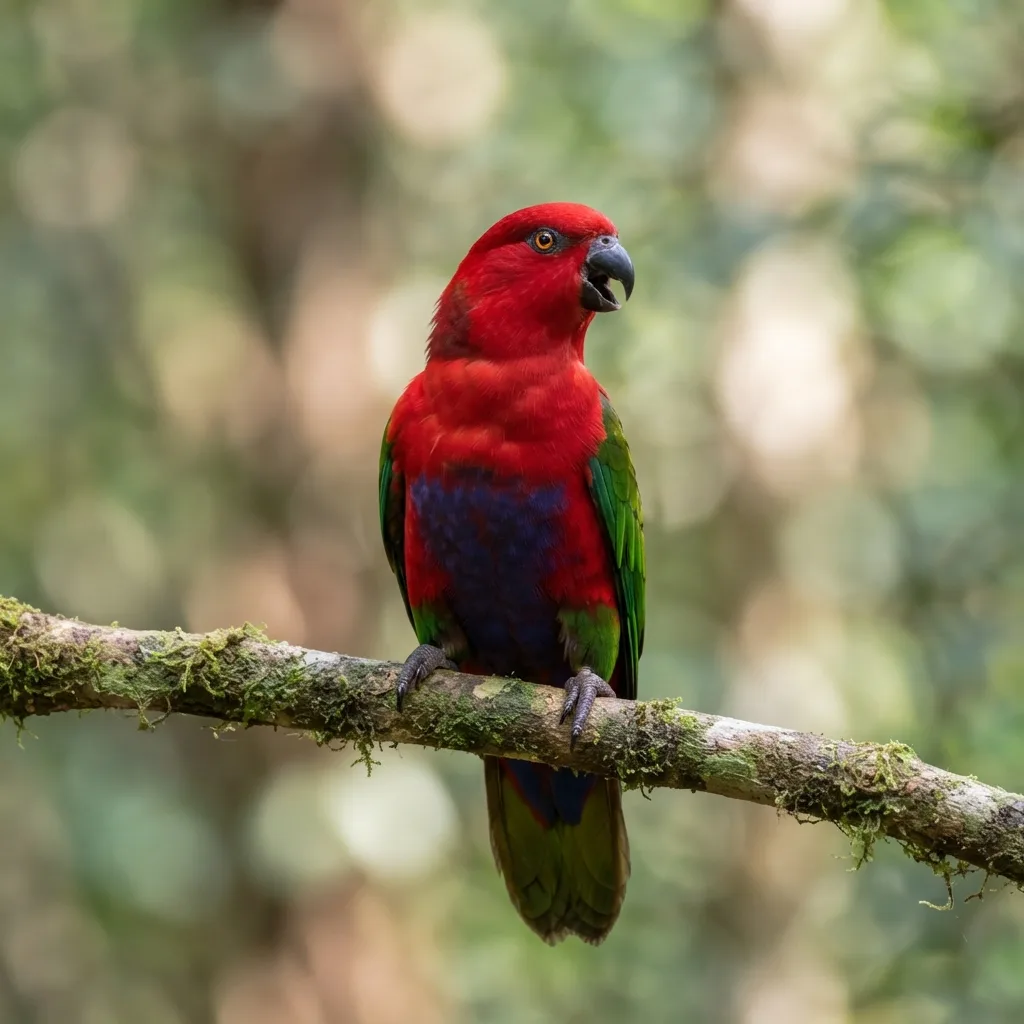
- Plumage: Mostly bright red with a striking black cap or crown on top of the head, green wings, and a deep purple or dark red-wine lower belly, vent, and thighs.
- Tail and Beak: Features a red tail widely tipped with dark blue-green, an orange-red iris, and a white cere. Juveniles can be told apart by a brownish bill.
- Subspecies: Includes three recognized subspecies (L. h. hypoinochrous, L. h. rosselianus, and L. h. devittatus) that exhibit minor variations in breast shade and underwing markings.
Habitat and Distribution
- Geographic Range: Found exclusively across regions of Papua New Guinea, including south-east New Guinea, the Bismarck Archipelago, the d'Entrecasteaux Islands, the Louisiade Archipelago, the Trobriand Islands, and Woodlark Island.
- Natural Environment: Inhabits subtropical or tropical moist lowland forests, mangrove forests, and moist montane forests, and frequently ventures into coconut plantations.
Behavior and Diet
- Diet: Like other lories and World Parrot Trust, it possesses a brush-tipped tongue specialized for gathering nectar, pollen, and soft fruits.
- Vocalizations: Known for a distinctively nasal, mournful, and harsh calling sound often described as “eee-arrr”.
- Conservation Status: Evaluated as Least Concern by the BirdLife DataZone with a stable population trend, though it is rarely seen in mainstream aviculture compared to other lory species.
- Group
- Parrots & cockatoos