

Sika Deer
Cervus nippon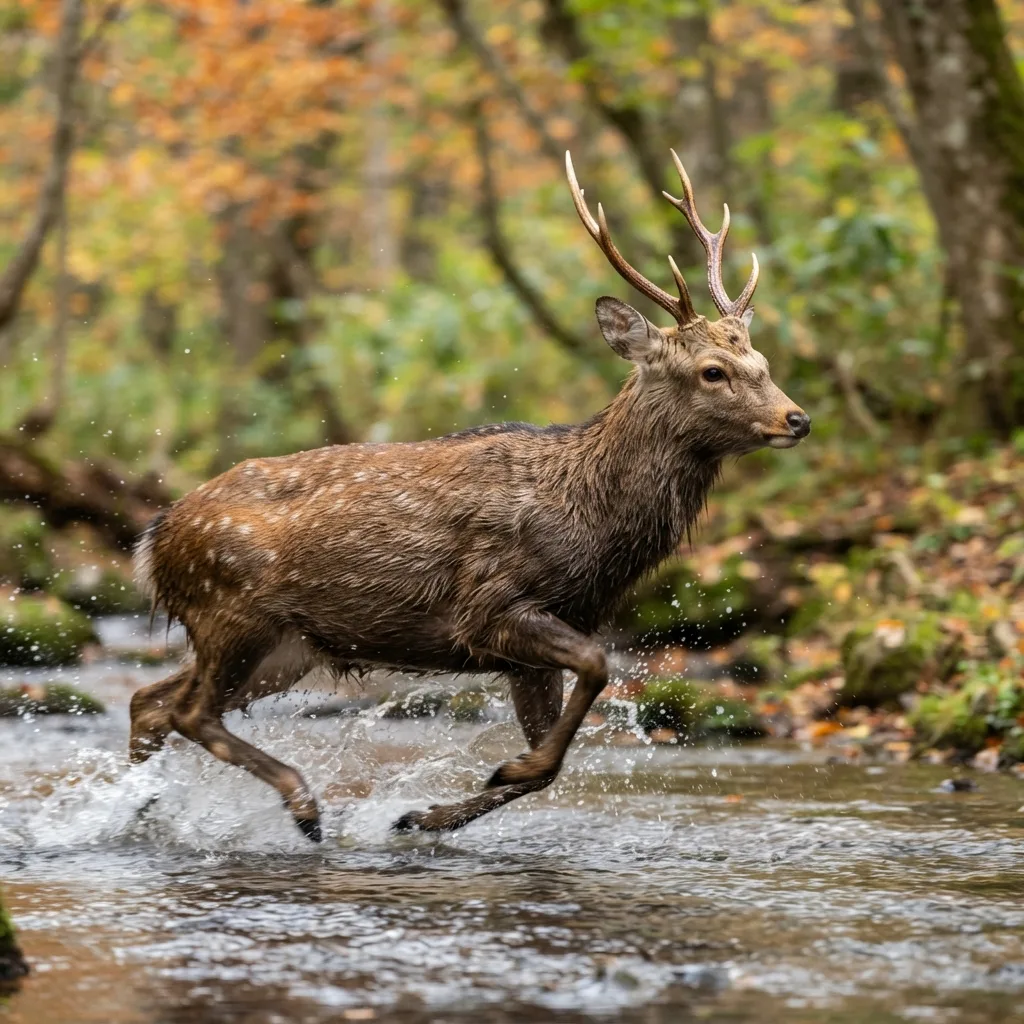
Large hoofed animals
Medium deer of East Asian descent
The sika deer (Cervus nippon), also known as the Japanese deer or northern spotted deer, is a compact, medium-sized species of deer native to East Asia that has been widely introduced around the world. Known for their vocal nature and adaptability, they are sometimes called "Asian mini-elk" because they belong to the same genus (Cervus) as the American elk and red deer.
Physical Characteristics
- Size: 50 to 110 cm (20 to 45 inches) tall at the shoulder, with considerable sexual dimorphism where males (stags) are noticeably larger than females (hinds). Weights range from 30 to 40 kg (70–90 lb) in smaller Japanese females up to over 100 to 170 kg (220–370 lb) in larger northern subspecies.
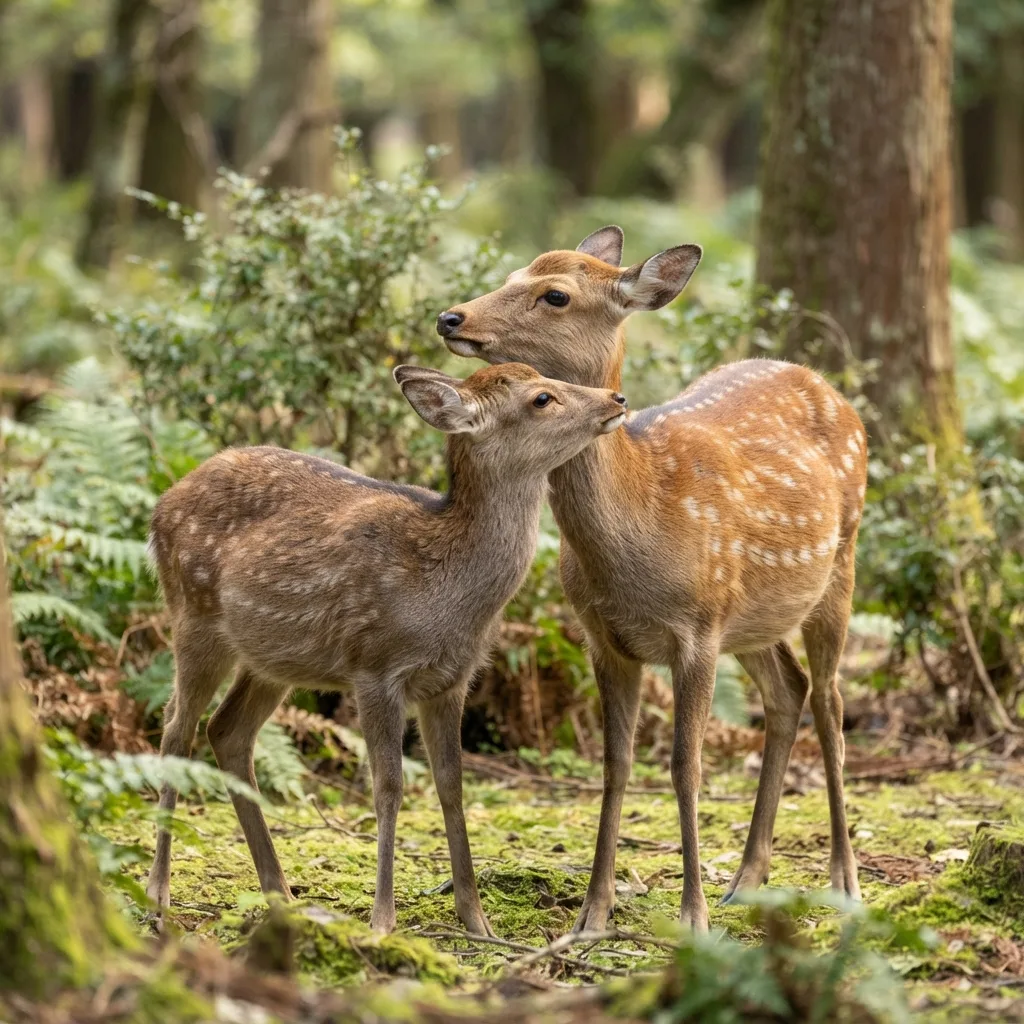
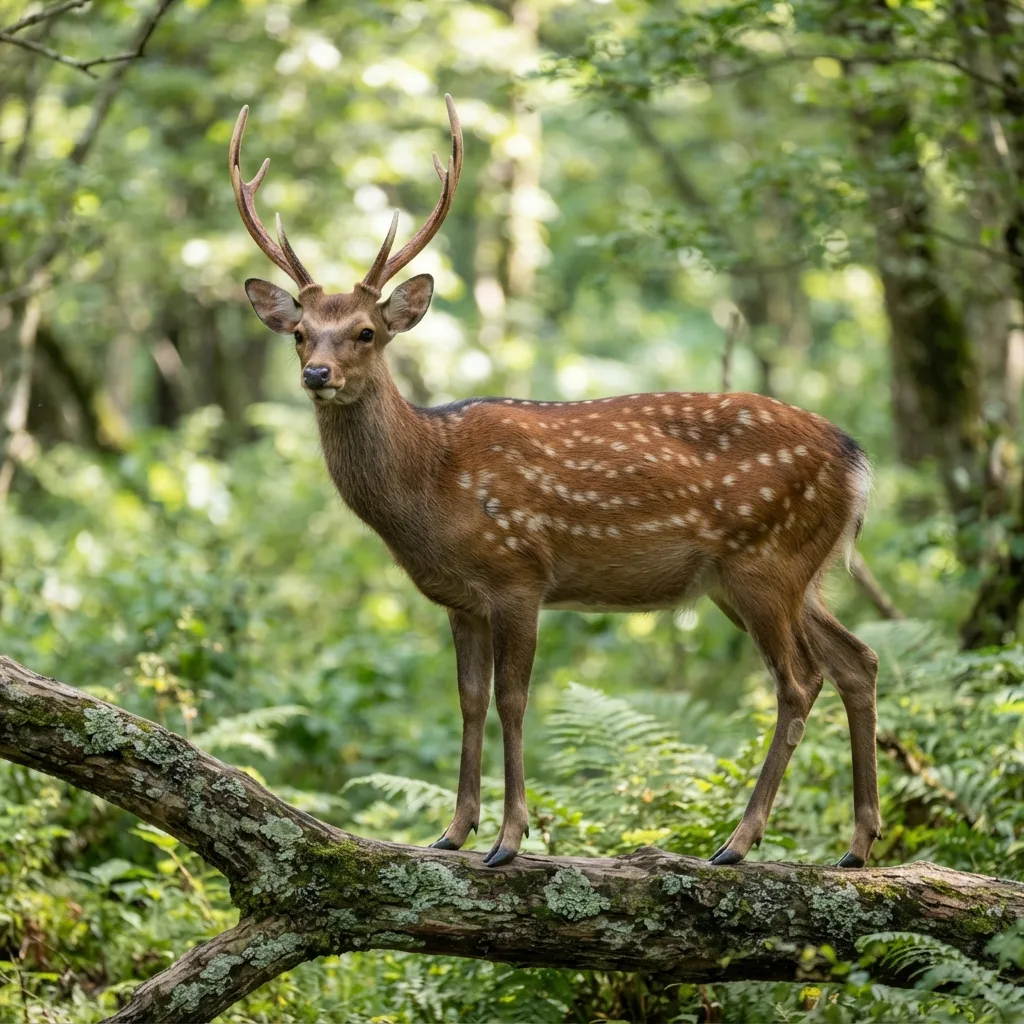
- Coat (Summer): Rich chestnut-red or yellowish-brown pelage marked with distinctive white spots resembling plum blossoms, giving them their Chinese name (méihuālù).
- Coat (Winter): Fades to a drab, darker grey-brown or blackish color where spots become faint or disappear entirely, and males develop a noticeable neck mane.
- Rump Patch: Features a prominent white or heart-shaped rump patch bordered by black hair, which flares outward when the animal is alarmed.
- Antlers: Carried only by stags; these are stout, upright, and branched (typically 3 to 4 points per beam, maxing out around 8 points), lacking the palmate (flat) growth seen in fallow deer.
Habitat and Distribution
- Native Range: Temperate and subtropical forests, dense underbrush, and woodland edges across Japan, parts of China, the Russian Far East, and Korea.
- Introduced Range: Established feral and wild populations exist in parts of Europe (such as the United Kingdom and France), New Zealand, and the United States (notably Maryland's Eastern Shore and parts of Texas).
- Invasive Concern: In regions like the UK and Europe, sika deer are considered damaging invasive species because they outcompete native deer and hybridize dangerously with native red deer populations.
Behavior and Ecology
- Social Structure: Crepuscular and most active at dawn and dusk. For most of the year, males and females remain segregated—stags live singly or in bachelor groups, while hinds live in small family groups.
- Vocalizations: Exceptionally vocal, possessing a repertoire of at least 10 distinct calls, including soft whistles, bleats, and a loud multi-pitched wail or "bugle" made by stags during the autumn rut.
- Diet: Flexible herbivores primarily feeding on grasses, sedges, leaves, shoots, forest browse, and agricultural crops.
- The Nara Deer: In Nara Park, Japan, sika deer roam freely and are protected as sacred national treasures and messengers of Shinto gods; some have even learned to dip their heads or "bow" when interacting with visitors offering special crackers.
- Group
- Large hoofed animals