

Woolly Necked Stork
Ciconia episcopus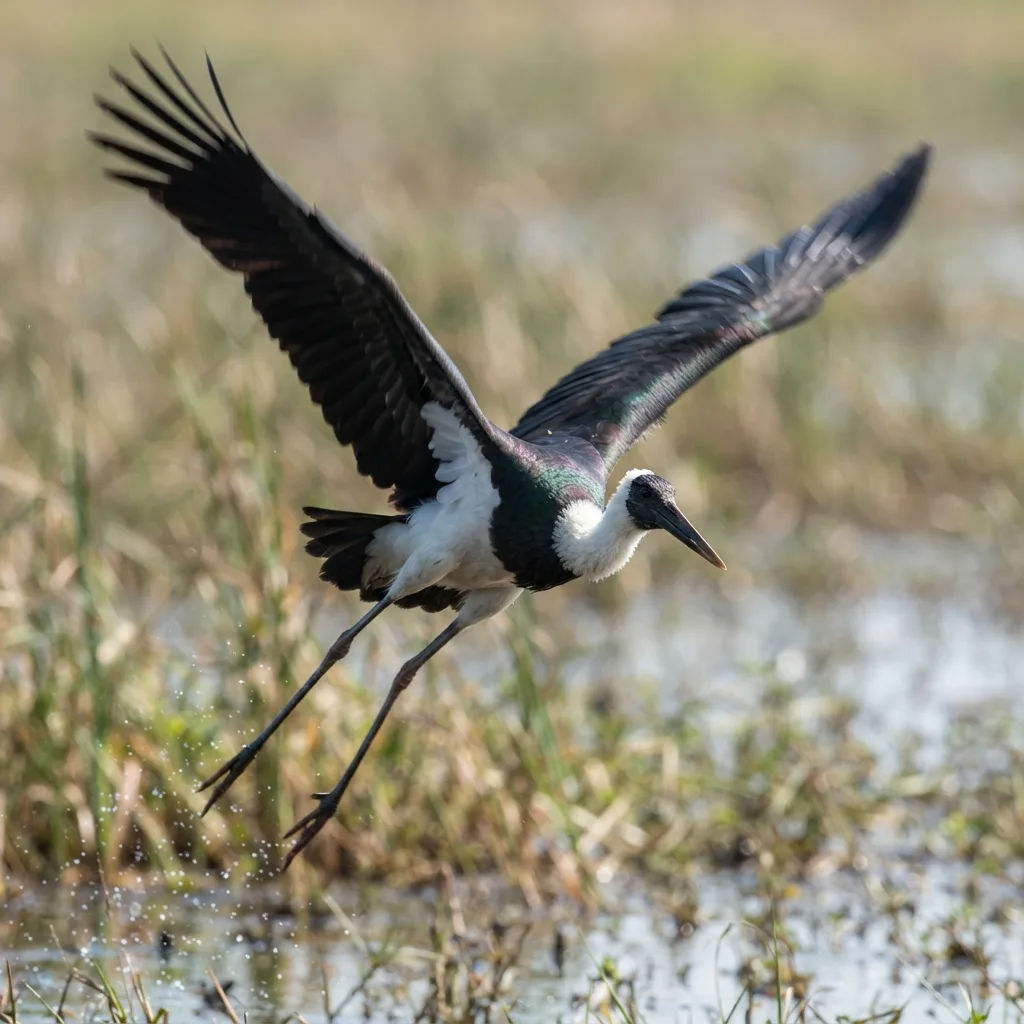
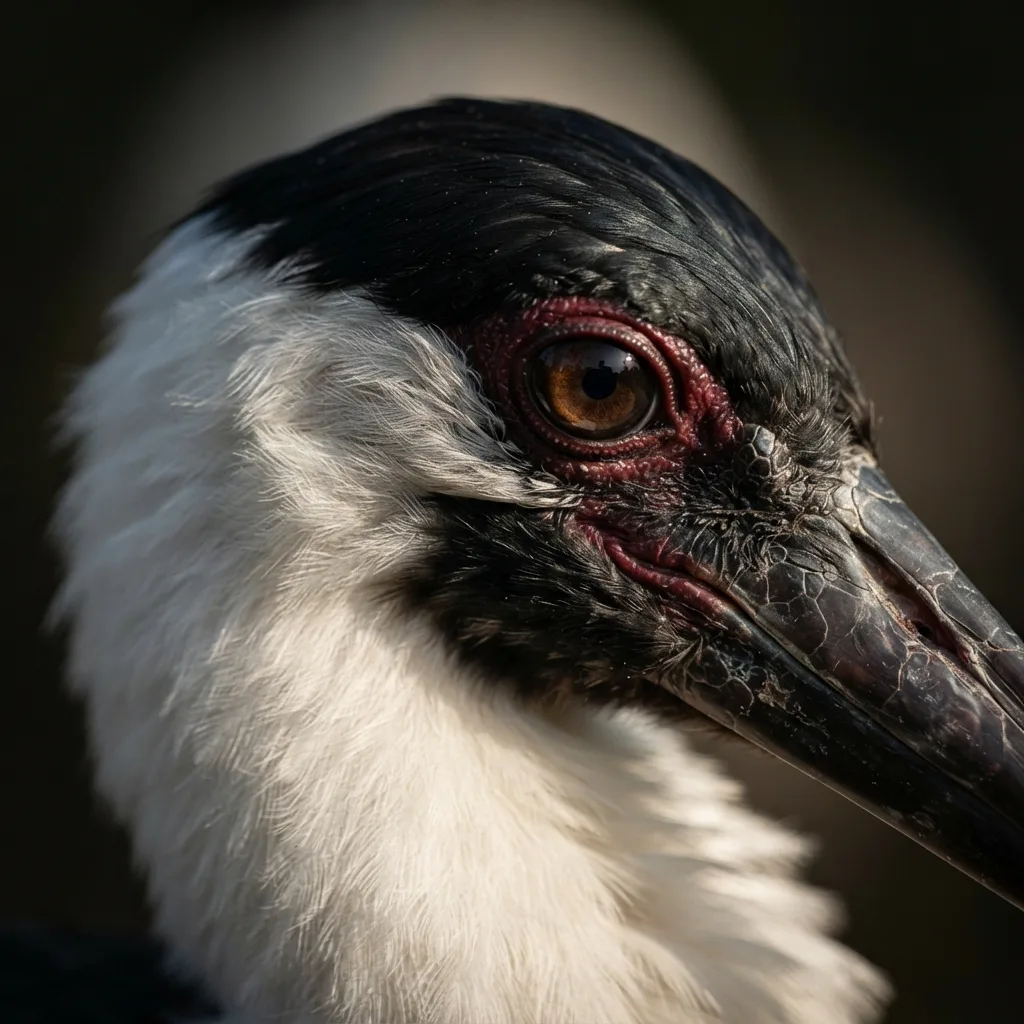

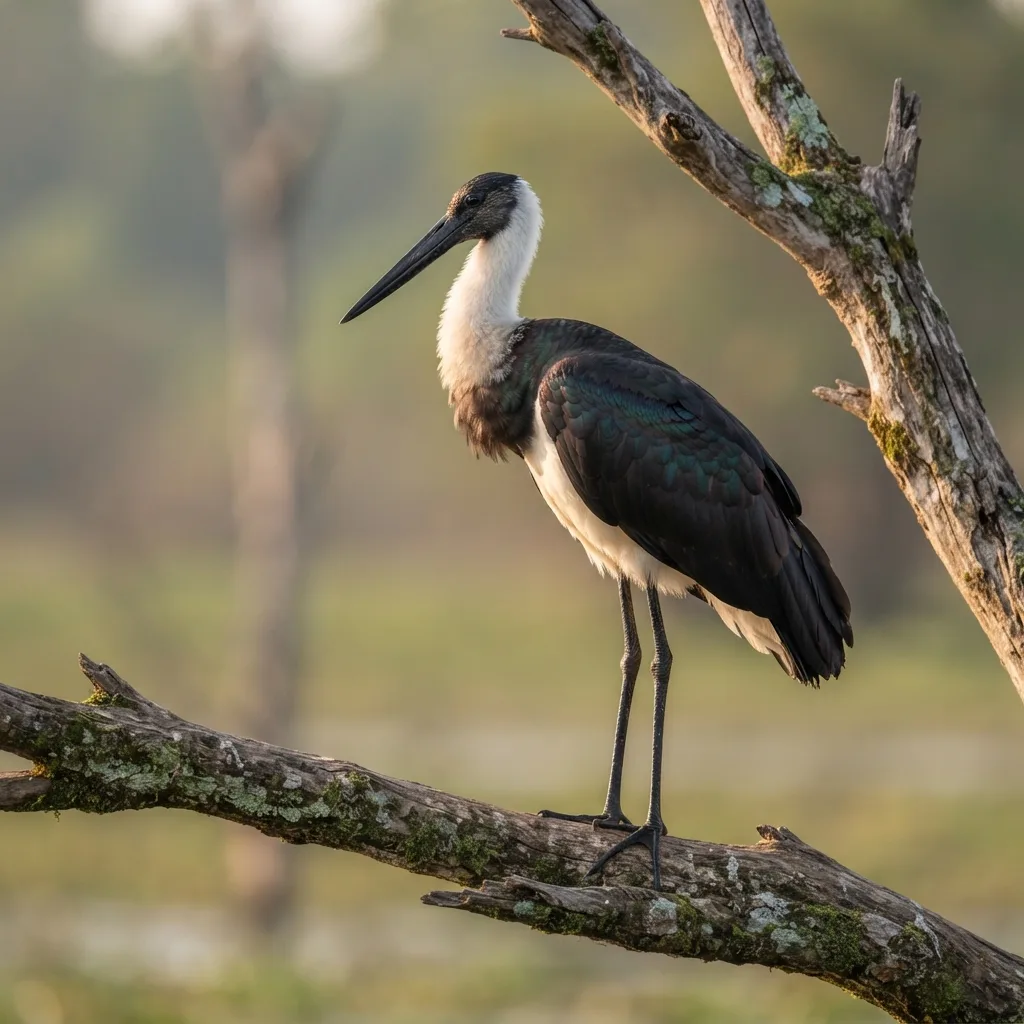
Black body, smooth and dull, mixed with white belly and soft white feather
The woolly-necked stork is a large wading bird known for its distinct glistening black-and-purple body, white belly, and fluffy, downy-white neck that gives it its name. Taxonomically, the bird has been split into two distinct species: the Asian Woolly-necked Stork (Ciconia episcopus) and the African Woolly-necked Stork (Ciconia microscelis).
🗺️ Species & Regional Differences
While both species share a similar physical stature—measuring roughly 75 to 92 cm tall with wine-red eyes—their ecological preferences and global populations vary significantly:
- Asian Woolly-necked Stork (Ciconia episcopus): Classified globally as Near Threatened. In South Asia (especially India), they are thriving by heavily utilizing agricultural fields, wetlands, and even urban cell towers. However, in Southeast Asia, their populations are severely declining or facing local extinction due to heavy deforestation and hunting.
- African Woolly-necked Stork (Ciconia microscelis): Evaluated as Least Concern. Widespread across sub-Saharan Africa, these birds have recently adapted well to urban landscapes in places like South Africa, frequently utilizing suburban gardens and mudflats.
🪶 Behavior and Diet
Woolly-necked storks are typically solitary hunters or forage in small family groups. They walk slowly across shallow wetlands, flooded grasslands, and agricultural landscapes to ambush prey. They are carnivorous, feeding primarily on invertebrates, fish, frogs, snakes, and large insects.
🥚 Breeding
Both species are monogamous and build large, permanent stick platforms high up in tall forest trees or cliffs. A mating pair usually lays 2 to 5 eggs, and both parents share the responsibilities of incubation and feeding the chicks through regurgitation.
- Group
- Storks & cranes