

Asian Palm Civet
Paradoxurus hermaphroditus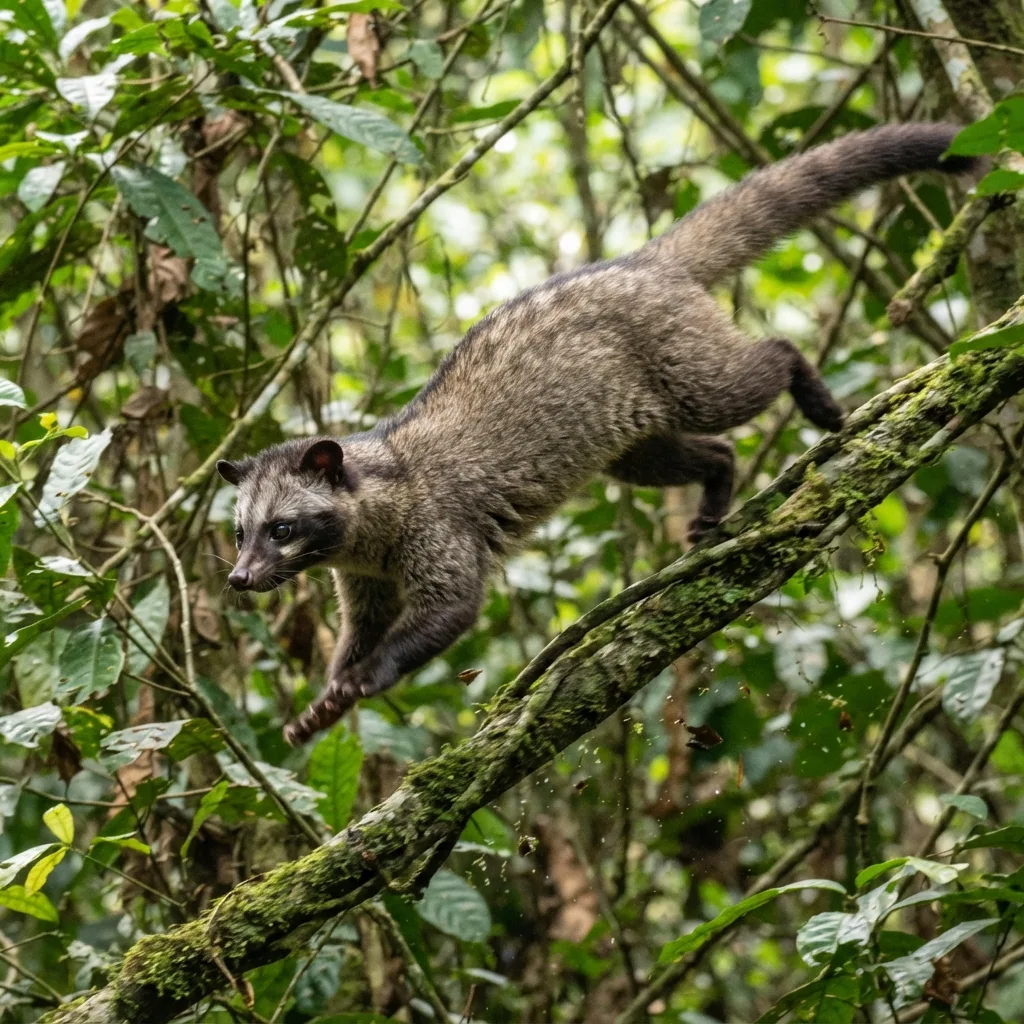
小型哺乳动物
A cat-sized mammal belonging to the Viverridae genus
The palm civet (most notably the Asian palm civet, Paradoxurus hermaphroditus) is a small, cat-sized mammal belonging to the family Viverridae, native to South and Southeast Asia—including Cambodia, India, and Indonesia—as well as parts of Africa (represented by the African palm civet).
Despite their cat-like or raccoon-like appearance, palm civets are feliform carnivorans more closely related to mongooses and hyenas than to domestic cats.
Physical Characteristics
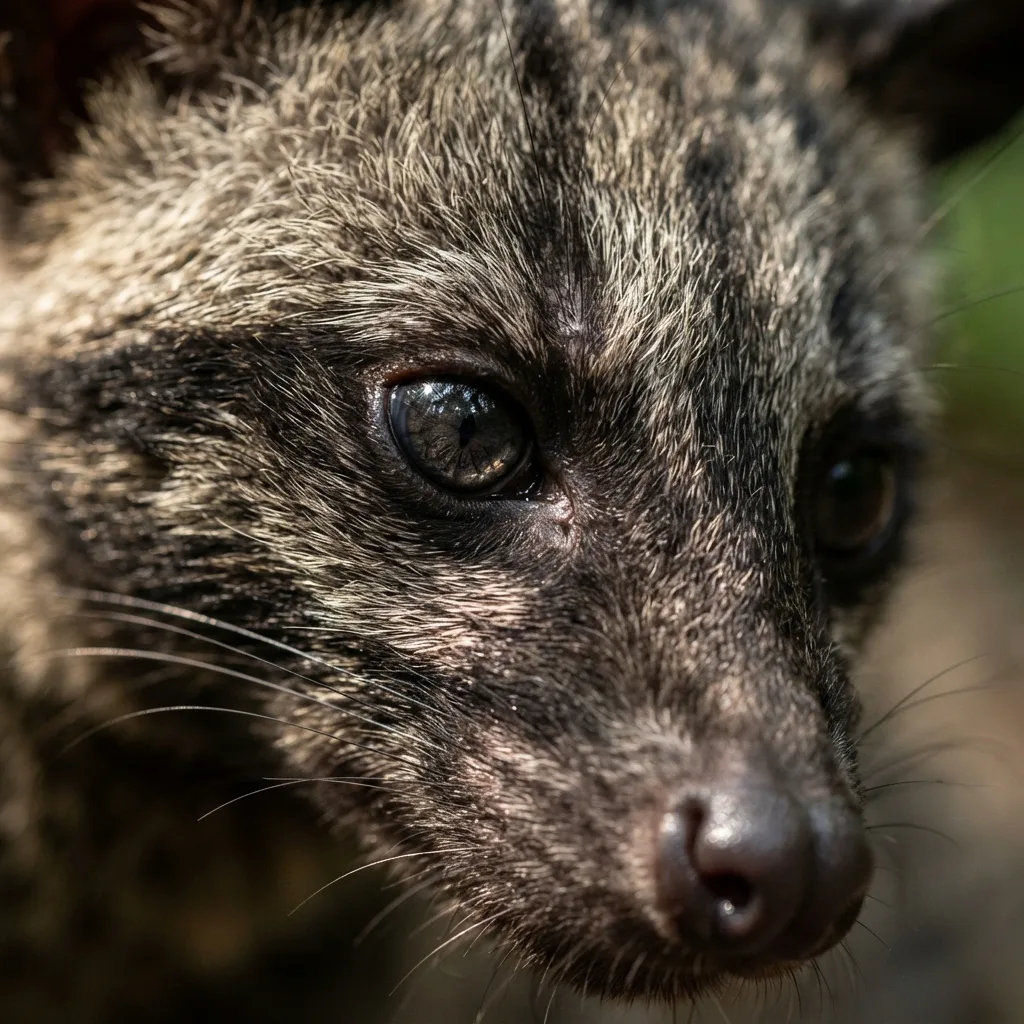
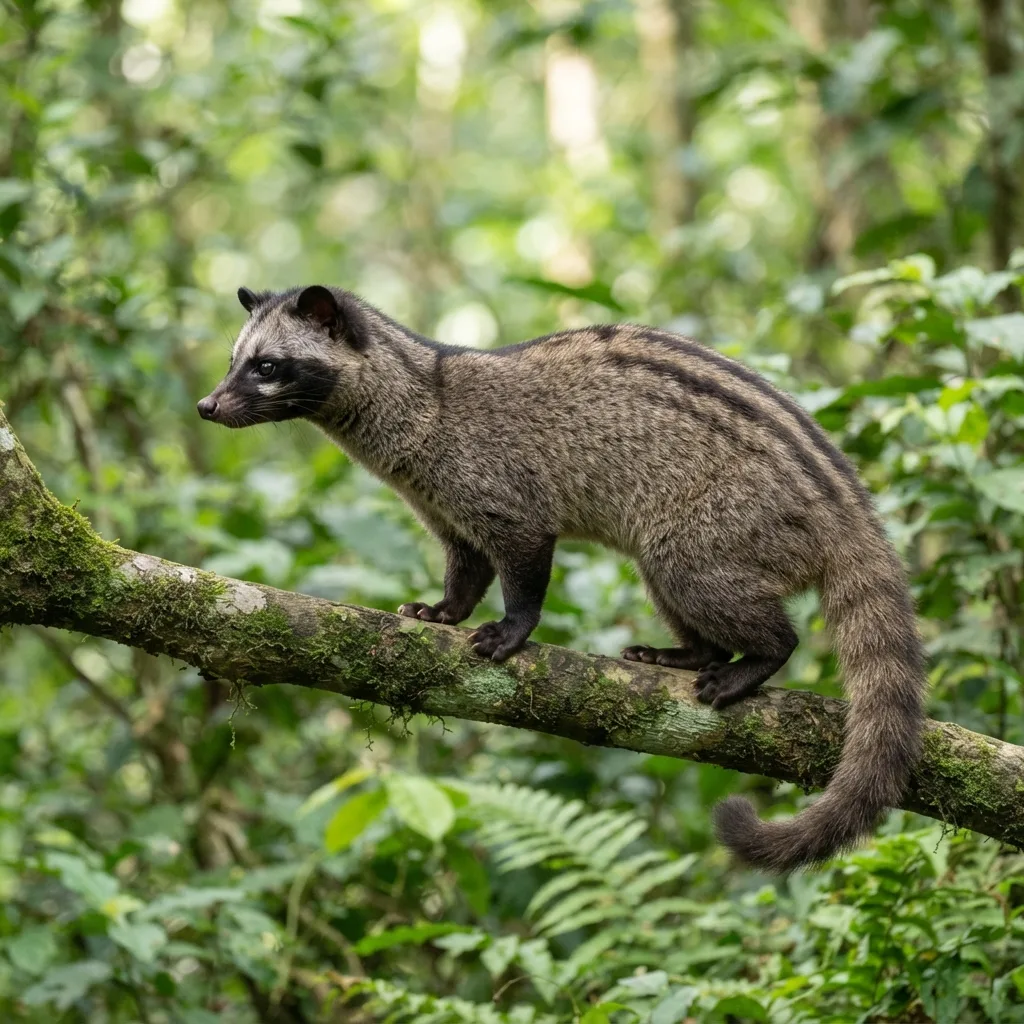
- Appearance: They feature a long, stocky body covered in coarse, shaggy greyish or brownish fur, often with dark markings or stripes along the back, a dark "mask" across the eyes, and white patches near the nose and forehead.
- Size: They typically measure 42 to 71 cm (16 to 28 inches) in head-and-body length, with a long, non-prehensile tail nearly matching their body length (33 to 66 cm / 13 to 26 inches).
- Weight: Adults generally weigh between 2 to 5 kg (4.4 to 11 pounds).
- Defense Mechanism: When threatened or cornered, they can emit a pungent, foul-smelling liquid from their anal scent glands.
Behavior and Ecology
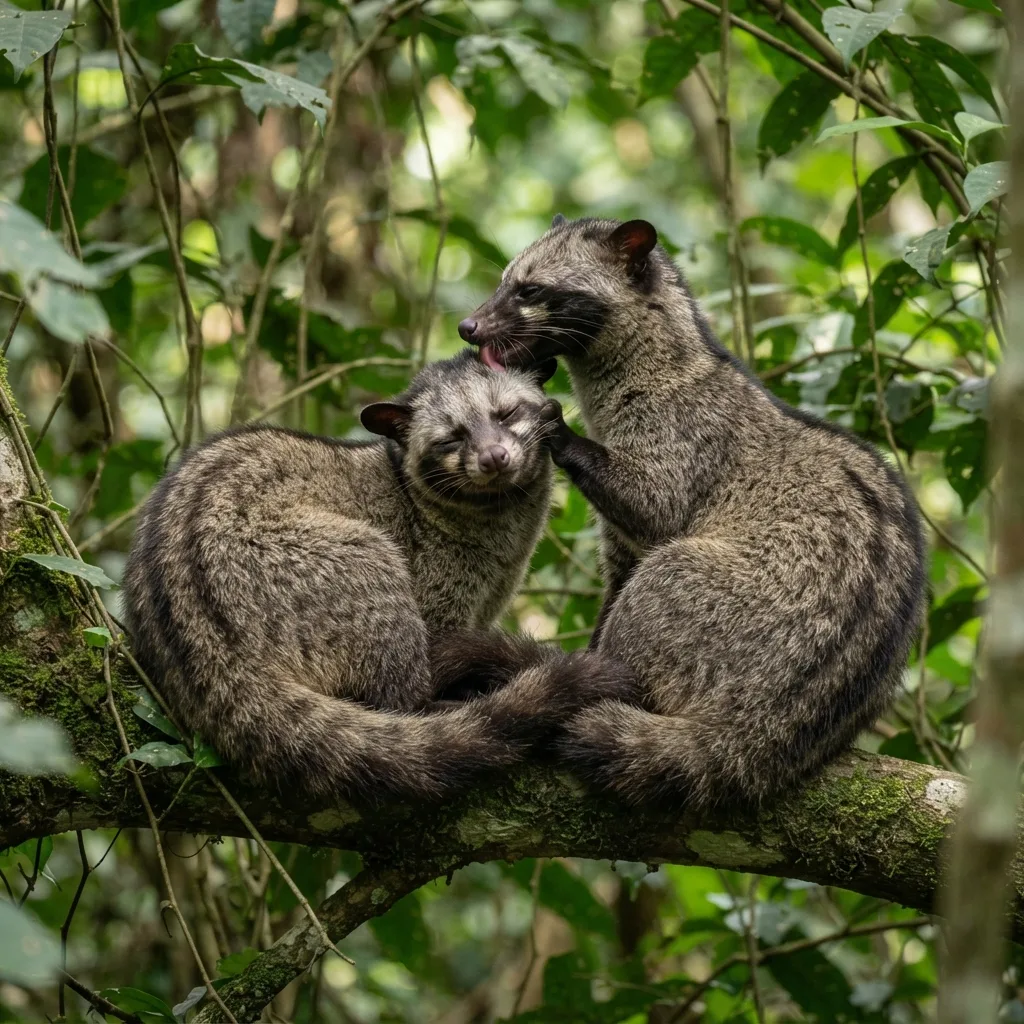
- Nocturnal & Solitary: Palm civets are strictly active at night (from dusk till dawn) and spend their days resting in hollow trees, dense foliage, or occasionally roof spaces near human settlements. Outside of brief mating seasons, they lead a solitary lifestyle.
- Arboreal Skills: They are expert climbers equally comfortable moving through the forest canopy or scavenging across urban rooftops.
- Diet: While technically classified under Carnivora, they are opportunistic omnivores with a heavy preference for sweet, pulpy fruits, berries, coffee cherries, insects, and small vertebrates.
Ecological Importance and Human Interaction
- Seed Dispersal: By consuming large amounts of fruit and excreting the seeds intact, palm civets play a critical, positive role in tropical forest regeneration, seed dispersal, and plant biodiversity.
- Kopi Luwak (Civet Coffee): Asian palm civets are globally famous—and heavily exploited—for their role in producing Kopi Luwak. They naturally select and eat ripe coffee cherries, digesting the outer fruit while passing the inner bean through their digestive tract, which imparts a unique flavor. High commercial demand has led to intensive battery-cage farming practices that raise severe animal welfare concerns.
- Conservation Status: On the IUCN Red List, the Asian palm civet is evaluated as Least Concern due to its wide distribution and adaptability. However, local populations face persistent threats from the illegal wildlife trade, pet-trade poaching, and deforestation. Organizations like Wildlife Alliance actively rescue civets trapped by the illegal pet and wildlife trafficking trades in Southeast Asia.
- 分类
- 小型哺乳动物