

Black-Necked Stork
Ephippiorhynchus asiaticus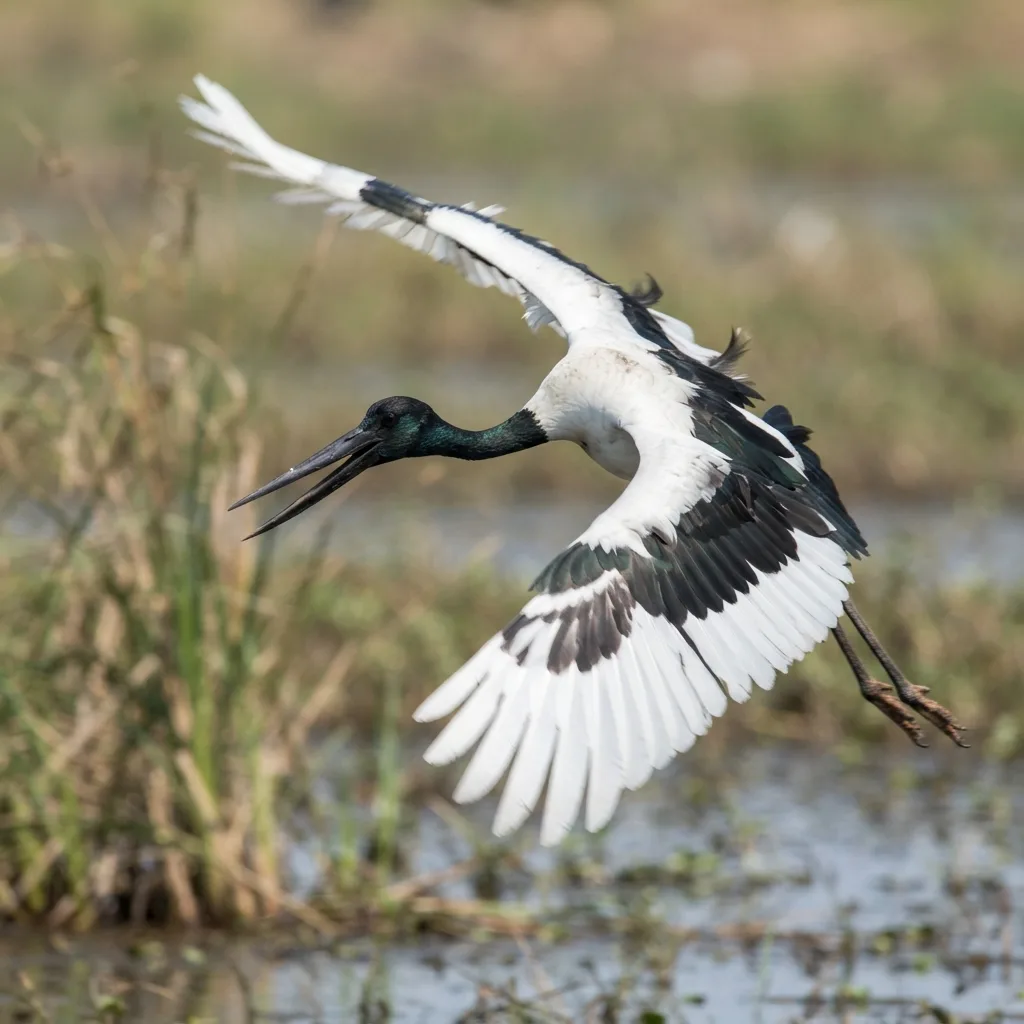
鹳与鹤
A large, prominent water bird belonging to the Roneal family
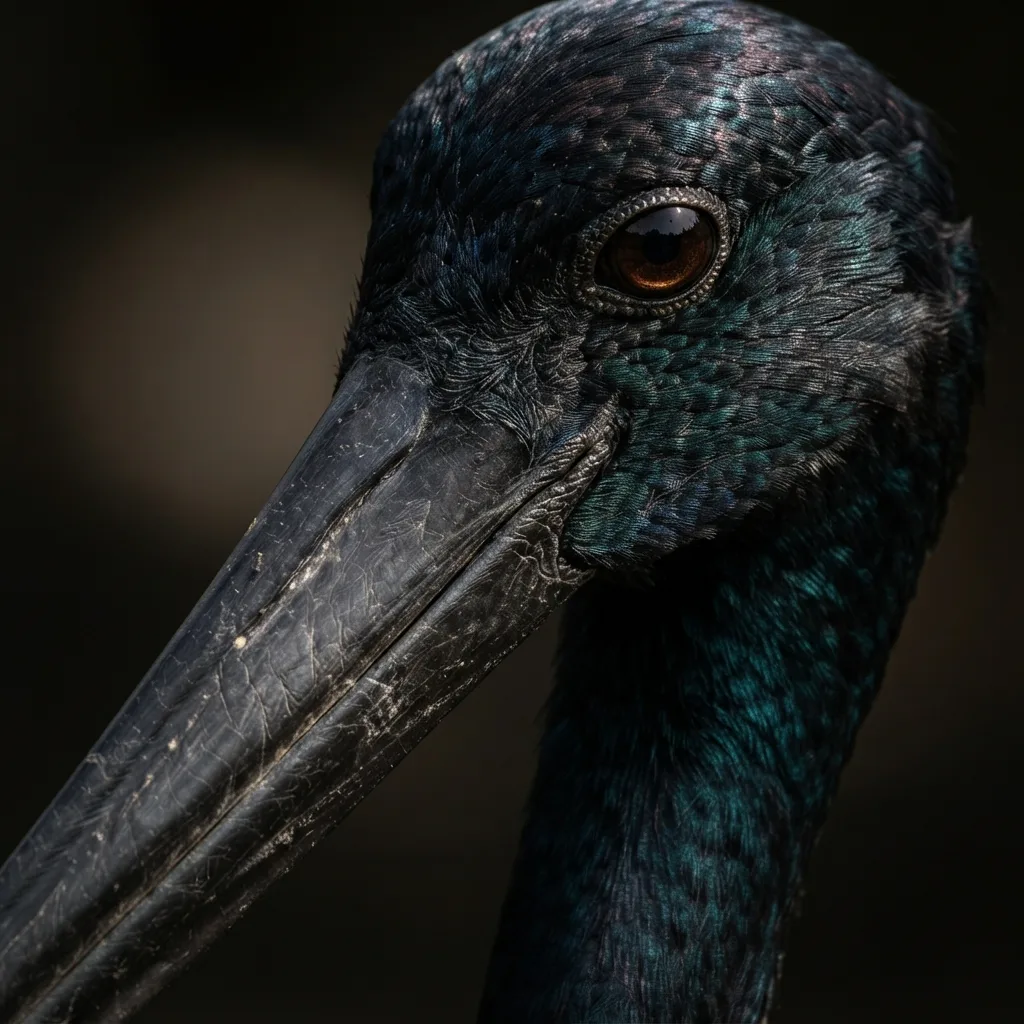
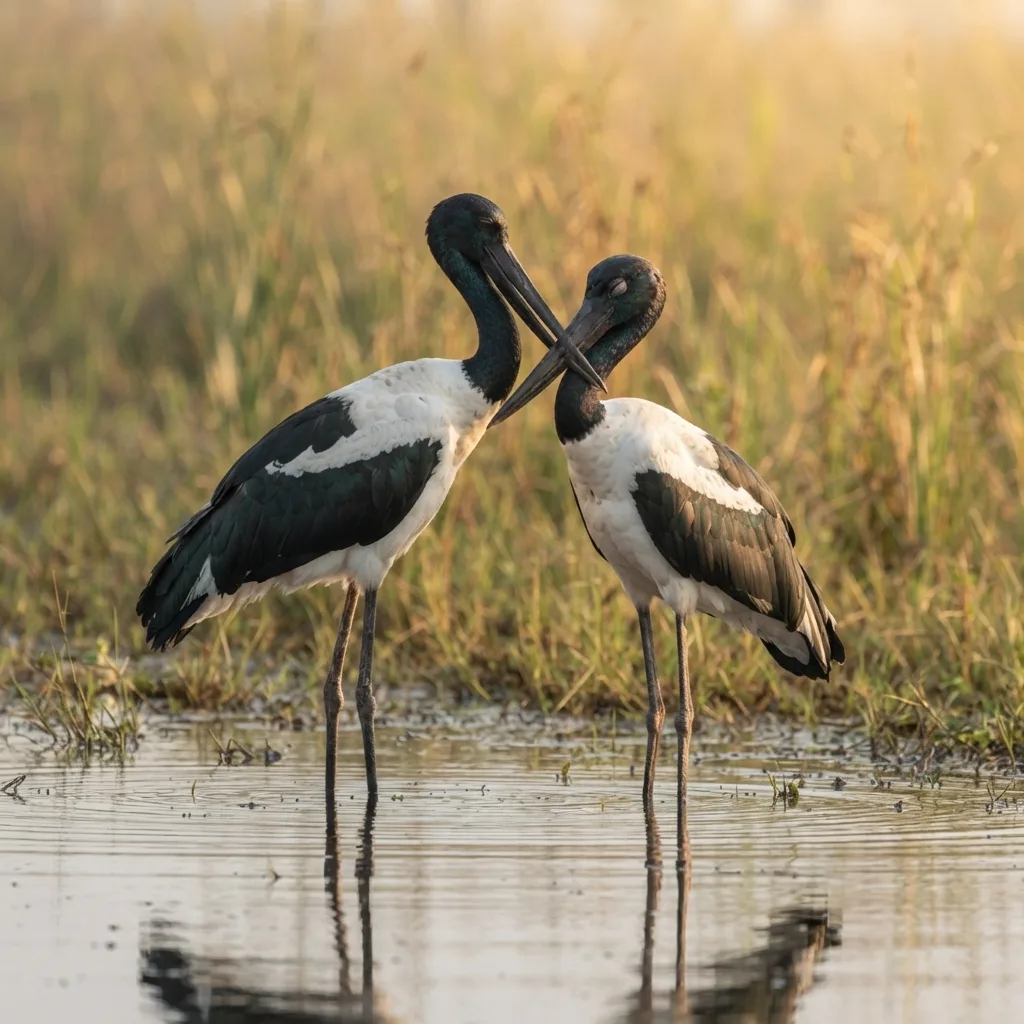
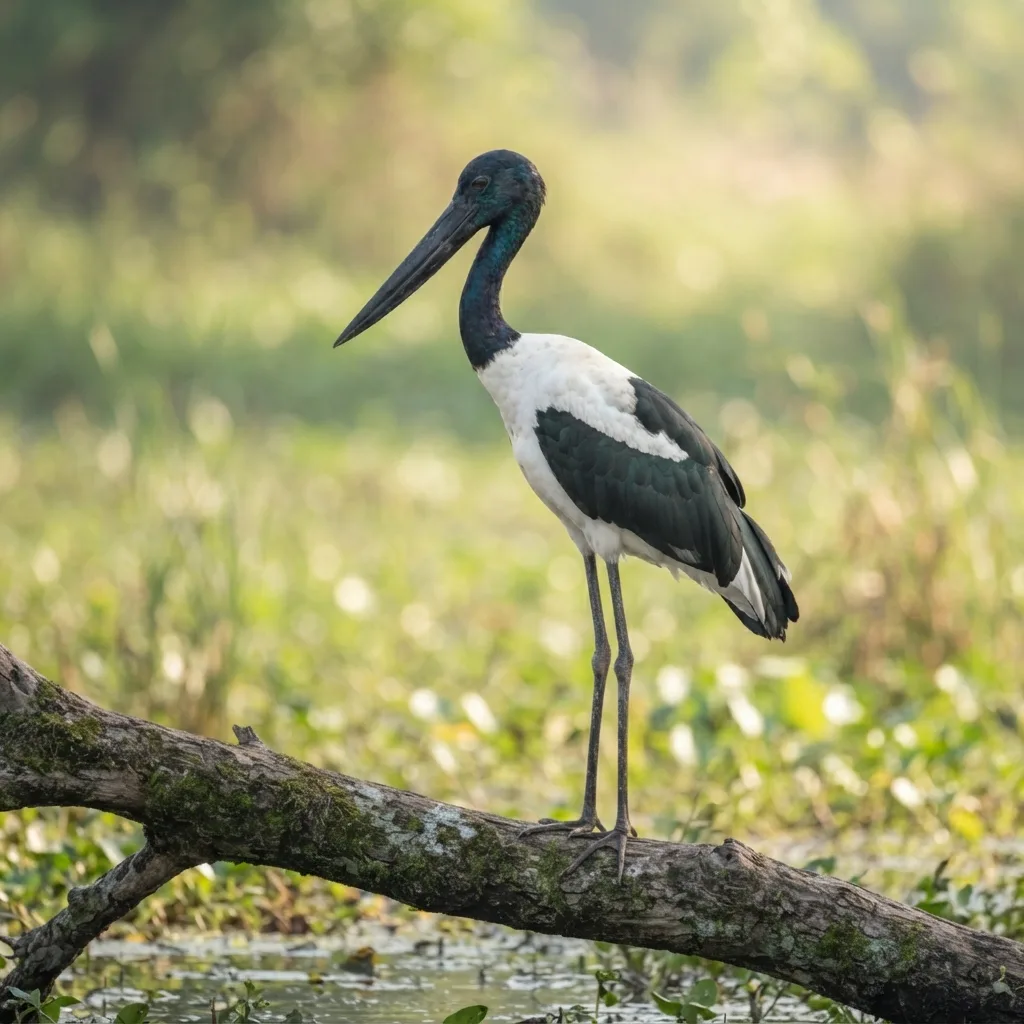
The black-necked stork (Ephippiorhynchus asiaticus) is a tall, stately wading bird in the stork family, easily recognized by its massive black bill, iridescent black head and neck, and bright red legs.
Physical Characteristics
- Size: Stands about 110–137 cm (43–54 in) tall with a large wingspan of 190–218 cm (75–86 in).
- Plumage: Features a glossy bluish-black head and neck with purple and green sheens, a coppery crown, and a brilliant white back and belly.
- Sexual Dimorphism: Adults look nearly identical except for their eyes—females have bright yellow irises, while males have dark brown or black irises.
- Alternative Name: In Australia, it is commonly called the jabiru, though that name technically belongs to a different American stork species.
Habitat and Distribution
- Geographic Range: Found locally across the Indian subcontinent, Southeast Asia, New Guinea, and northern/eastern Australia.
- Ecosystems: Inhabits freshwater wetlands, including shallow swamps, floodplains, billabongs, rivers, and agricultural fields like flooded rice paddies.
- Status: Evaluated as Least Concern globally by the IUCN Red List, though Asian populations face severe declines from habitat loss and are rare or locally extirpated in parts of Southeast Asia. The Australian population remains much larger and stable.
Diet and Behavior
- Diet: Operates as a generalist carnivore, hunting fish, frogs, aquatic snakes, eels, small crustaceans, and insects.
- Hunting Style: Wades deliberately in shallow water (5–35 cm deep), using its heavy, sword-like bill to jab, snap, or lunge at prey.
- Communication: Lacks a true voice box and communicates mostly through bill-clattering and wing-flapping at the nest.
- Breeding: Forms long-term, monogamous pairs that build bulky stick platforms high in tall trees near water, returning to the same nesting territories for multiple years.
- 分类
- 鹳与鹤