

Red Junglefowl
Gallus gallus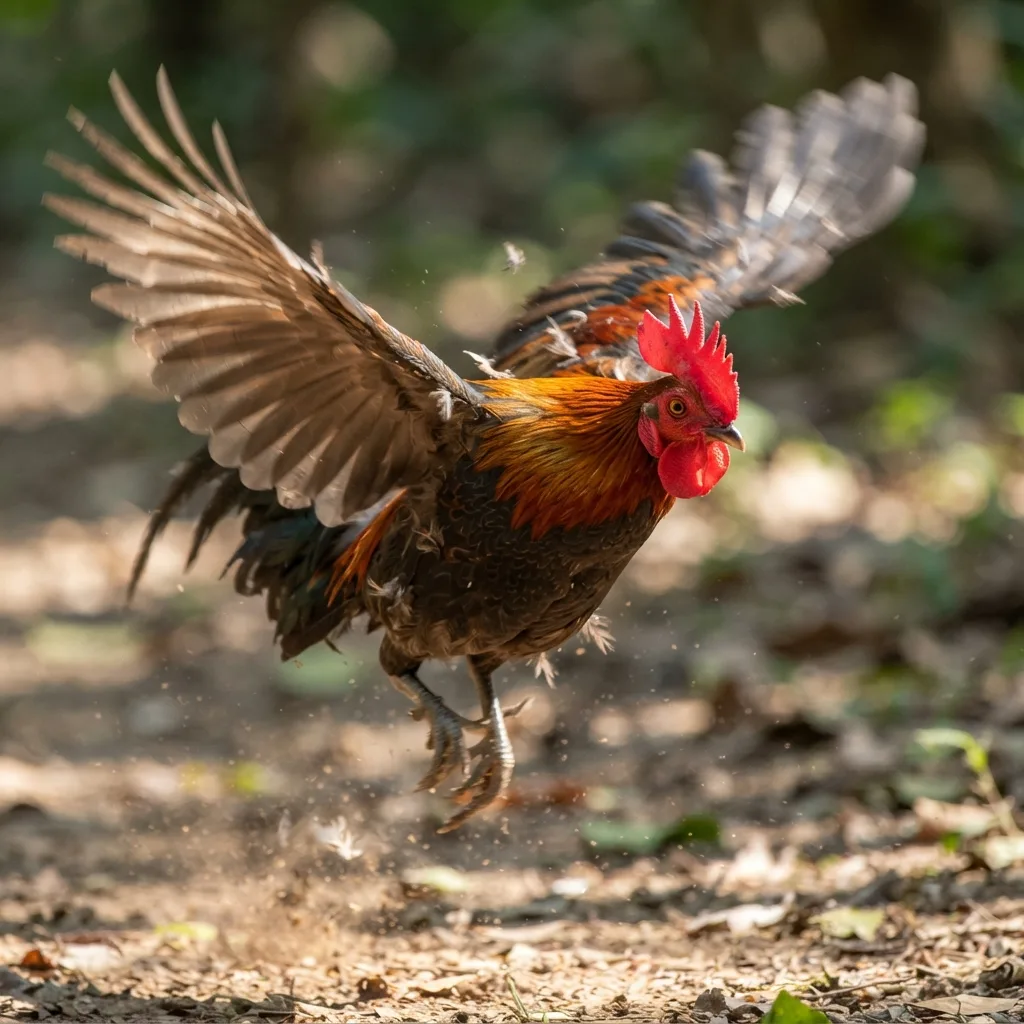
A type of hot zone bird is the main ancestor of the local chicken today
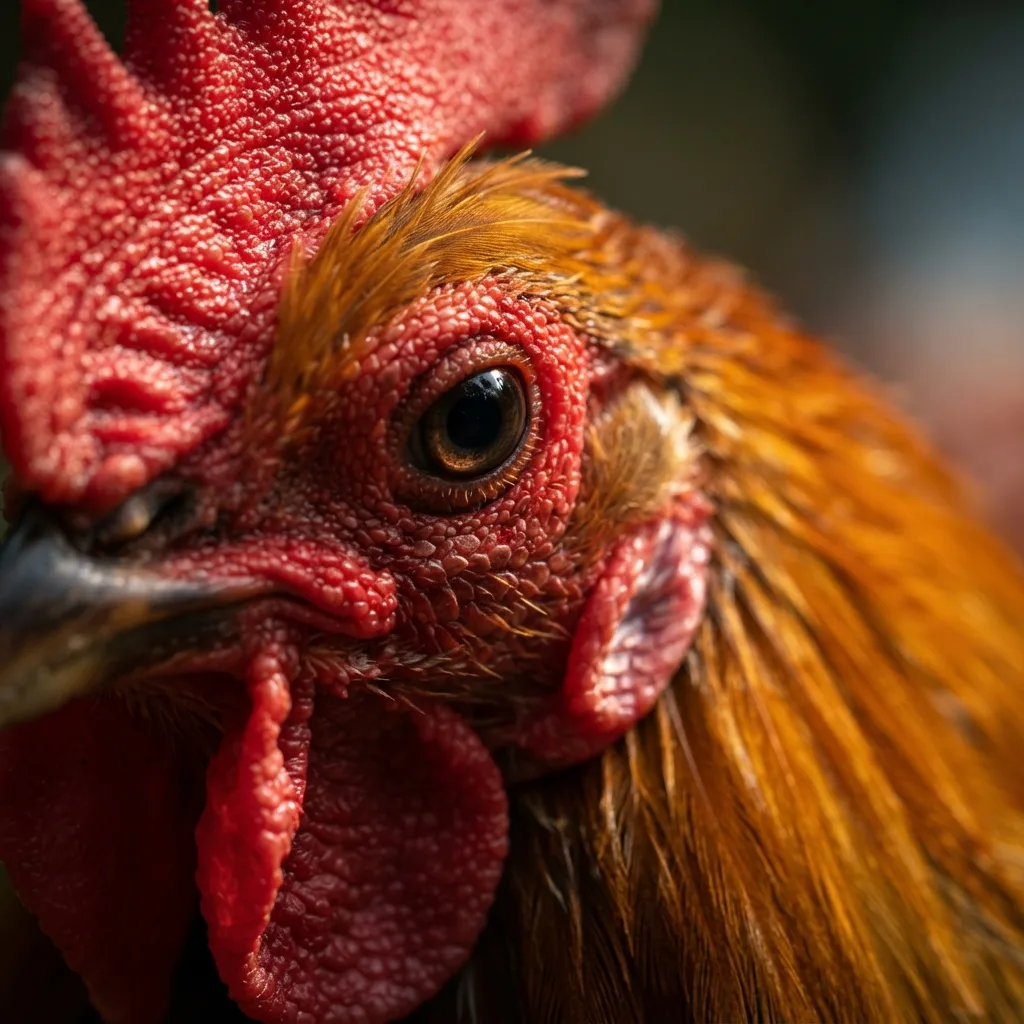
The red junglefowl (Gallus gallus) is a tropical bird belonging to the family Phasianidae and is most famous as the primary wild ancestor of the domestic chicken. Native to South and Southeast Asia, these wary, ground-foraging birds look strikingly similar to domestic chickens but are slimmer, smaller, and possess excellent flight capabilities to escape forest predators.
Key Characteristics & Behavior
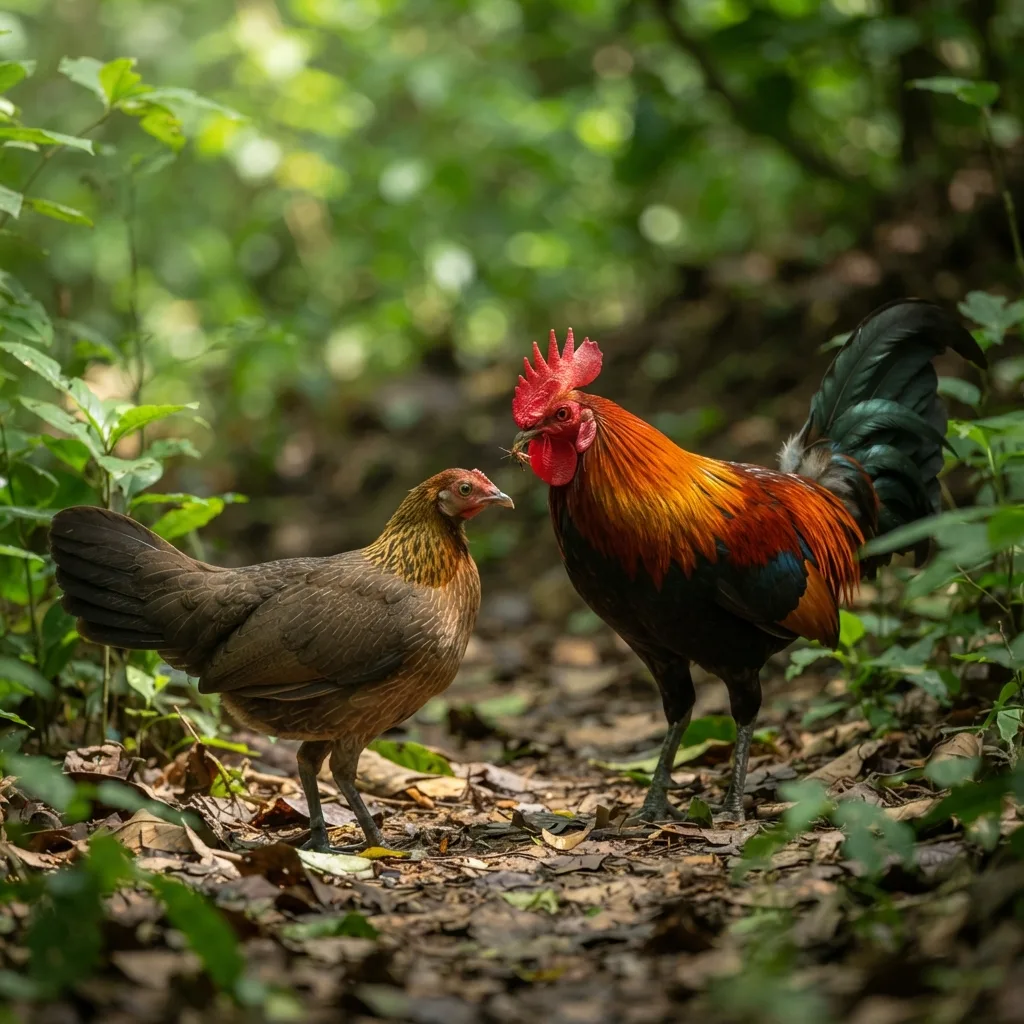
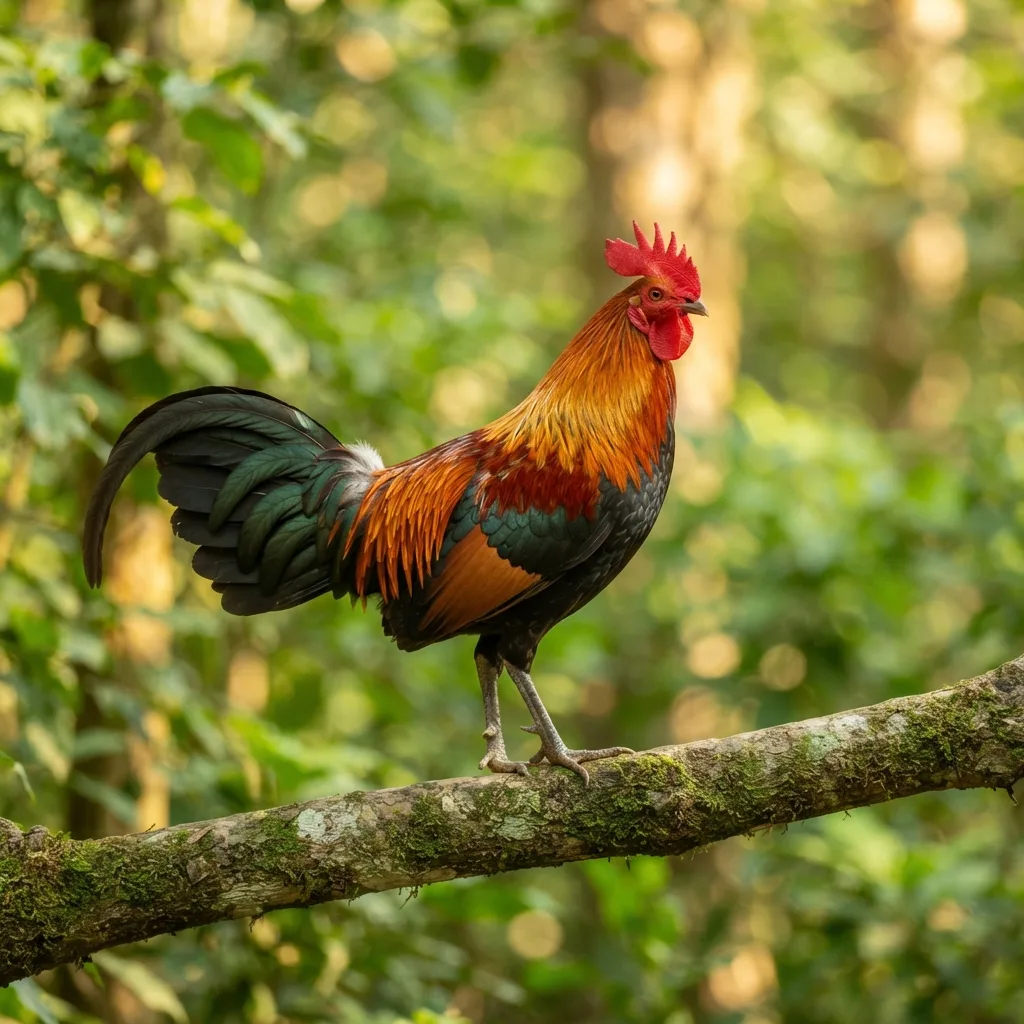
- Sexual Dimorphism: Roosters are larger (around 1.5 kg / 3.3 lbs) and brightly colored with iridescent green-black tails, orange-red neck hackles, and prominent red combs. Hens are smaller (around 1 kg / 2.2 lbs) and feature cryptic, dull brown plumage optimized for camouflage while nesting on the ground.
- Distinguishing Wild Features: True wild red junglefowl can be distinguished from feral or domestic chickens by their slate-grey legs, a distinctive white patch on their lower back/rump, and a lean, athletic build.
- Diet & Habitat: They are omnivores that forage on the forest floor for seeds, fallen fruits, berries, and invertebrates. They prefer forests, scrublands, and forest edges.
- Survival Instincts: Unlike heavy domestic chickens, they are agile and capable of flying short distances. They fly up into trees at night to roost safely away from predators like pythons, monitor lizards, and stray dogs.
Domestication History
Genetic evidence indicates that the red junglefowl was first domesticated by humans at least 5,000 to 8,000 years ago in Asia, though some genetic markers indicate smaller hybridization events with the grey junglefowl occurred over time. Today, its descendants—the Domestic Chicken—are the most populous domestic birds on the planet.
While their overall species status is categorized as Least Concern on the IUCN Red List, pure wild populations face ongoing threats from habitat loss and genetic hybridization with free-ranging domestic chickens.
- 分类
- 孔雀与雉鸡