

Slow Loris
Nycticebus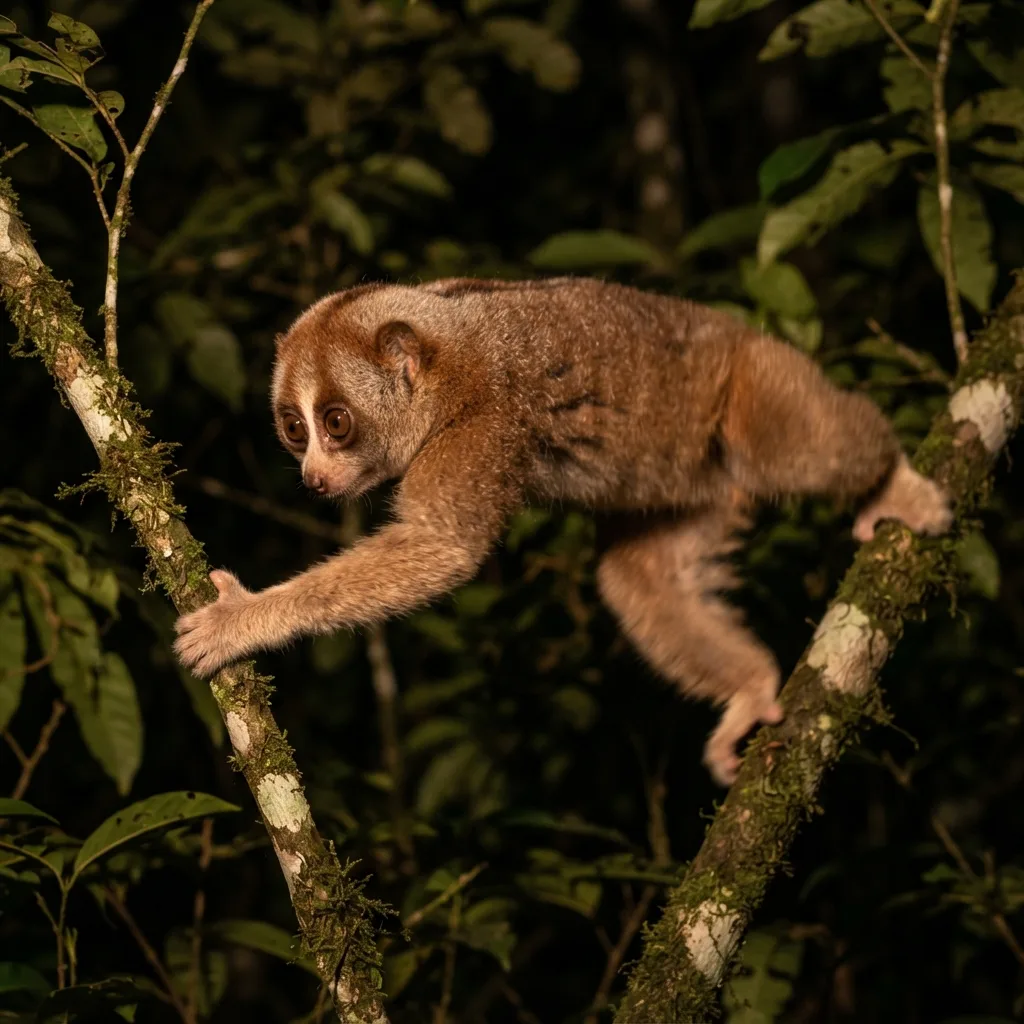
Small, not very fast-growing, night-eating prey
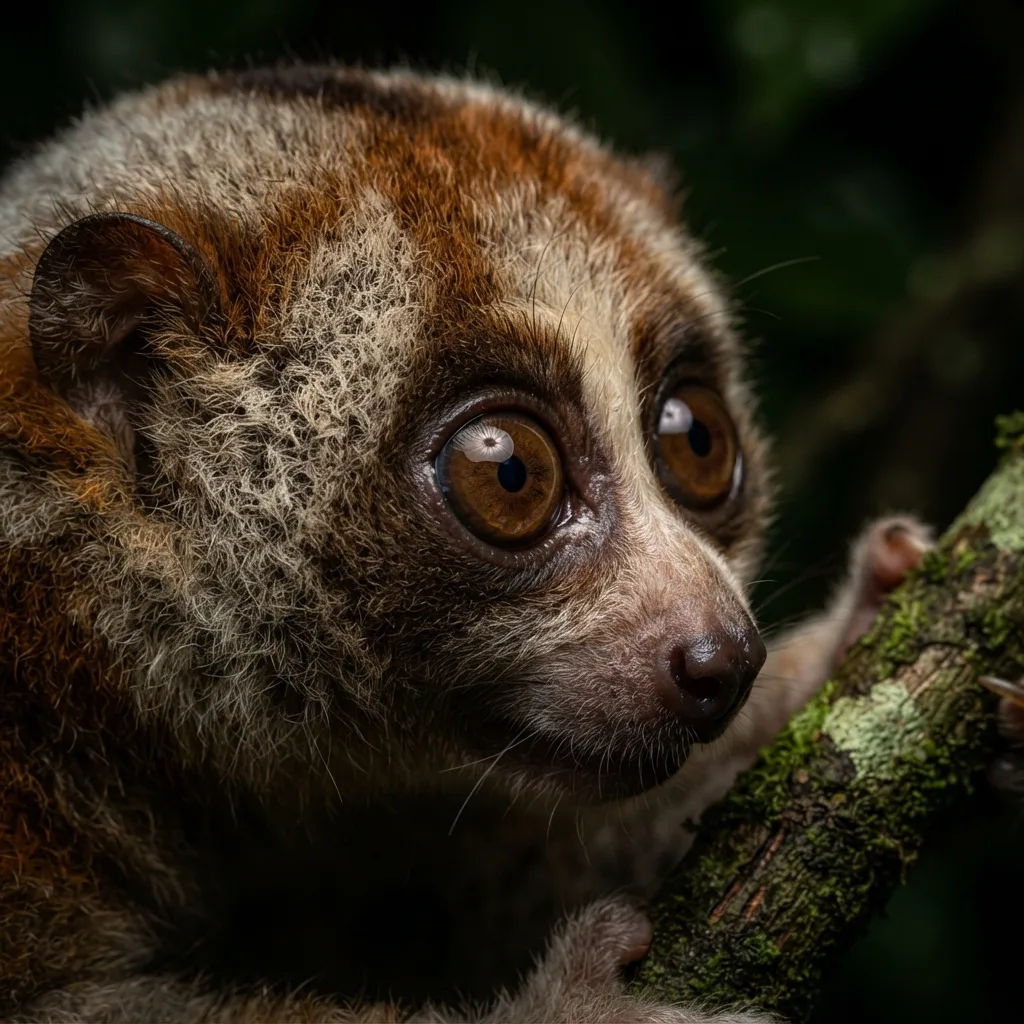
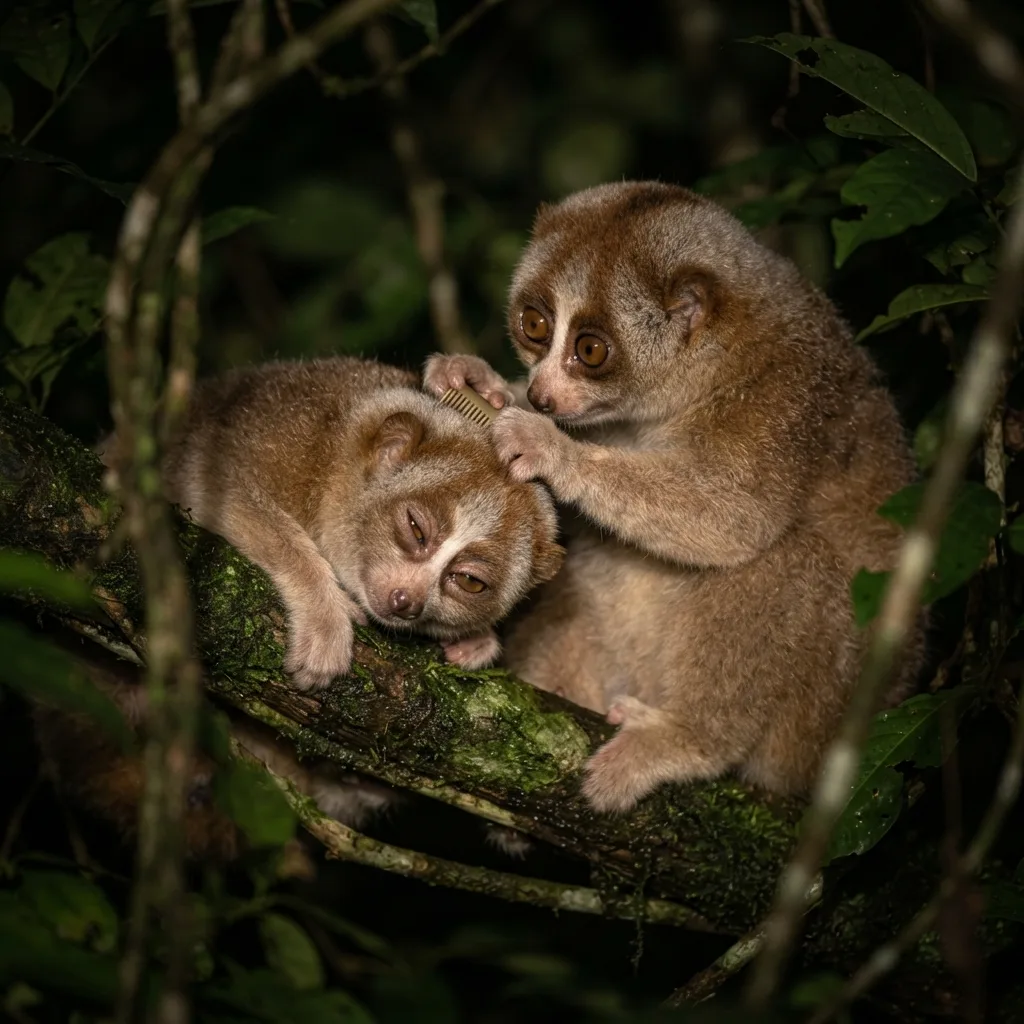
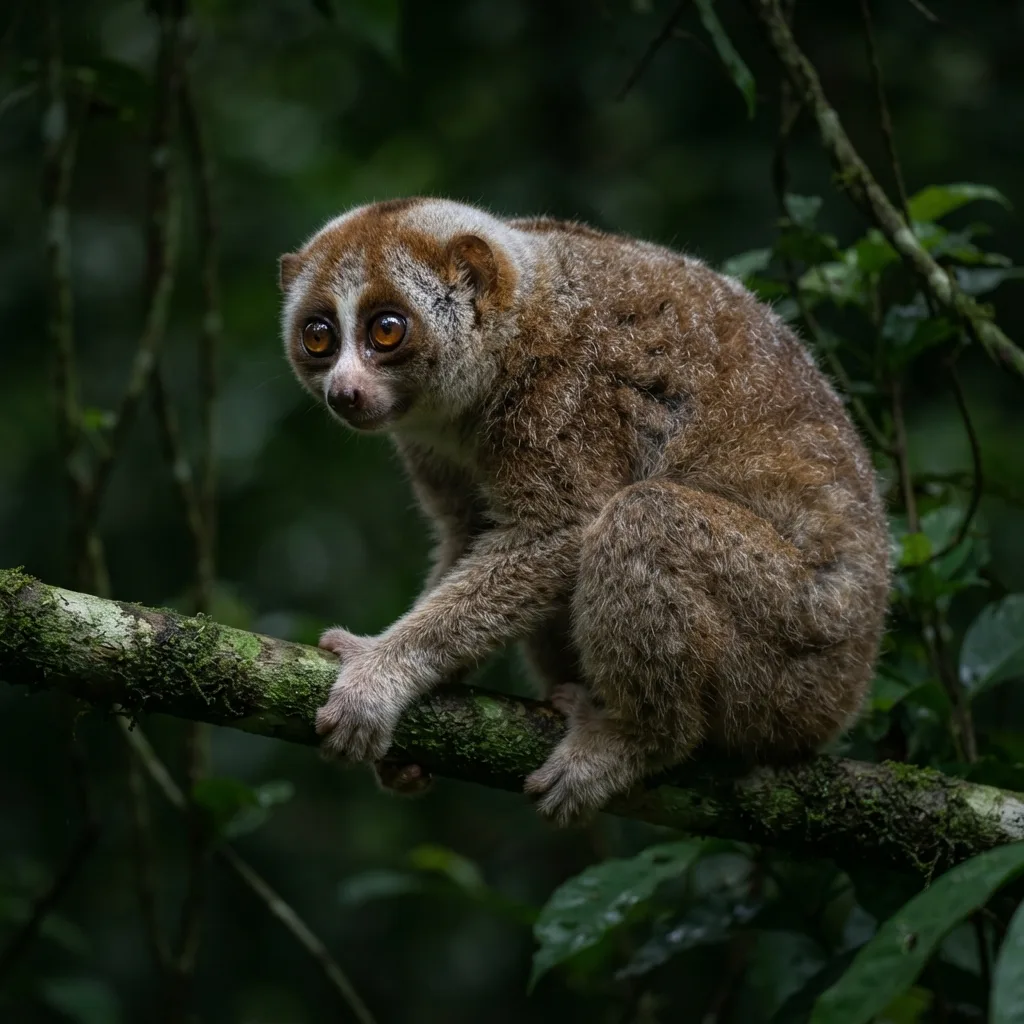
The slow loris is a group of small, nocturnal, arboreal primates native to South and Southeast Asia belonging to the genus Nycticebus (and the pygmy loris in Xanthonycticebus). Despite their large, adorable eyes and fluffy appearance, they are famously known as the world's only known venomous primates.
Key Characteristics & Biology
- Venomous Bite: They secrete a toxic oil from a brachial gland on their upper arm. When threatened, they lick the gland, mixing the secretion with their saliva to activate a potent toxin deployed through their specialized front teeth (toothcomb).
- Physical Adaptations: They have rounded heads, short snouts, dense fur, distinctive facial markings, and a specialized capillary network in their hands and feet that allows them to grip tree branches firmly for hours without losing sensation.
- Diet: Omnivorous and specialized, feeding largely on tree sap, gum, nectar, fruit, and insects.
- Metabolism: They possess an unusually low basal metabolic rate compared to other mammals of their size, similar to sloths, which helps them process toxic compounds in their specialized diet.
Species & Conservation Status
There are multiple recognized species of slow lorises distributed across tropical and subtropical forests.
- Bengal slow loris (Nycticebus bengalensis): Found across Southeast Asia and Northeast India; listed as Endangered.
- Javan slow loris (Nycticebus javanicus): Endemic to Java, Indonesia; listed as Critically Endangered.
- Sunda slow loris (Nycticebus coucang): Found in Sumatra, Malaysia, and Singapore; listed as Endangered.
- Pygmy slow loris (Xanthonycticebus pygmaeus): Native to Indochina (east of the Mekong River); listed as Endangered.
Threats from the Illegal Pet Trade
All slow loris species are protected under Appendix I of CITES and local laws, prohibiting commercial international and domestic trade. Despite this, viral internet videos depicting them being "tickled" or kept as pets have driven a devastating illegal exotic pet trade. Poachers frequently pull or clip their front teeth with nail clippers or pliers without anesthesia to make them safe for buyers, causing severe trauma, infections, or high mortality rates. Organizations like International Animal Rescue actively campaign against viral loris content and rescue illegally trafficked animals.
- 分类
- 灵长类