

Muscovy Duck
Cairina moschata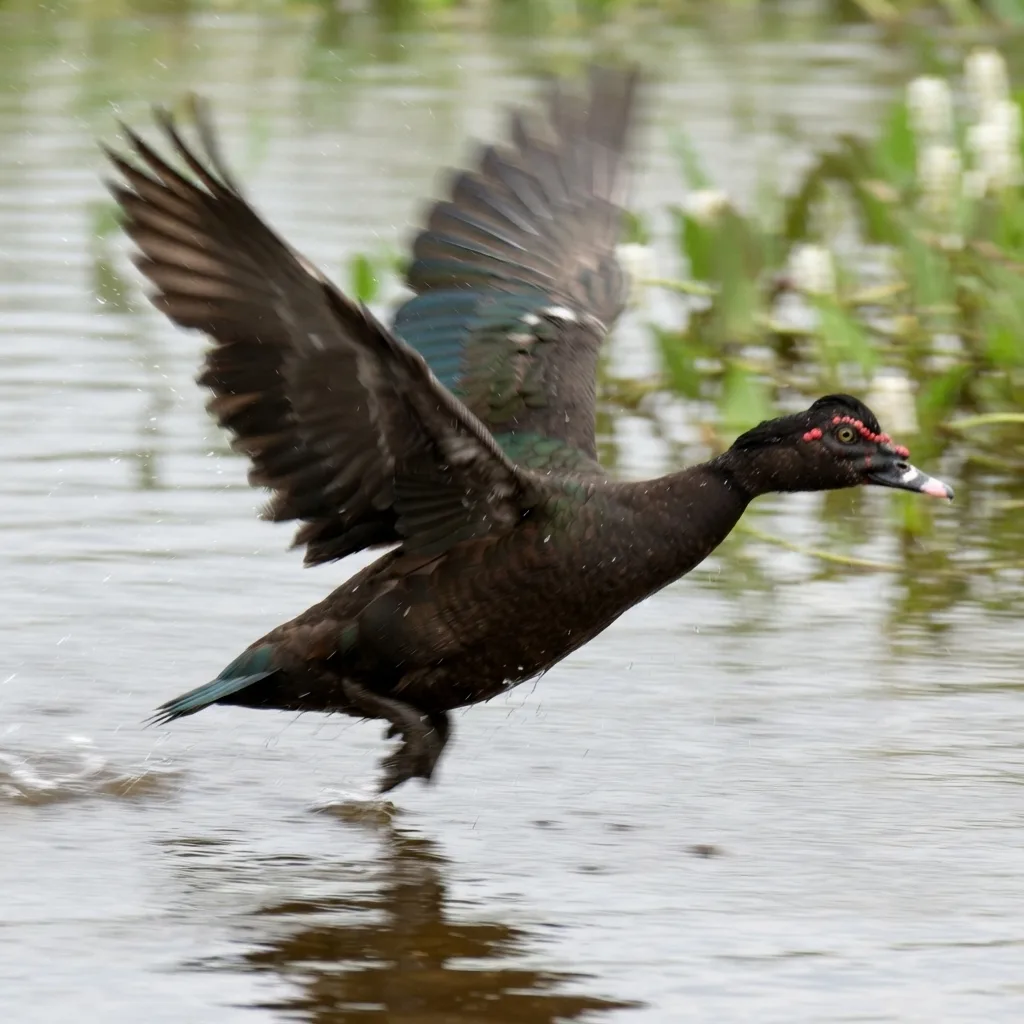
Waterfowl
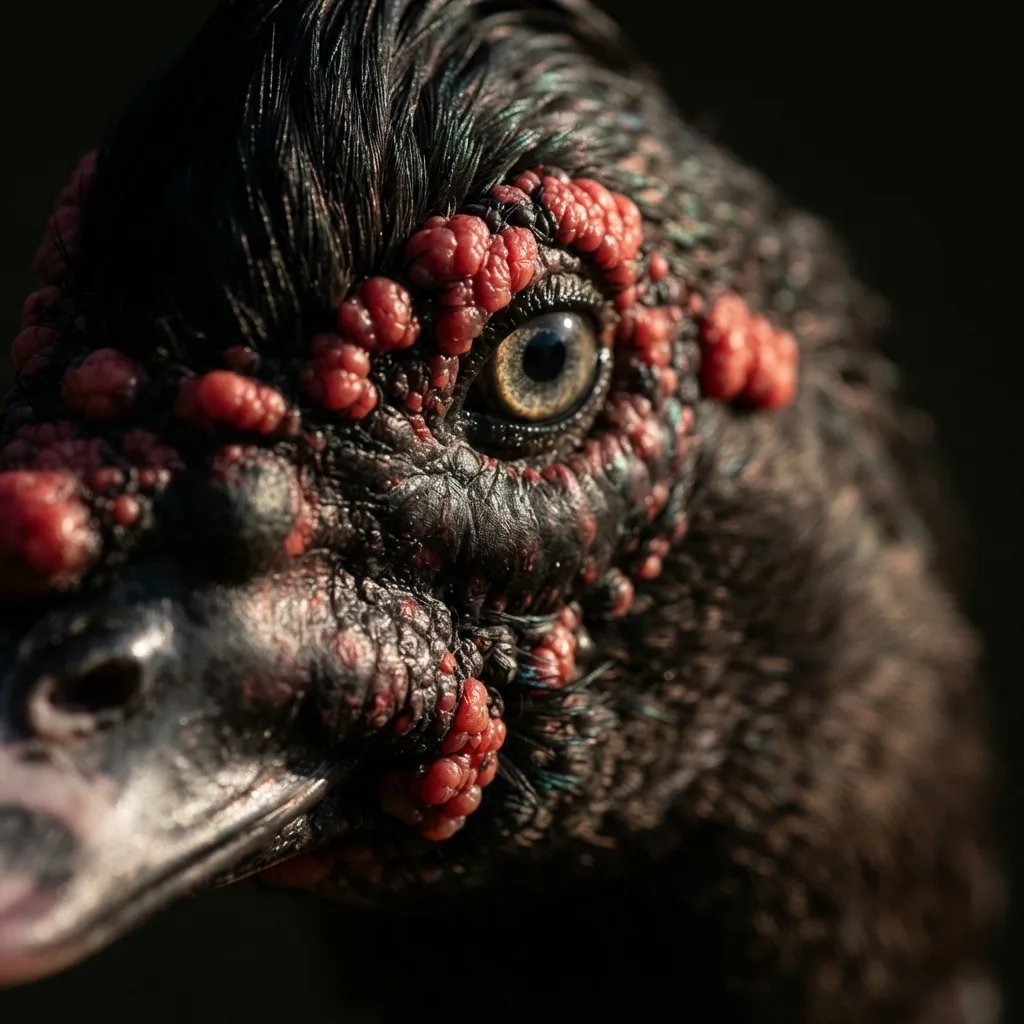
Crunchy skin with red or red mixed with black patches around the beak and eyes
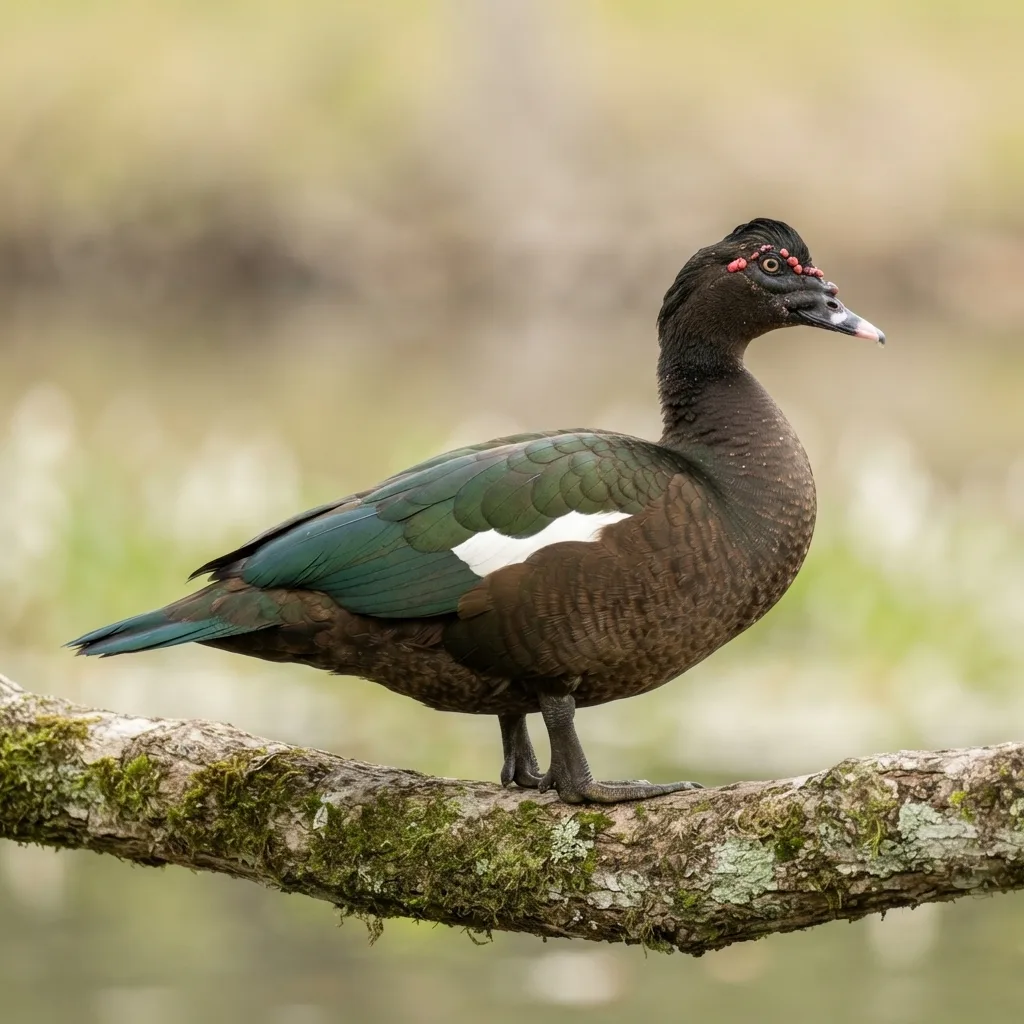
The Muscovy duck (Cairina moschata) is a large, heavy-bodied tropical duck native to Central and South America, as well as the lower Rio Grande Valley in Texas, easily recognized by the fleshy red bumps (caruncles) on its face and its distinctive lack of a traditional quack.
Key Characteristics and Appearance
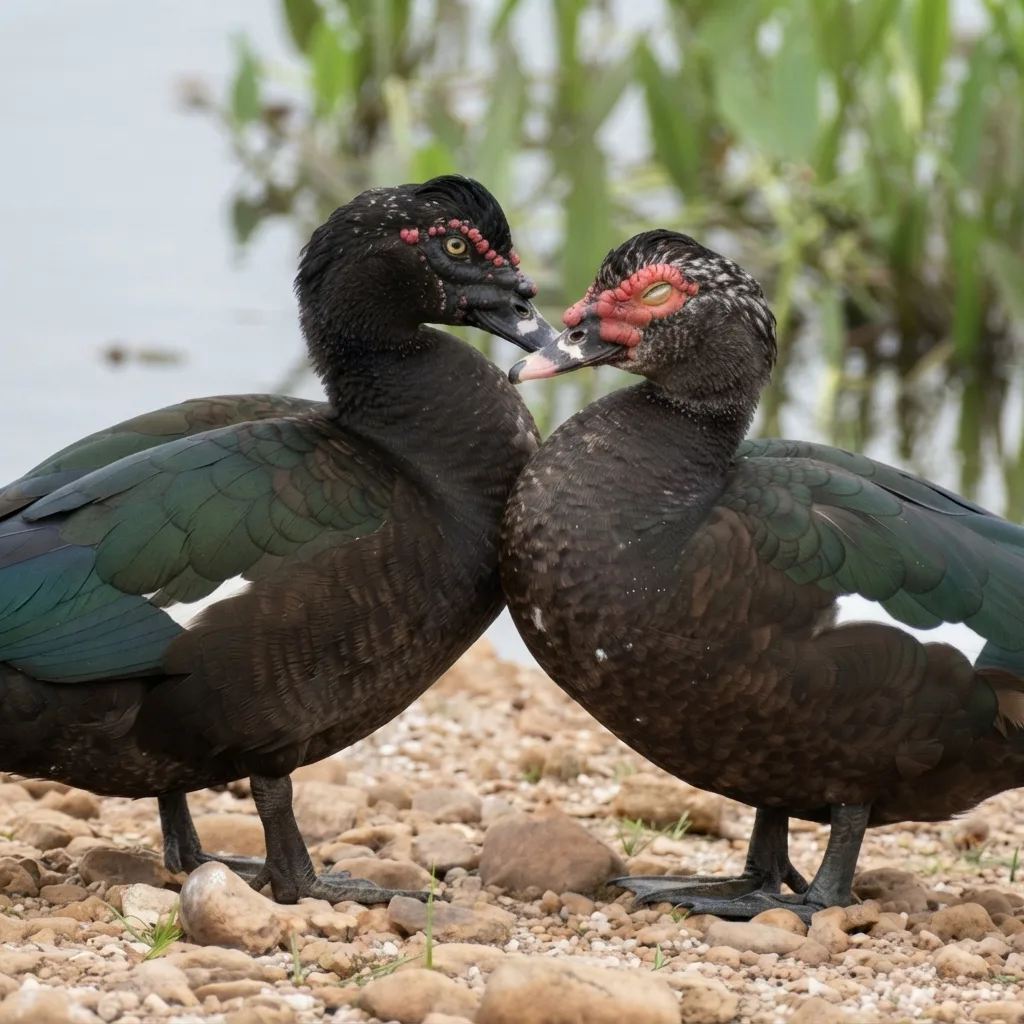
- Facial Caruncles: Both wild and domestic birds feature naked, warty red or blackish facial skin around the bill and eyes, which are more prominent in adult males.
- Sexual Dimorphism: Males (drakes) are significantly larger, measuring 76–84 cm (30–33 in) and weighing 4.5–6.8 kg (10–15 lb), whereas females are roughly half that weight, measuring 64–76 cm and weighing 2.3–3.6 kg (5–8 lb).
- Claws and Perching: They possess sharp, long claws on their webbed feet, allowing them to easily grip and perch in trees or roost on elevated structures.
- Vocalization: Unlike mallard derivatives, they do not quack. Males produce a low, breathy hiss or puffing sound, while females give a quiet, trilling coo.
Behavior and Ecology
- Diet: Omnivorous foragers that feed on aquatic plants, grasses, agricultural crops, insects, spiders, small fish, reptiles, and crustaceans.
- Flight and Water Habits: They are surprisingly strong flyers compared to standard heavy domestic ducks, though heavy drakes become less agile with age. Their oil glands are somewhat underdeveloped, meaning they spend less time swimming and do not require large ponds.
- Nesting: Unlike typical ground-nesting ducks, wild and feral Muscovies are cavity nesters, often laying clutches of 8 to 18 eggs in high tree hollows or nest boxes.
- Group
- Waterfowl