

Mouse Deer
Tragulidae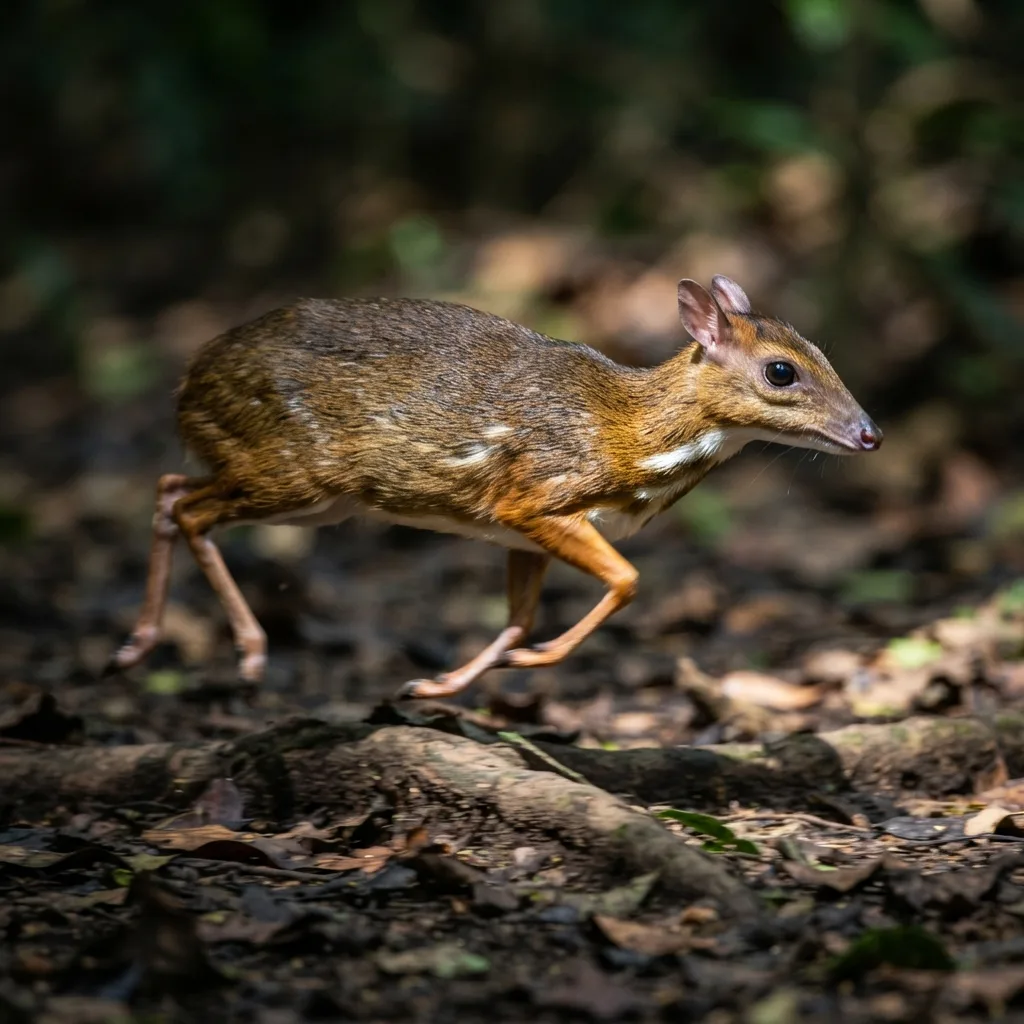
Large hoofed animals
The world's smallest fingernail maze (ungulate)
The mouse-deer (also known as a chevrotain) is the smallest hoofed mammal (ungulate) in the world, belonging to the family Tragulidae. Despite their name and deer-like appearance, they are not true mice or true deer, but represent an ancient, primitive group of even-toed ungulates that date back over 30 million years.
Key Characteristics
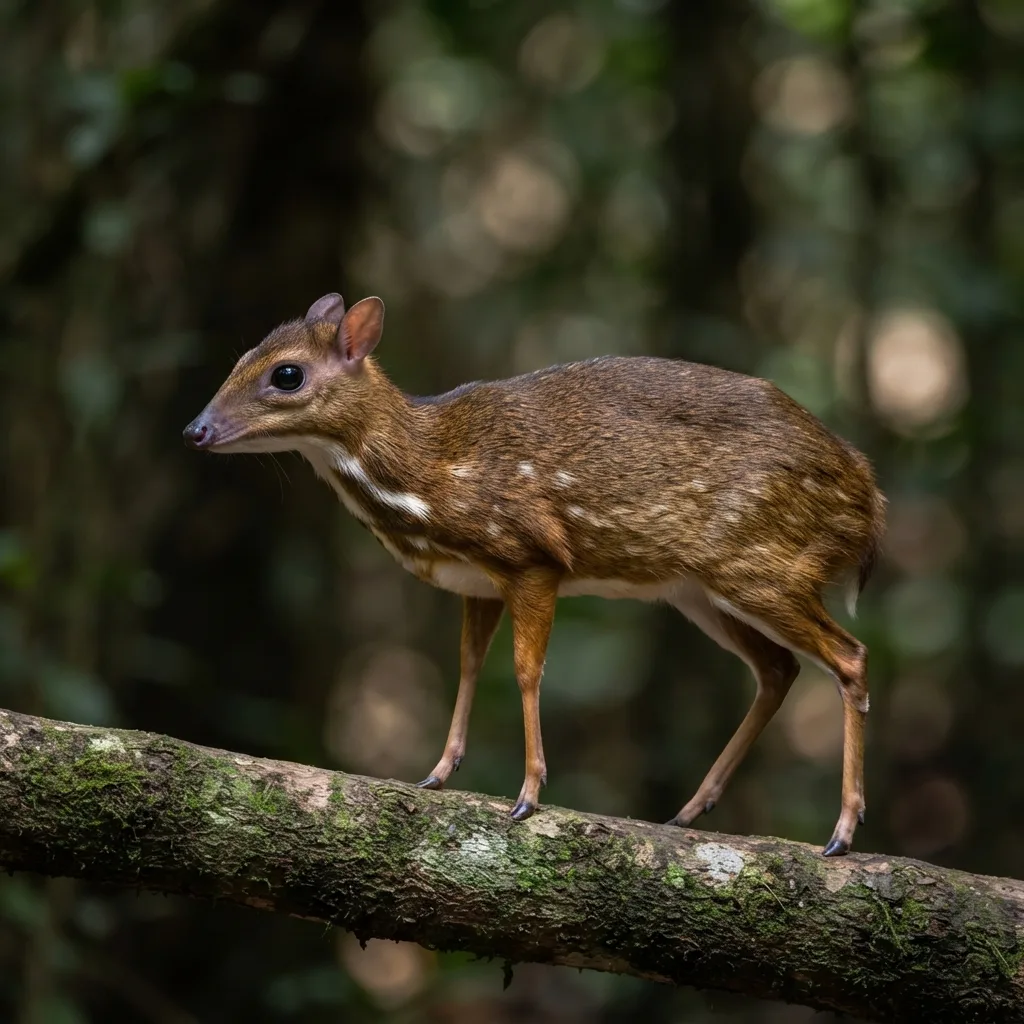
- Size: Ranging from tiny Asian species like the Java mouse-deer that weigh just 1 to 2 kg (2.2 to 4.4 lbs) and stand about 30 cm tall, up to the larger African water chevrotain at 7 to 16 kg (15 to 35 lbs).
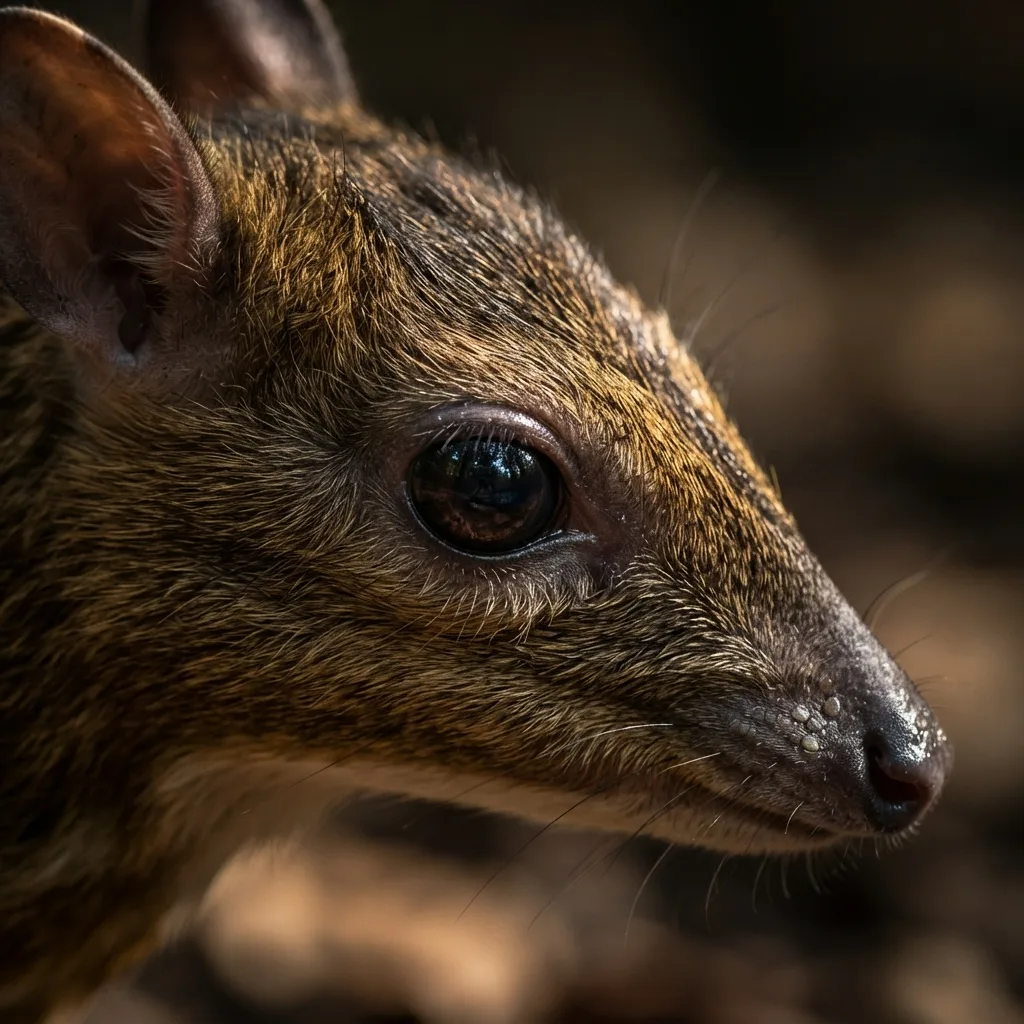
- No Antlers: Unlike true deer, mouse-deer have no antlers or horns. Instead, males possess long, sharp, fang-like canine teeth that protrude like tiny tusks and are used during territorial disputes.
- Appearance: They feature slender, pencil-thin legs, a compact arched back, a reddish-brown or grayish coat, and large, alert eyes.
- Ruminants: They possess a multi-chambered stomach and chew the cud just like cows or sheep, but retain primitive traits like four toes on each foot.
Habitat and Distribution
- Geographic Range: Most species live in the dense, tropical rainforests and undergrowth of Southeast Asia and South Asia (such as Thailand, Vietnam, Malaysia, Indonesia, and Cambodia), with a single species—the water chevrotain—found in Central and West Africa.
- Water Affinity: Many species have a remarkable relationship with water, often submerging themselves in streams for up to 5 minutes or more to evade predators.
- Behavior: They are predominantly solitary, shy, and nocturnal or crepuscular animals that rely on stealth, camouflage, and rapid zigzag movements through thick brush to survive.
Diet and Reproduction
- Diet: They are primarily herbivorous, feeding on fallen fruits, leaves, tender shoots, fungi, and buds found on the forest floor.
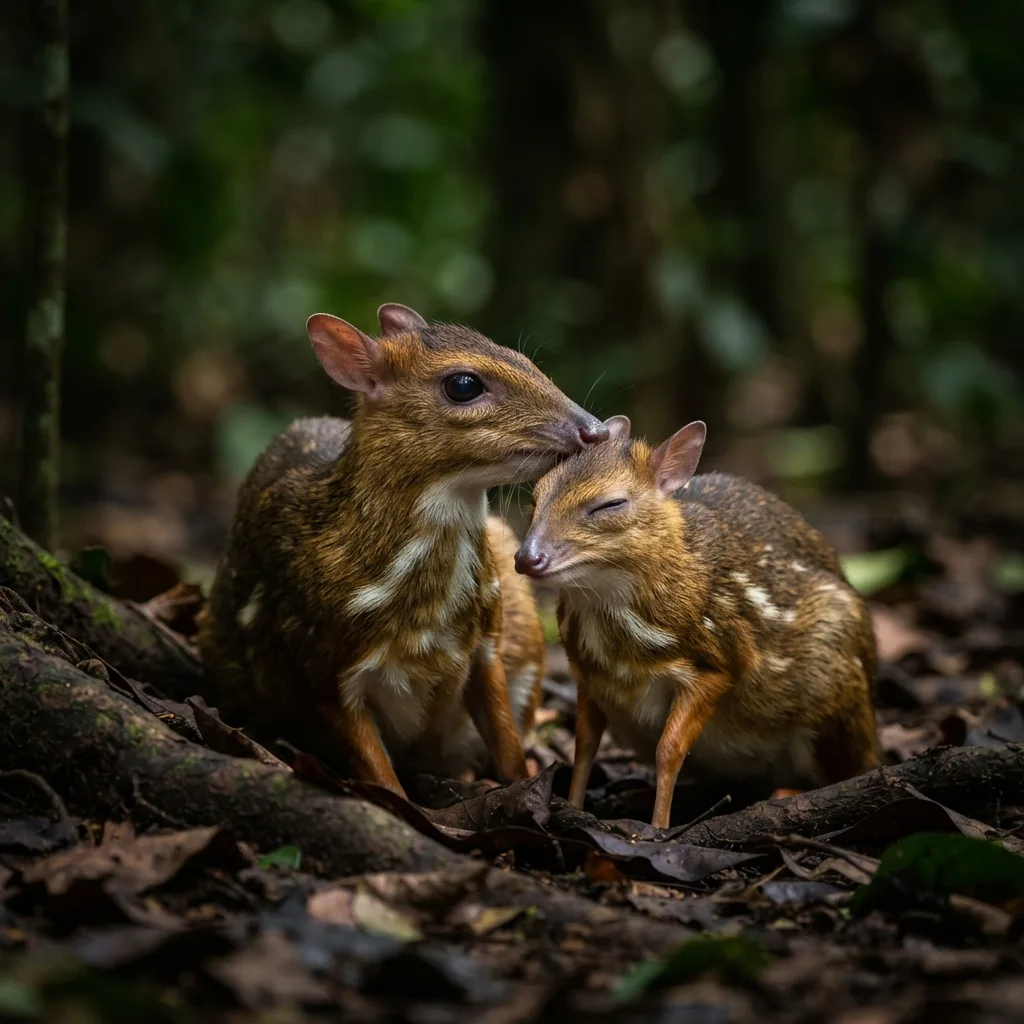
- Breeding: Females have an exceptionally fast reproductive cycle and can become pregnant again within hours of giving birth, meaning they spend a vast majority of their adult lives pregnant.
- Fawns: A single precocial fawn is born after a gestation period of roughly 4.5 months, capable of standing within 30 minutes of birth.
Cultural Significance
- Folklore: In Malay and Indonesian folklore, the mouse-deer (known as Sang Kancil) is famous as a clever trickster who consistently uses its wits and cunning to outsmart much larger predators like tigers and crocodiles.
- Heraldry: Two mouse-deer appear on the coat of arms of Malacca, commemorating the historical founding legend of the Malacca Sultanate by King Parameswara.
- Group
- Large hoofed animals