

Silvered Langur
Trachypithecus cristatus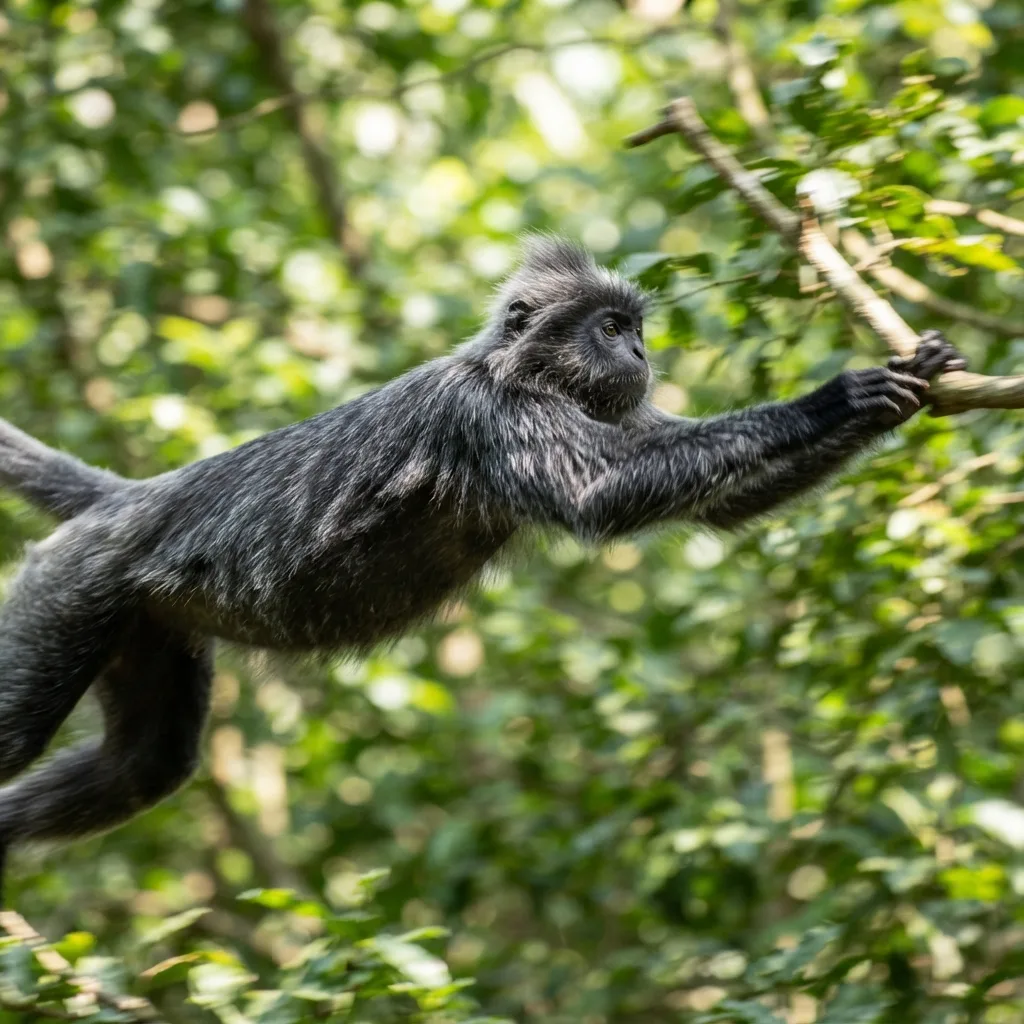
Primates
Monkeys live on trees in coastal forests, mangrove forests, and river forests
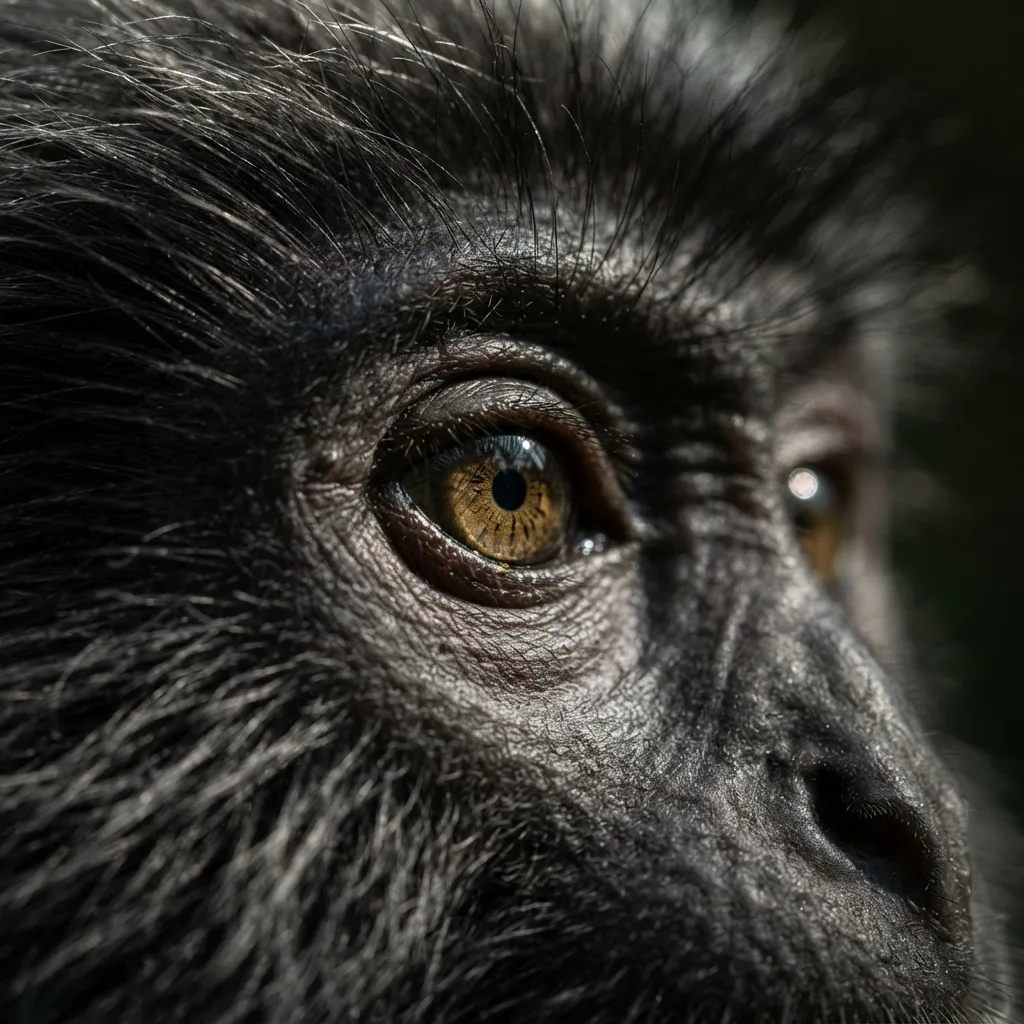
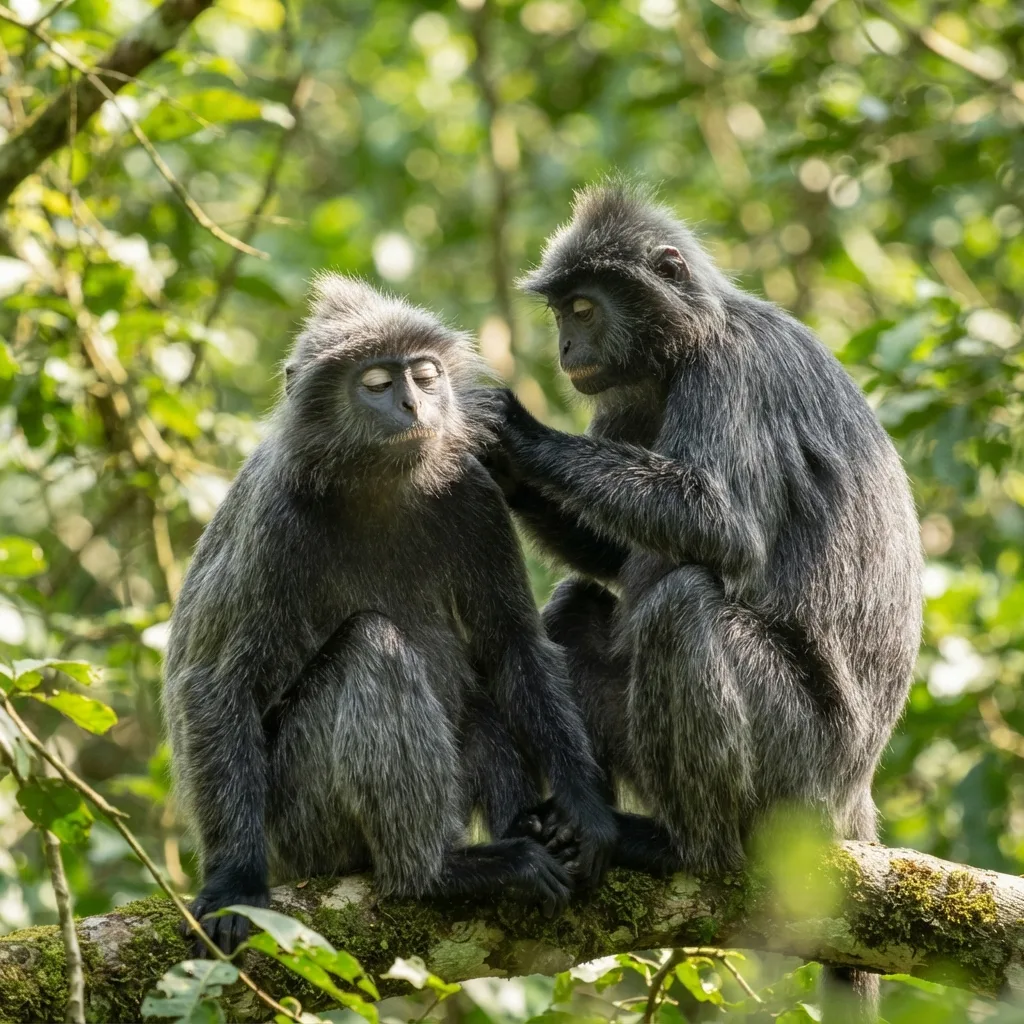
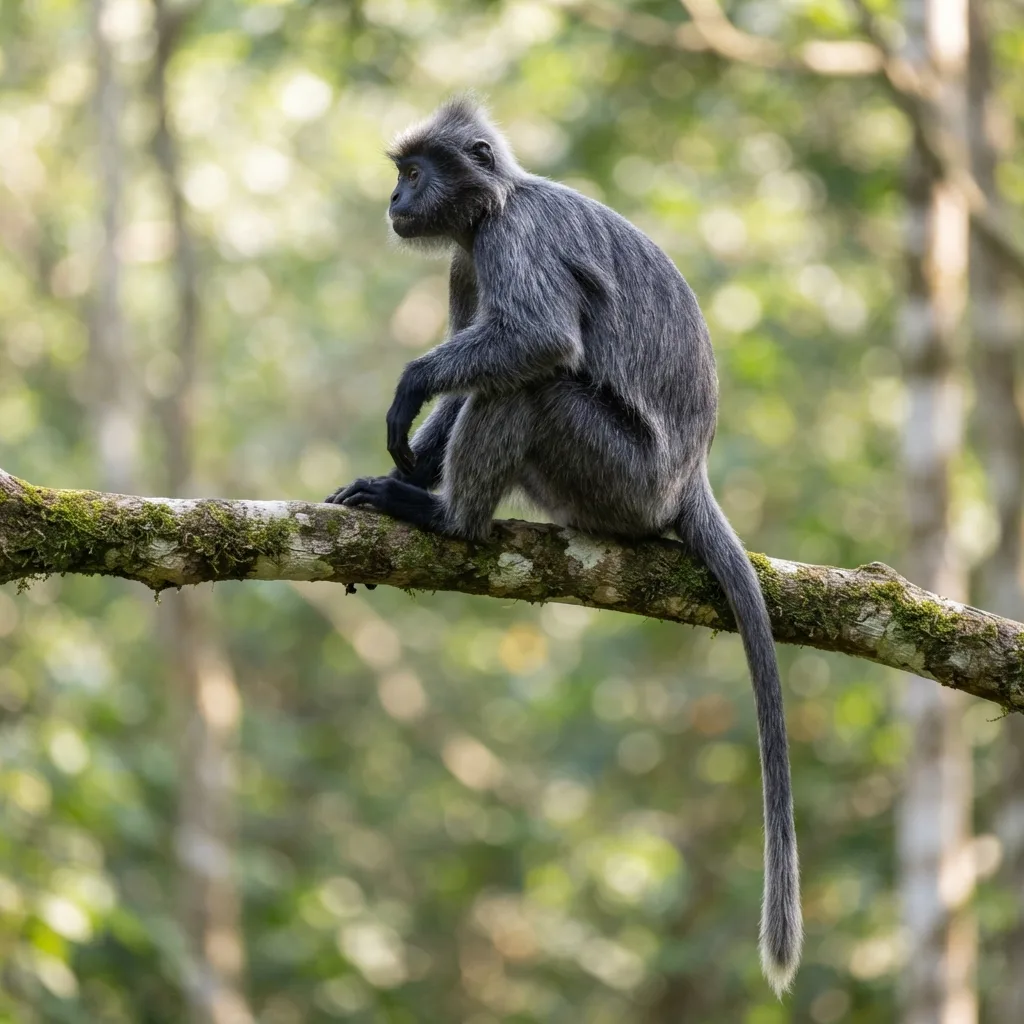
The silvered langur (also known as the silvery lutung or silvered leaf monkey, scientifically classified as Trachypithecus cristatus) is a medium-sized Old World monkey native to the coastal, mangrove, and riverine forests of Southeast Asia.
Physical Characteristics
- Adult Coat: Dark brown or black fur tipped with gray-white or silvery hairs, giving the animal a uniform frosted or silver appearance.
- Infant Fur: Newborns are born with brilliant bright orange fur and a white face, hands, and feet, which gradually darkens to the adult gray-silver pelage over three to six months.
- Size & Weight: Adults generally weigh between 4.0 kg and 6.6 kg (9 to 15 lbs) with a head-body length of 41 to 55 cm and a long, non-prehensile tail measuring 60 to 76 cm.
- Facial Features: Dark faces framed by long cheek hair that often obscures the ears, along with a distinct crest of hair on top of the head.
Habitat and Distribution
- Geographic Range: Found across Peninsular Malaysia, Sumatra, Borneo, Java, and nearby Indonesian and Malaysian islands. Related regional species like Germain's langur (Trachypithecus germaini) inhabit parts of Indochina including Cambodia.
- Preferred Environment: Strictly arboreal, living primarily in coastal mangrove swamps, riverbanks, and secondary lowland forests. They rarely descend to the ground, using long limbs and a swinging brachiation motion to move through the canopy.
Diet and Behavior
- Diet: Primarily folivorous (leaf-eating), possessing a specialized multi-chambered stomach designed to break down tough plant cellulose, supplemented by seeds, fruits, and flowers.
- Social Structure: Live in diurnal groups of 9 to 40 individuals typically consisting of one dominant adult male, numerous females, and their offspring. Females practice alloparenting, communally caring for and holding infants regardless of direct maternity.
Conservation Status
- Threat Level: Categorized globally as Vulnerable to Near Threatened depending on the specific taxonomic sub-population, facing prominent pressures from habitat loss due to coastal development, charcoal production in mangroves, and agricultural conversion.
- Group
- Primates