

Iguana
Iguana iguana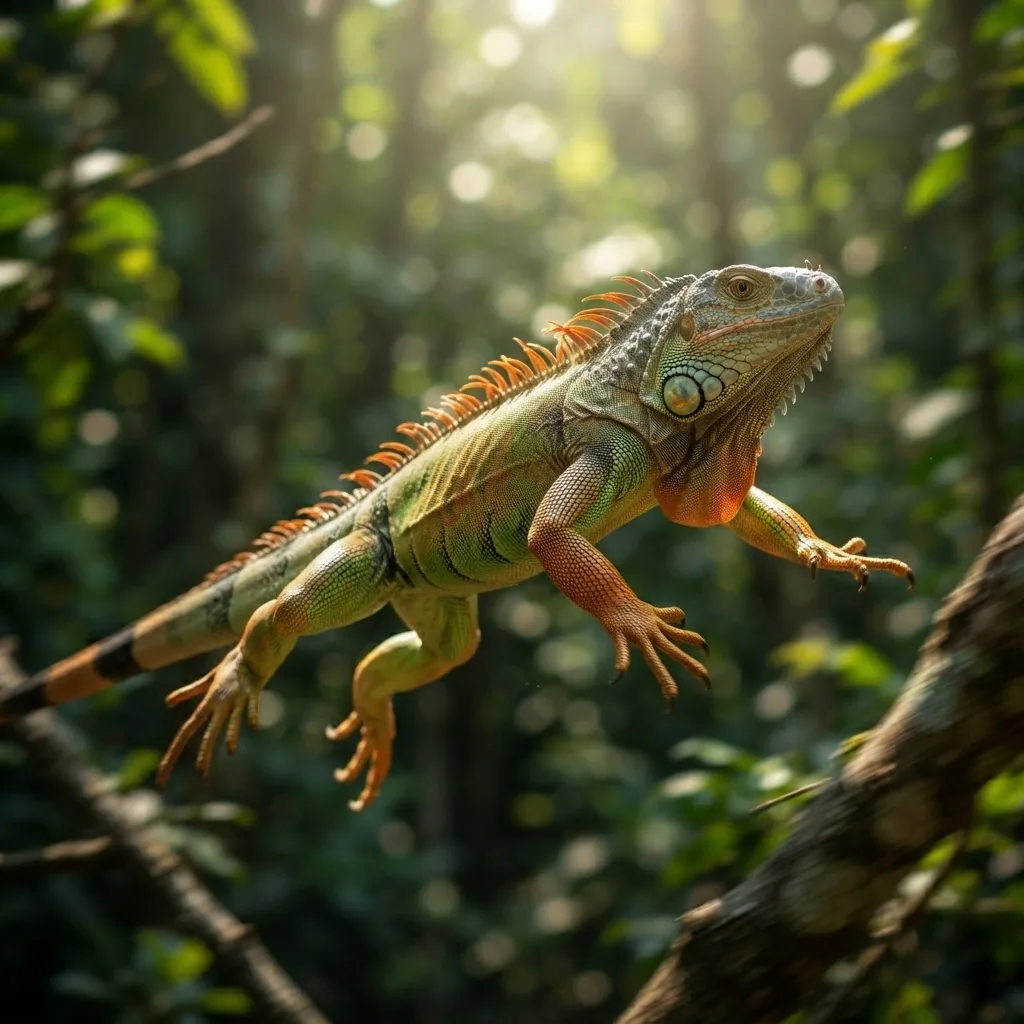
爬行动物
Large, cold-blooded, primarily plant-eating species
An iguana is a genus of large, primarily herbivorous, ectothermic (cold-blooded) lizards native to tropical and subtropical regions of Central America, South America, Mexico, and the Caribbean.
Key Characteristics and Anatomy
- Size and Weight: Adults can grow anywhere from 4 to 6 feet long (including their long tails) and typically weigh between 9 to 17 pounds, depending on the specific species and sex.
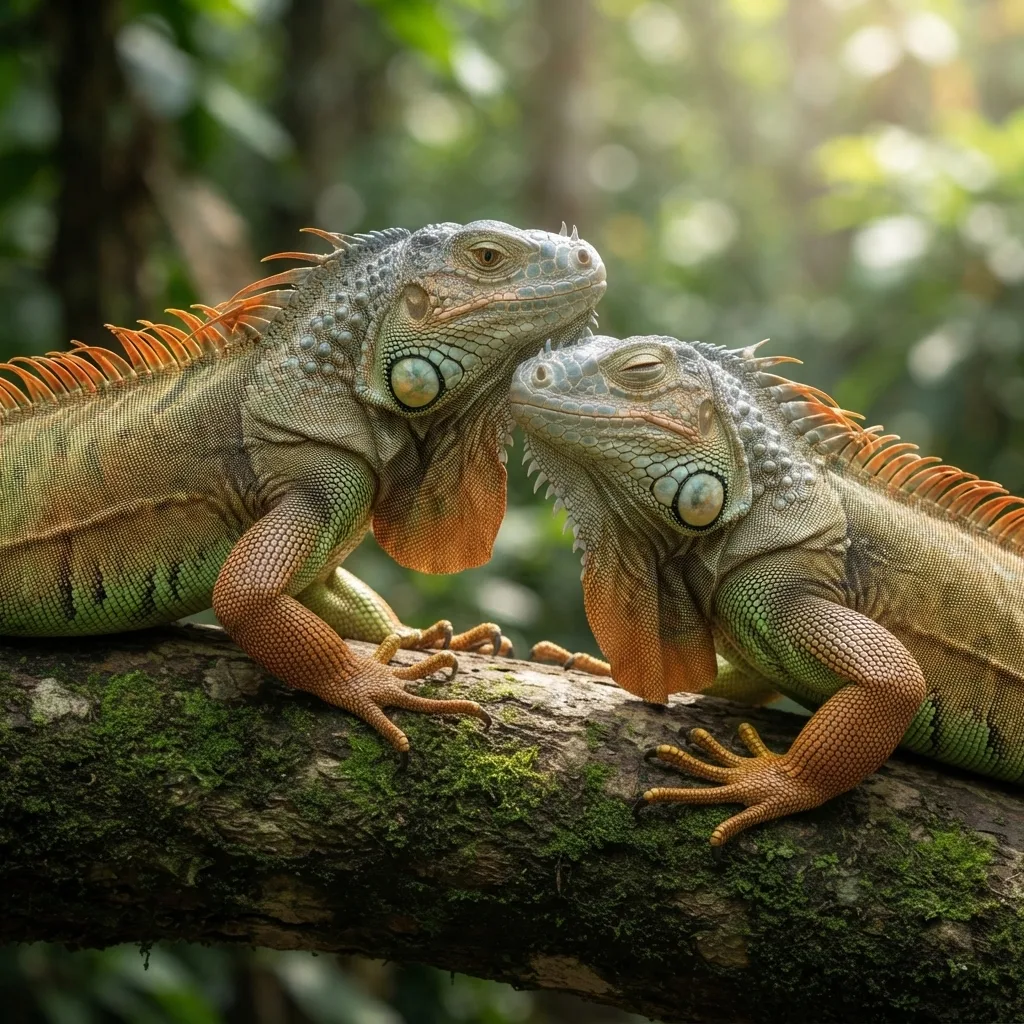
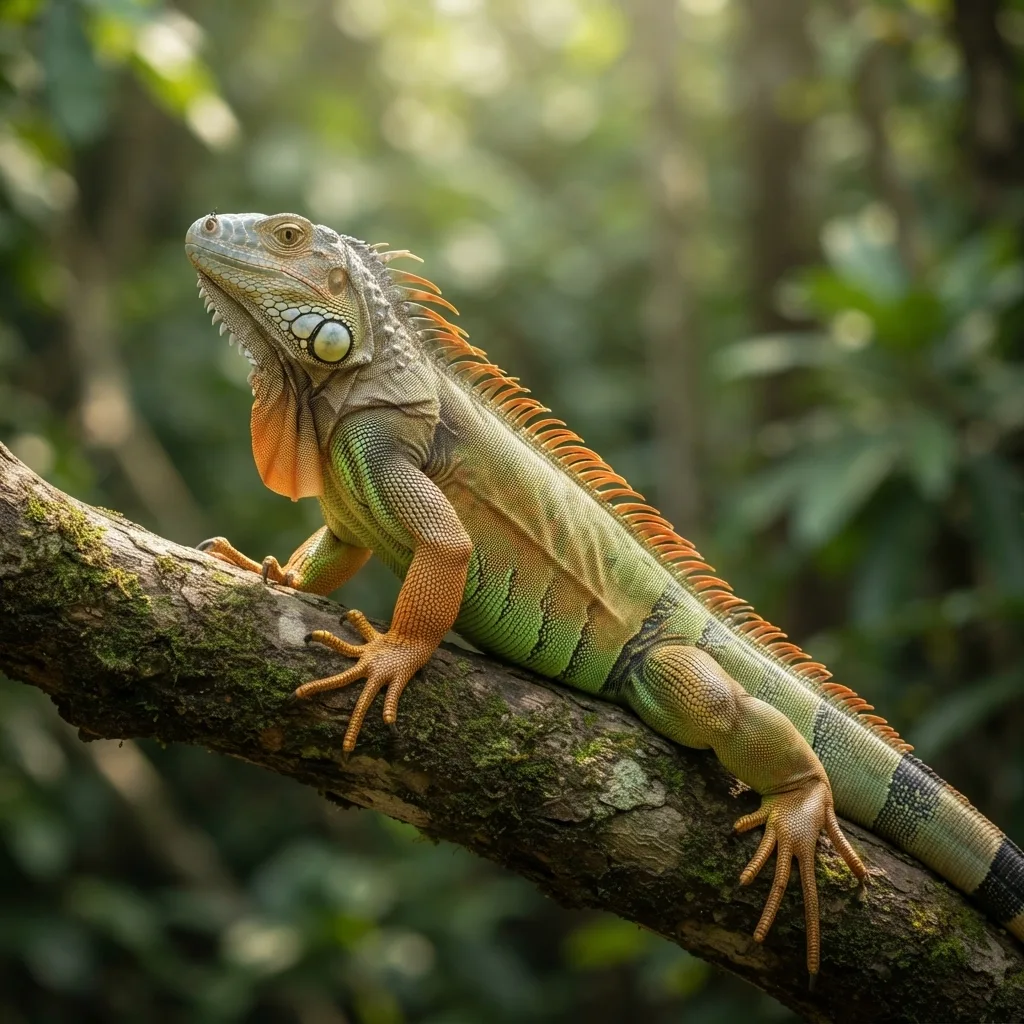
- Dorsal Spines: A prominent row of flexible, saw-like spines runs down their back and tail, helping with defense and thermoregulation.
- The Dewlap: A large flap of loose skin hanging under the chin used for communication, territorial displays, and regulating body temperature.
- The Parietal Eye: A small, pale, photo-sensory scale on top of their head (often called a "third eye") that detects changes in light and shadows to spot predators from above.
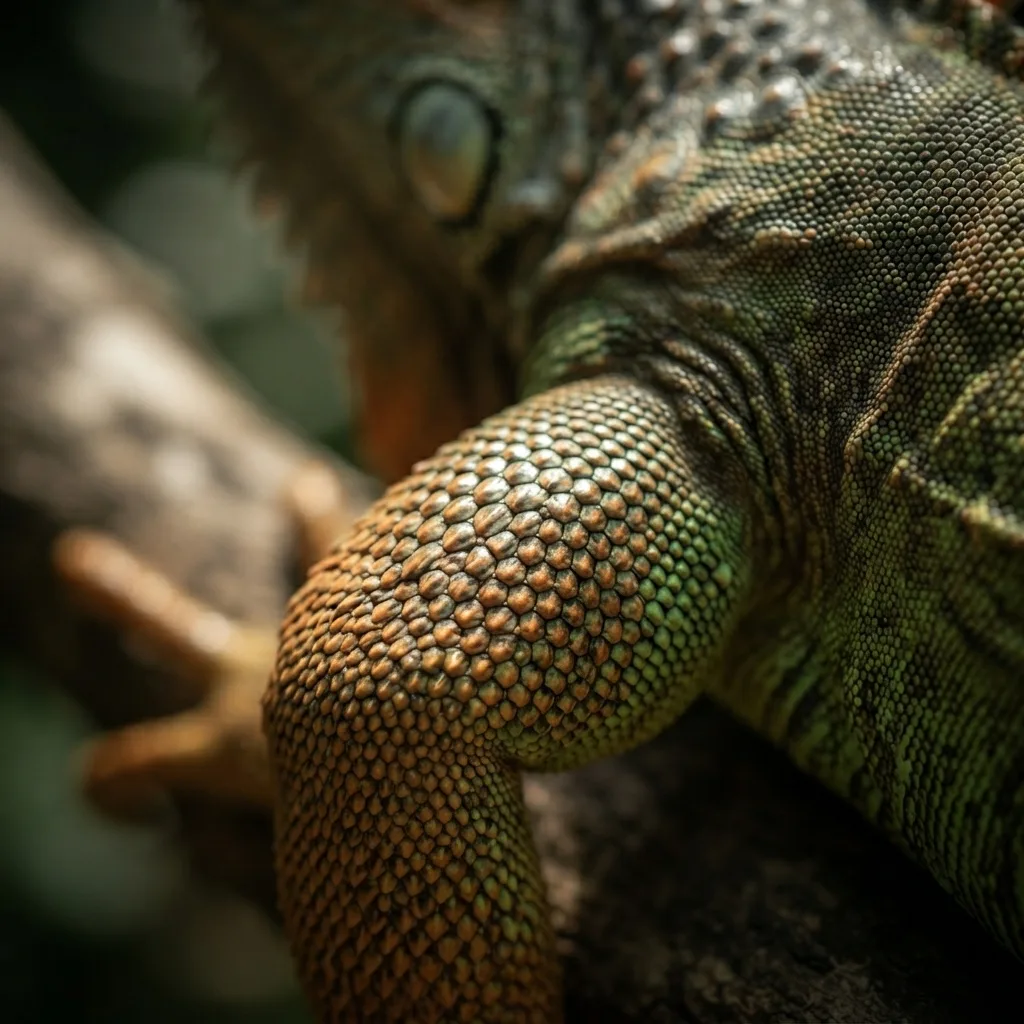
- Defensive Adaptations: They possess powerful whip-like tails that can detach or be used to strike when threatened, alongside sharp claws and teeth.
Major Types of Iguanas
- Green Iguana (Iguana iguana): The most common and widely recognized species, known for its arboreal lifestyle, excellent swimming abilities, and popularity in the exotic pet trade.
- Marine Iguana (Amblyrhynchus cristatus): Endemic to the Galápagos Islands, it is the only lizard in the world that forages in the ocean, feeding on marine algae and sneezing out excess salt.
- Blue Iguana (Cyclura lewisi): A critically endangered species native exclusively to Grand Cayman, distinguished by its striking blue coloration.
- Spiny-Tailed Iguana (Ctenosaura): Known as some of the fastest lizards on earth, featuring ringed, spiny tails and swift sprinting speeds.
Habitat and Behavior
- Thermoregulation: As ectotherms, iguanas rely on environmental heat sources, spending a significant portion of their day basking in the sun on tree branches or rocks to raise their body temperature for digestion.
- Diet: While young hatchlings occasionally eat insects or small invertebrates for extra protein, mature iguanas transition to a strictly herbivorous diet of leaves, flowers, and fruits.
- Water Affinity: Most species live near water sources, often dropping or diving straight from overhanging branches into streams or ponds to escape predators.
- 分类
- 爬行动物