

Sarus Crane
Antigone antigone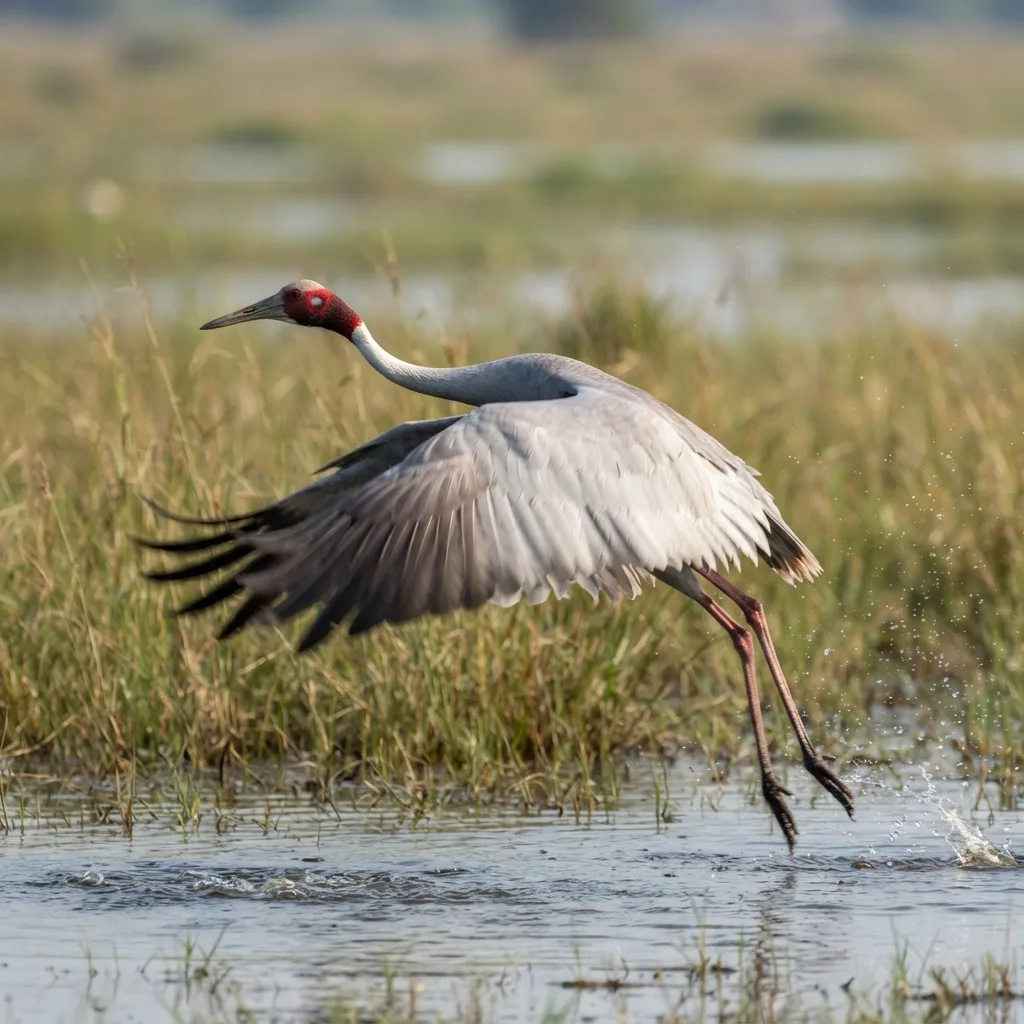
The tallest flying bird in the world
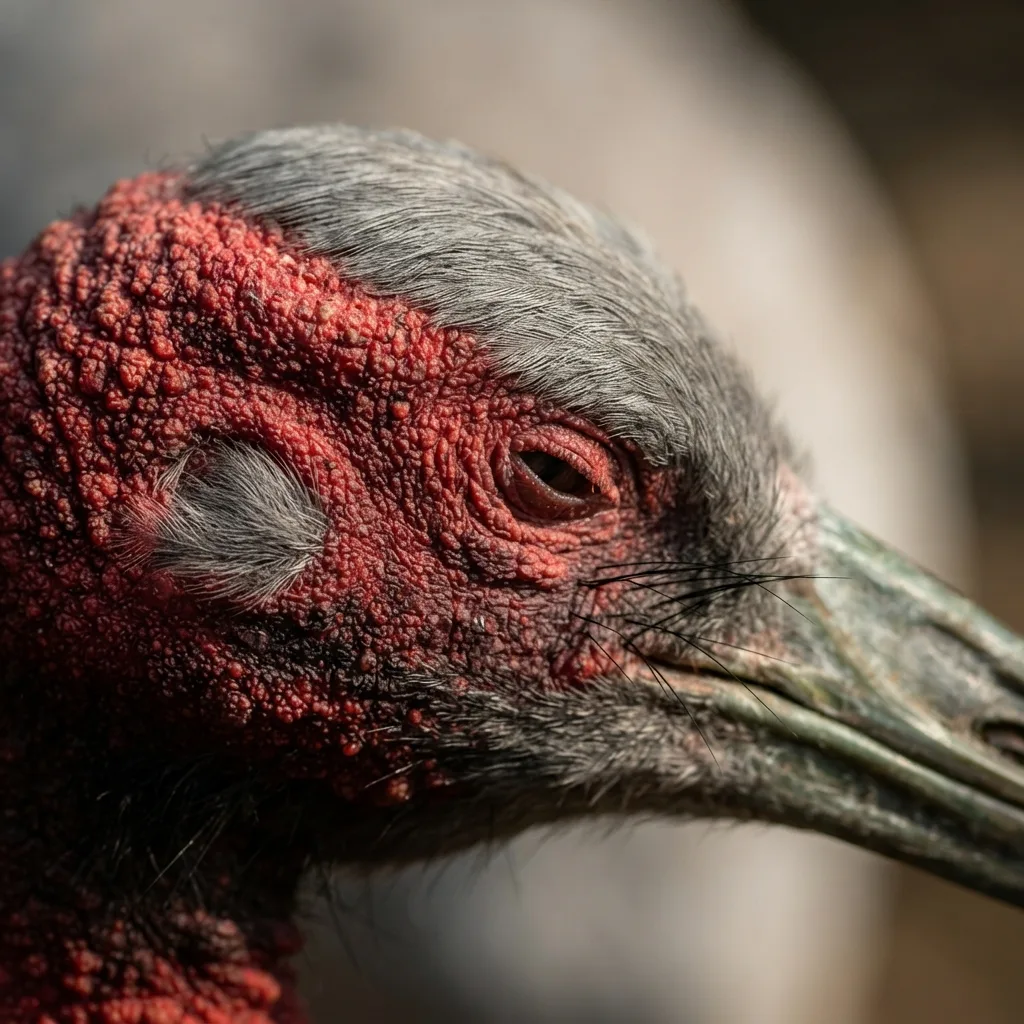
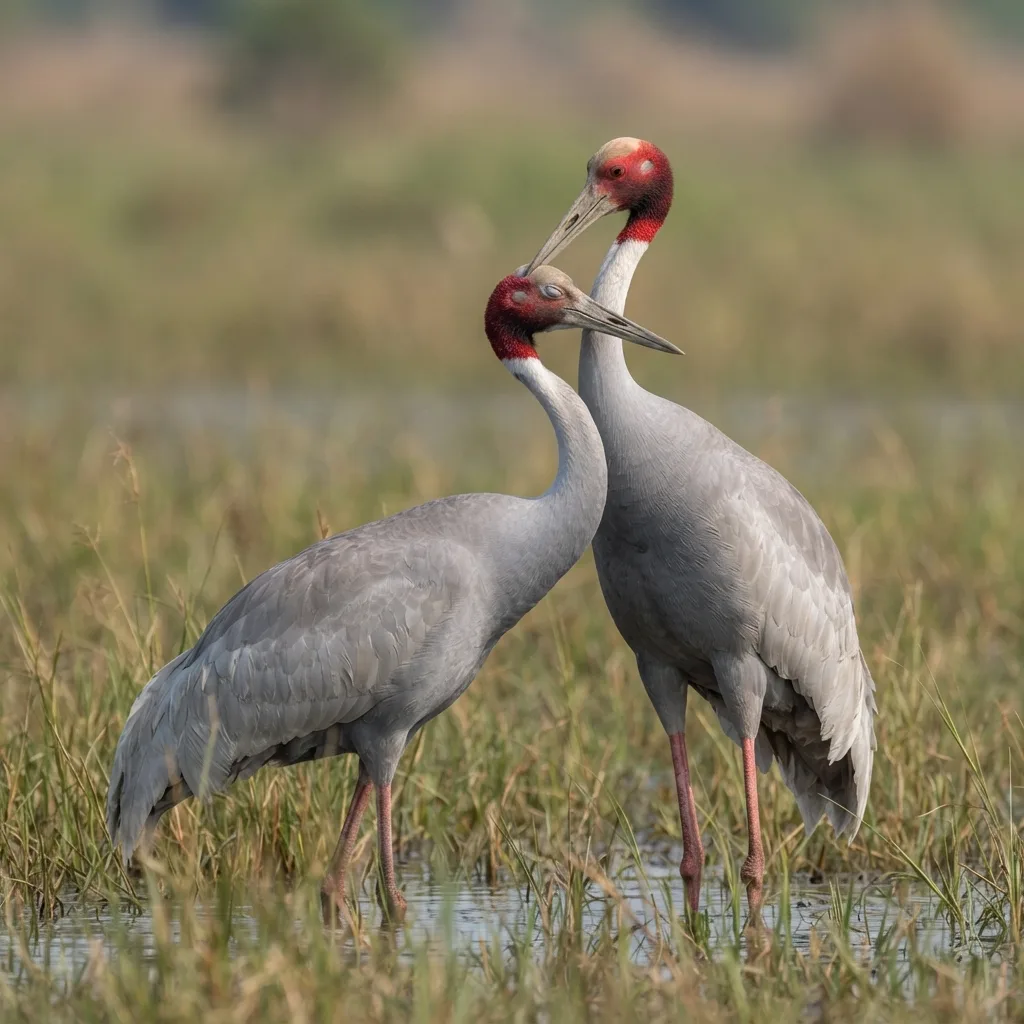
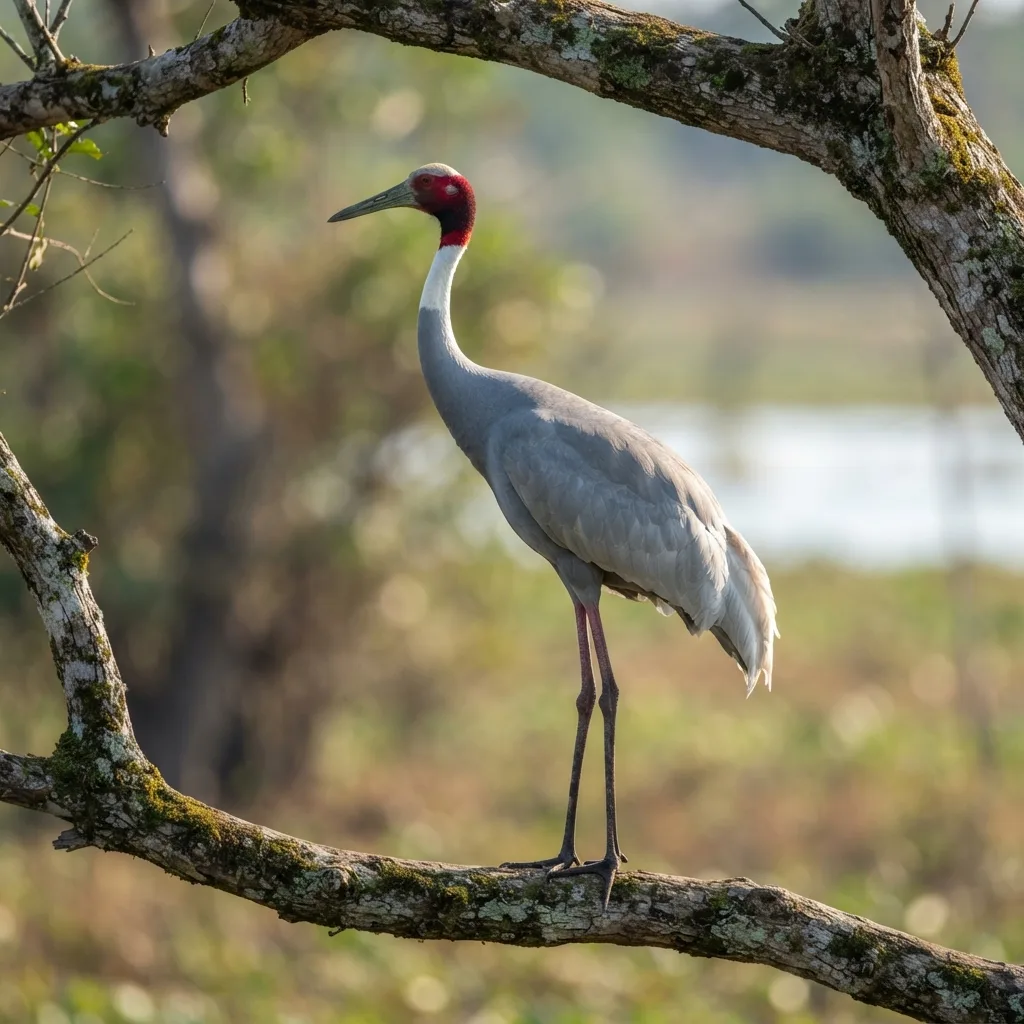
The sarus crane is the tallest flying bird in the world, with some individuals reaching a standing height of up to 1.8 meters (5 feet 11 inches). Its most distinctive features are a light grey body contrasted by a completely bare, bright red head and upper neck.
Key Characteristics & Behavior
- Lifelong Loyalty: Sarus cranes form monogamous pair bonds and mate for life. In many cultures, they serve as powerful symbols of marital fidelity.
- Courtship Dances: Pairs reinforce their bonds through loud, synchronized unison calls and elaborate courtship displays that involve bowing, wing-spreading, and leaping into the air.
- Massive Nests: Unlike migratory cranes, they are mostly sedentary (non-migratory). During the wet season, pairs build enormous floating nest "islands" out of reeds and grasses in shallow water, often exceeding two meters in diameter.
- Diet: They use their long, greenish-grey bills to probe wetland mud layers for roots, tubers, insects, crustaceans, and small vertebrates.
Subspecies and Range
The species is divided into three main geographic subspecies:
- Indian Sarus Crane (A. a. antigone): Found in northern and northwestern India, Nepal, and Pakistan. They prefer wet grasslands and agricultural fields.
- Eastern Sarus Crane (A. a. sharpii): Found in Cambodia, Myanmar, Laos, and Vietnam. They typically inhabit dry savanna woodlands and temporarily flooded grasslands.
- Australian Sarus Crane (A. a. gillae): Found in northeastern and northern Australia.
Conservation Status
The sarus crane is currently classified as Vulnerable on the IUCN Red List. Population sizes have severely declined in the Indochina region, including Cambodia. The species is already extinct in China, Thailand, Malaysia, and the Philippines, though reintroduction efforts have been underway in Thailand.
The primary threats facing these birds include loss of wetland habitats due to agricultural conversion, pesticide poisoning, collisions with power lines, and the illegal collection of eggs and chicks. In Cambodia, wildlife conservation organizations like WCS and their partners work actively with local communities to protect key protected wetlands—such as the Anlung Pring Protected Landscape and the Boeung Prek Lapouv Protected Landscape—to secure a safe habitat for them.
- 分类
- 鹳与鹤